
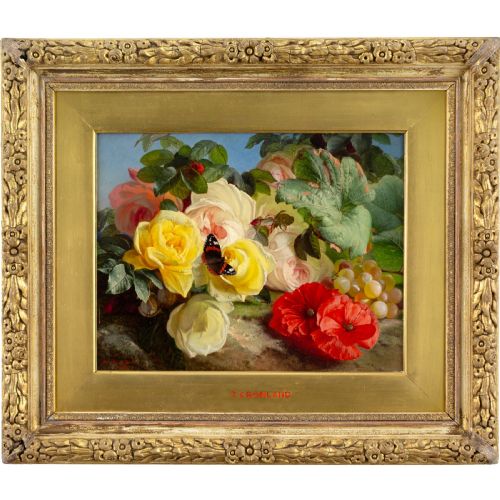
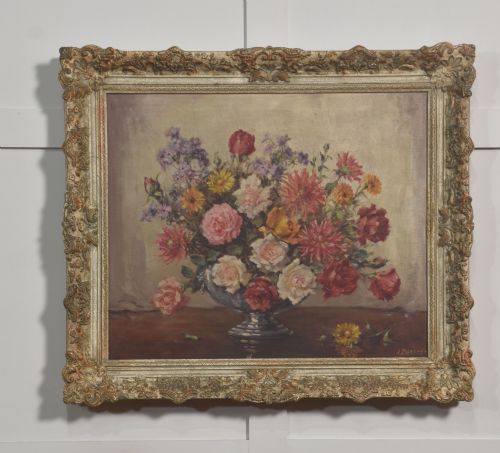
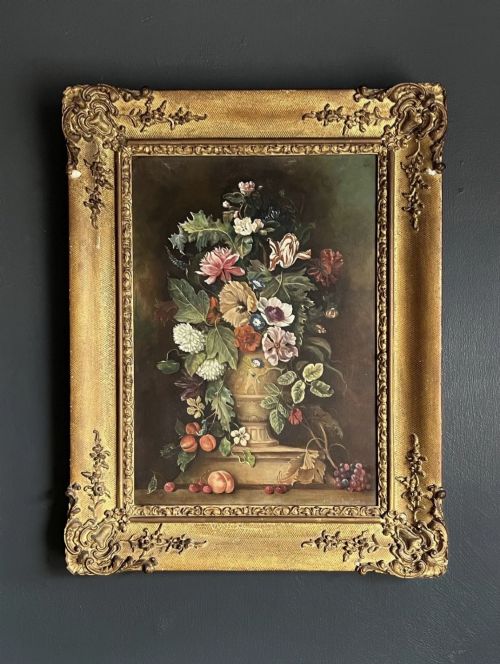
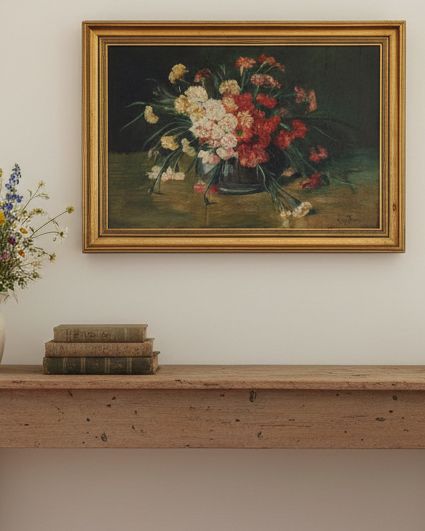
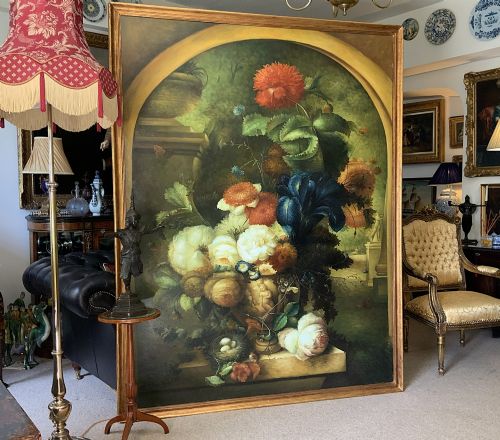
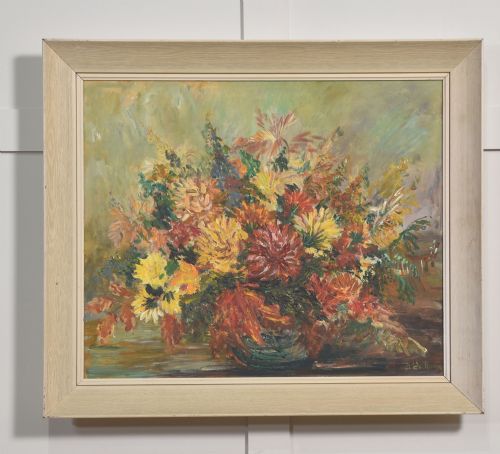
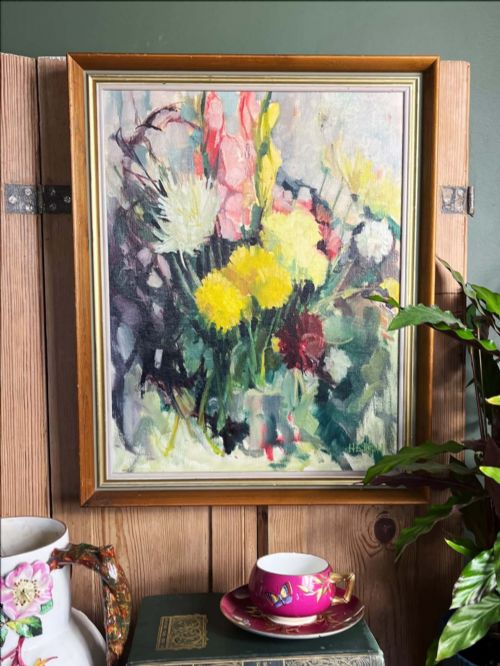
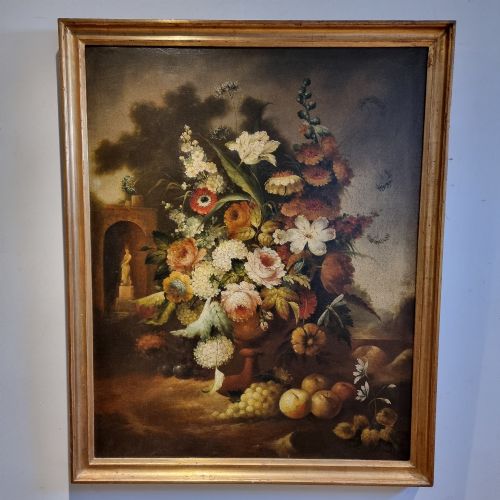

Framed Flower Canvas Painting
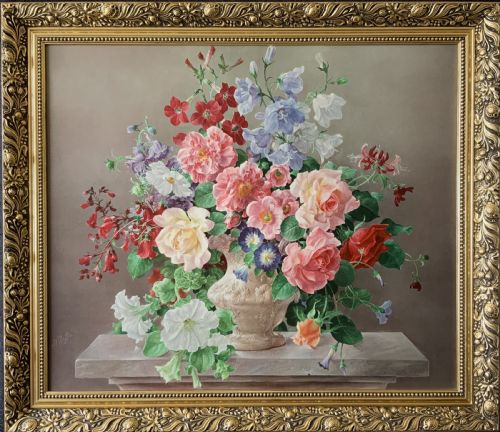
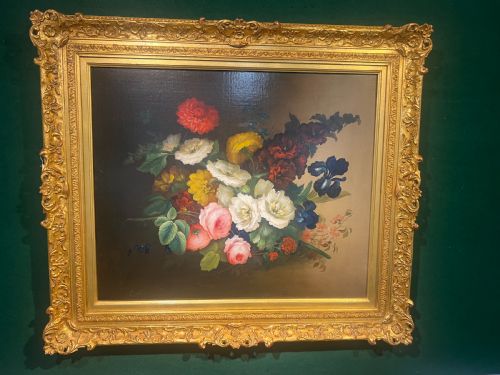
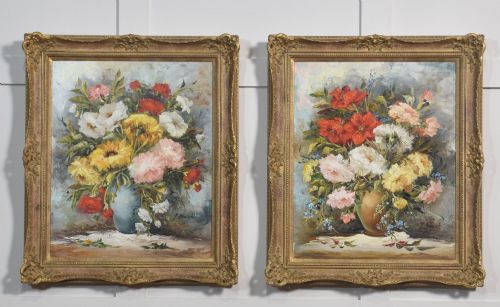
These framed flower canvas painting works span centuries of botanical and still life composition, bringing rich floral pigment into domestic rooms.
Framed Flower Canvas Painting
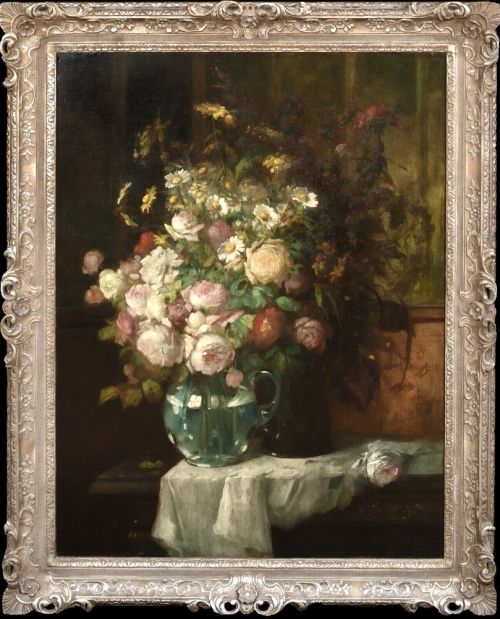
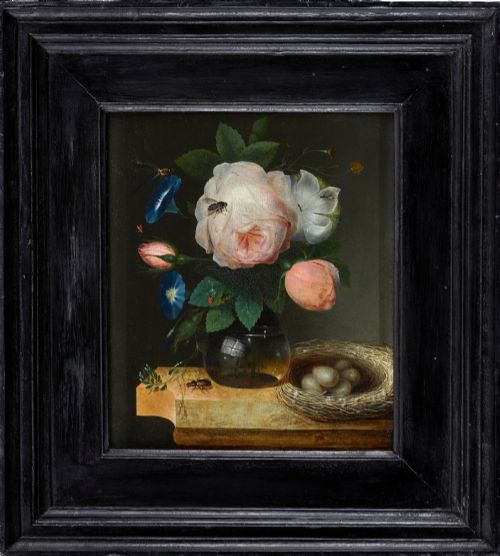
A framed flower canvas painting captures botanical subjects, ranging from Dutch-style still lifes of roses and poppies to mid-century impressionist floral displays. These works appear across diverse periods, including nineteenth-century realist interpretations and twentieth-century modernist compositions.
The dominant forms on this page include oil paintings on canvas and board, often housed within period timber surrounds. Buyers encounter both intimate cabinet pieces and monumental wall art sized for grander interiors.
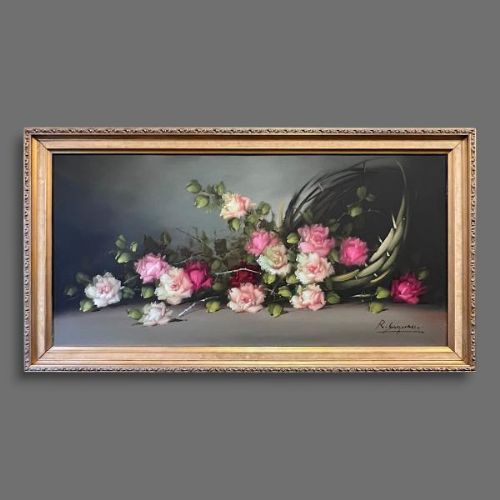
Subjects stretch from simple arrangements in glass vases and wicker baskets to complex garden scenes and figurative works like flower girl studies. Origins span British, French, Dutch, Austrian, and Belgian schools of painting.
Materials and Technique
Makers built these pieces primarily using oil paint applied to woven canvas or wood panels, capturing light and texture across petals and foliage. Pigments range from restrained tonal palettes to vibrant impasto applications seen in post-impressionist works.
Surrounds form an integral part of the construction, utilising carved wood, moulded gesso, and applied gold leaf or gilt finishes. These frames protect the canvas edge while complementing the depth of the painted floral subjects.
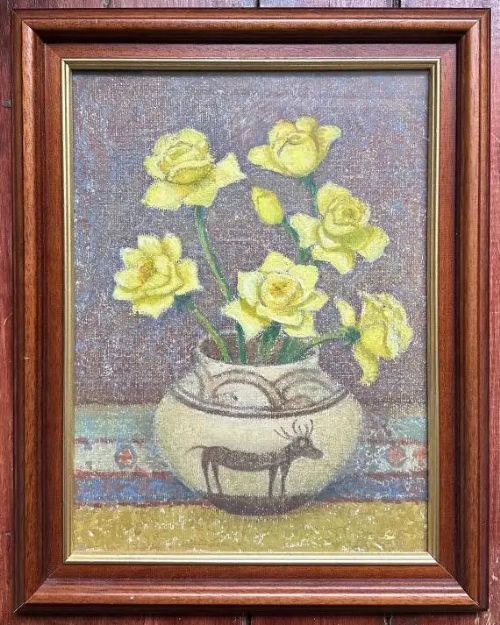
Several canvases capture elaborate floral displays spilling from wicker baskets, Hopi pots, and glass vases, preserving petals that withered centuries ago.
Judging Quality
Quality rests upon the handling of light, brushwork confidence, and the structural integrity of both canvas and pigment layer. Superior examples demonstrate sophisticated composition and chromatic harmony rather than mere botanical accuracy.
The relationship between the painting and its housing dictates visual success, where period-appropriate gilt gesso frames enhance the depth of the canvas. Finer works retain original stretcher frames and stable paint surfaces free from excessive overpainting.
Theude Grönland·Emma Fordyce MacRae·Gaspar Peeter Verbruggen·Konstantin Stoitzner·William Watt Milne
The Framed Flower Canvas Painting Glossary
- Oil paint
- A slow-drying medium made by combining pigments with drying oils such as linseed. This material allows artists to build rich layers and subtle tonal gradations.
- Gesso
- A plaster-like mixture applied to wood frames to create a smooth surface for gilding. It provides a stable base for gold leaf application.
- Gilt
- Covered thinly with gold leaf or gold paint. This finish adds reflective warmth to wooden picture frames.
- Impasto
- Paint applied thickly to a canvas, standing out from the surface so that the marks of the brush or palette knife remain visible. This technique adds tactile dimension to floral petals.
- Still life
- A work depicting inanimate subject matter, typically commonplace objects such as flowers in vases. Botanical still lifes form the core of this category.
Framed Flower Canvas Painting: Frequently Asked Questions
How do I date an antique floral painting?
Dating relies on stylistic clues, canvas preparation, and the construction methods of the accompanying wooden frame. Mid-century works often show brighter palettes and looser brushwork compared to earlier nineteenth-century realist pieces.
Examining the stretcher bars and nails at the back of the canvas provides further chronological evidence. Older pieces exhibit hand- forged or early machine-cut fixings that match their stated period.
Are these paintings supplied with their original frames?
Many listings feature period-correct or original gilt gesso frames that complement the age of the canvas. These surrounds often show patination and wear consistent with their history.
Some pieces have been reframed over the decades to suit changing interior tastes. Checking listing descriptions clarifies whether the timber surround is contemporaneous with the artwork.
How should I care for oil paintings on canvas?
Oil paintings require stable indoor environments away from direct sunlight and extreme humidity fluctuations. Excessive moisture or heat can cause the canvas to slacken and the paint layer to crack.
Dusting should occur gently with a soft, dry brush without applying pressure to the pigment surface. Professional conservators should handle any cleaning of accumulated grime or varnish discolouration.
What is the difference between oil on canvas and oil on board?
Oil on canvas involves stretching woven fabric across a wooden frame, offering slight flexibility and a distinct textile texture beneath the paint. This method became standard for larger works.
Oil on board utilises a rigid wooden or composite panel as the painting support. Board supports frequently appear in smaller studies and twentieth-century plein air compositions.