




Framed Equine Oil Canvas
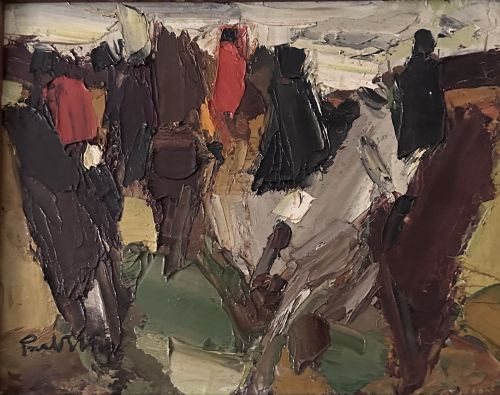
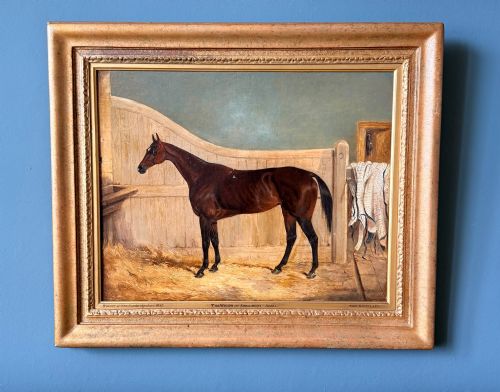
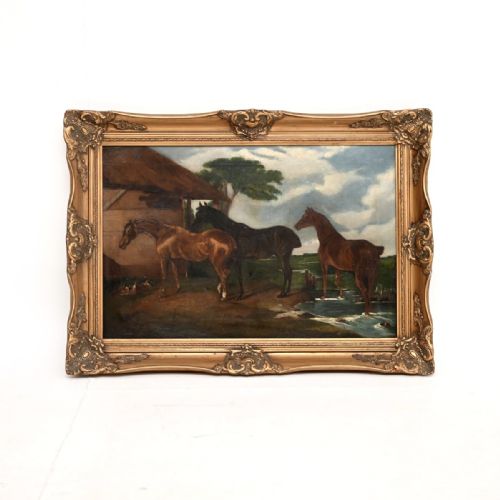
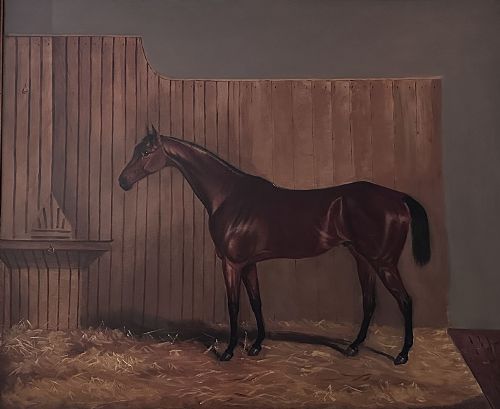
When you seek a framed equine oil canvas, you find painted portraits and scenes of horses rendered in oil paint on canvas.
Framed Equine Oil Canvas
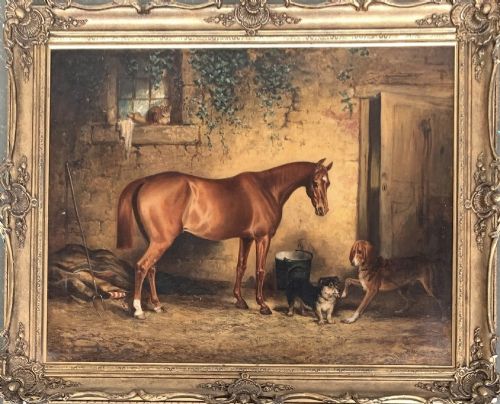
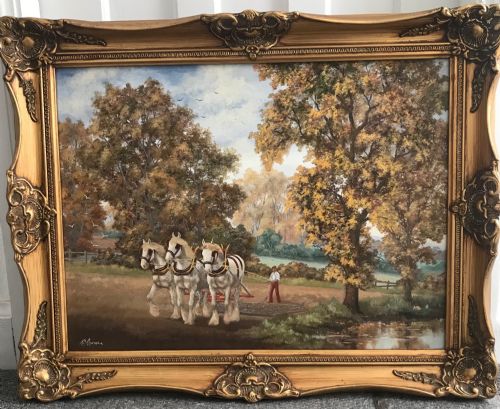
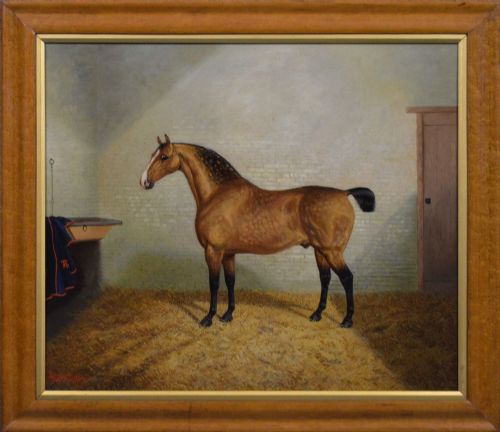
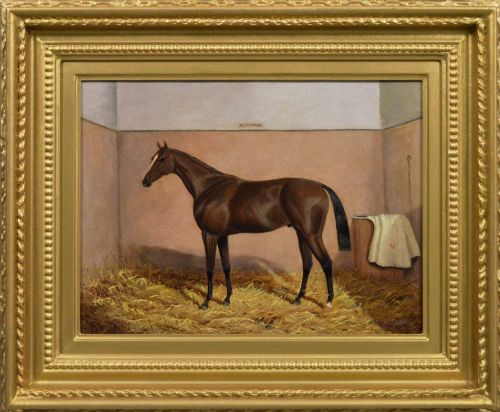
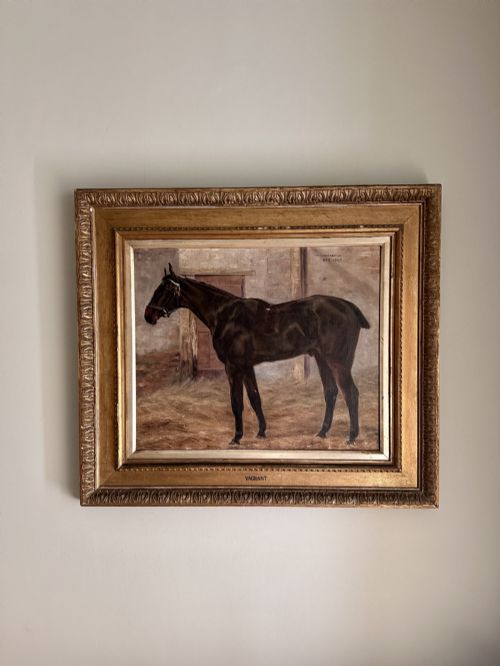
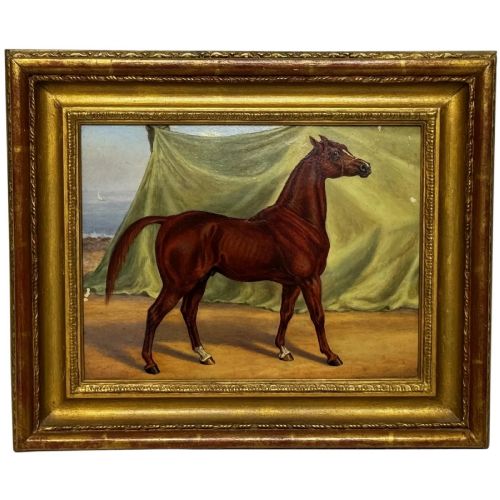
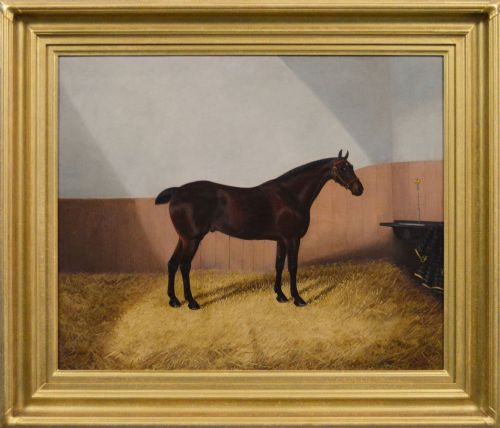
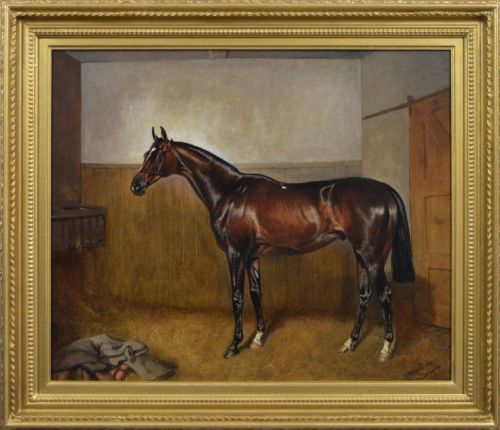
A framed equine oil canvas brings together historical paintings of horses, hunters, and racehorses housed in period frames. These works span the nineteenth century into the twentieth century, capturing individual animals, stables, and rural landscapes.
You meet Victorian sporting art alongside Georgian and Edwardian examples. The subjects range from named thoroughbred champions with jockeys to working shires and farm horses in fields.
Most items on this page originate from British traditions, reflecting a long history of canine and equine portraiture commissioned by owners and breeders.
How they were made
Artists painted primarily with oil paint applied onto stretched canvas supports. The physical build-up of pigment creates depth in the coats and musculature of the horses.
Surviving canvases sit within wood frames, frequently finished in giltwood or gold leaf. These surrounds complement the tonal palette of the nineteenth-century compositions.
Listings feature oil on canvas works spanning the Victorian, Edwardian, and Georgian periods, utilising giltwood frames.
What varies in quality
Quality rests upon the artist's anatomical accuracy in rendering the horse and the handling of light across the coat and landscape. Accomplished hands capture muscle tension and character.
The integration of the canvas with its original giltwood frame alters the overall harmony of the piece. Conservation state and the presence of clear provenance signatures also separate standard works from major commissions.
Henry Barraud·Albert Clark·Fred Fitzpatrick·John Alfred Wheeler·Thomas Walker Bretland·John Ferneley Senior·George E Sharpe·John Frederick Herring·Benjamin Cam Norton·Clifton Tomson·Alfred Moginie Bryant·Abraham Cooper·Charles Bilger Spalding·George Goodwin Kilburne·Ernest Higgins Rigg·Walter Herbert Wheeler·James Barenger·William F Perrin
The Framed Equine Oil Canvas Glossary
- Canvas
- A heavy woven fabric used as a surface for oil painting. It is stretched tightly over a wooden frame before application of the ground layer.
- Giltwood
- Wood carved and covered with a thin layer of gold leaf or metallic powder. It provides a bright decorative border to many nineteenth-century paintings.
- Sporting Art
- A genre of painting dedicated to horses, hunting, racing, and rural sports. It flourished in Britain throughout the Victorian and Georgian periods.
- Thoroughbred
- A horse breed developed for racing, frequently featured in named portraits by period artists. These animals were documented with precise physical traits.
- Provenance
- The documented history of ownership of an artwork. It traces the piece from its original commission through galleries and estates.
Framed Equine Oil Canvas: Frequently Asked Questions
What is a framed equine oil canvas?
These items are painted depictions of horses created in oil on canvas and presented in decorative frames. They record individual animals, race winners, and rural working scenes from past centuries.
Buyers select them for their historical record of breeds and the craftsmanship of period artists who specialised in animal painting.
Who painted these horse portraits?
The works were produced by specialised animal and sporting artists working during the nineteenth and early twentieth centuries. Many painters observed famous racehorses and hunters directly from stables and training grounds.
Signatures or attribution records on the canvas often connect the painting to known Victorian and Georgian painters.
How do I care for an oil painting?
Keep the canvas away from direct sunlight and steady humidity levels to prevent cracking in the oil paint. Dust the surface and the giltwood frame gently with a dry, soft brush.
Avoid using liquid cleaners on the canvas or the gold leaf surround to preserve the original material layers.
How can I tell the age of the piece?
Dating relies on the style of the giltwood frame, the weave of the canvas behind, and the clothing or tack worn by figures in the scene. Signatures and recorded artist life dates also narrow the period of creation.
Victorian and Georgian works display specific tonal palettes and framing conventions distinct from later twentieth-century output.