


Stable Interior Oil Artwork
Stable interior oil artwork brings together Victorian sporting art and equestrian studies, offering a direct view into nineteenth-century equine life.
Stable Interior Oil Artwork
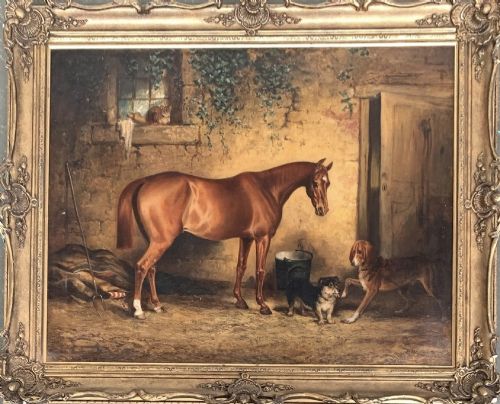
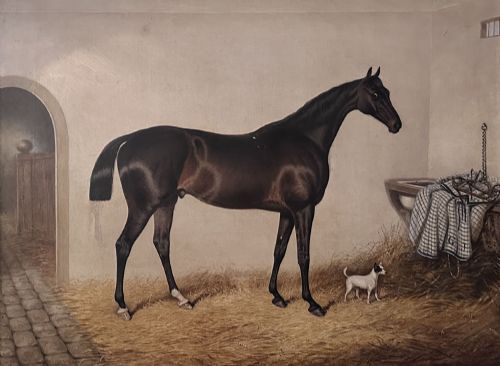
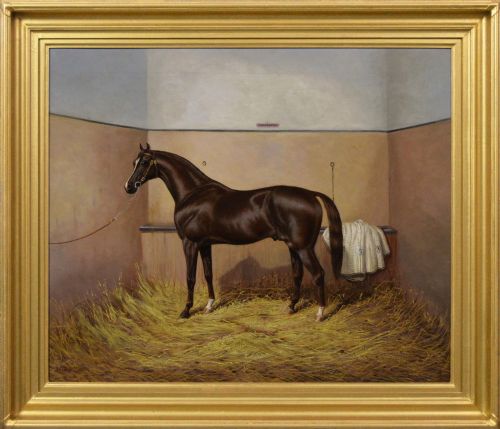
Stable interior oil artwork captures horses, grooms, and canine companions within nineteenth-century stables. These pieces reflect the prominent place of horses in Victorian life, ranging from portraits of named hunters to broader sporting scenes.
The versions most commonly met on this page belong to the Victorian era and the wider nineteenth century. They include works attributed to named artists alongside pieces created in the manner of established sporting painters of the period.
Subjects typically focus on individual horses, such as bay hunters, roan hunters, and racehorses like Worcester. Many compositions feature a terrier alongside the horse and groom, grounding the interior setting in daily rural reality.
How stable interior oil artwork was made
These works rely on oil paint applied to canvas or board, mounted within wooden frames that frequently incorporate gold leaf and gilt decoration. Oak frames also appear, providing a solid boundary for the canvas.
Artists built up the compositions using traditional oil painting techniques to render the sheen of equine coats, the texture of stable straw, and the dim interior light. The handling of paint ranges from detailed portraits to looser sporting art styles.
What varies in quality
Quality in these paintings rests on the anatomical accuracy of the horse and the handling of light within the confined stable space. Stronger examples convey the weight and musculature of the animal with convincing depth.
The reputation of the artist, whether fully attributed or associated through style and circle, influences the standing of the work. Attribution to painters such as Albert Clark or Benjamin Cam Norton places an artwork within a recognised tradition of Victorian equestrian art.
Albert Clark·Benjamin Cam Norton·Edwin Frederic Holt·Charles Bilger Spalding·John Nost Sartorius·John Ferneley Jnr·William Shayer Snr
The Stable Interior Oil Artwork Glossary
- Oil on canvas
- Pigment mixed with drying oil applied to a stretched fabric support. This remains the primary medium for nineteenth-century sporting art.
- Gilt
- A thin layer of gold applied to wood framing. It enhances the visual weight of the picture surround.
- Sporting art
- Depictions of rural sports, horses, dogs, and field pursuits. This genre flourished throughout the Victorian period.
- Hunter
- A horse bred and trained for fox hunting. Such animals form a frequent subject in nineteenth-century stable portraits.
Stable Interior Oil Artwork: Frequently Asked Questions
What is a stable interior oil artwork?
It is a nineteenth-century painting depicting horses, often hunters or racehorses, inside their stables. These pieces frequently include grooms or terriers.
They record the close relationship between humans, animals, and rural sporting culture during the Victorian era.
Who painted these stable scenes?
Works were produced by specialised animal and sporting artists active during the nineteenth century. Some bear signatures or attributions to known painters of the period.
Others are executed in the manner of prominent sporting artists without carrying a direct signature.
How should I display one at home?
These works suit traditional interiors, study rooms, or spaces with period architectural details. Their dark backgrounds and warm gilt frames pair well with timber furniture.
Keep them away from direct sunlight and damp walls to protect the oil paint and canvas.
How do I identify the period?
Dating relies on the costume of any figures present, the style of the wooden frame, and the painting technique. Most pieces on this page date from the nineteenth century and the Victorian era.
Canvas stamps, stretcher construction, and inscriptions on the reverse also provide clues to the exact decade.