
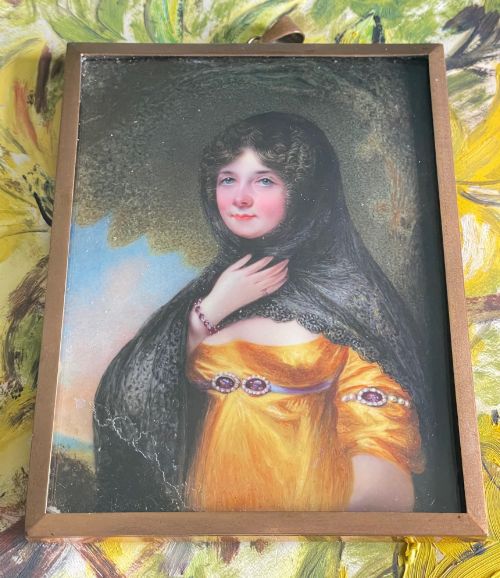
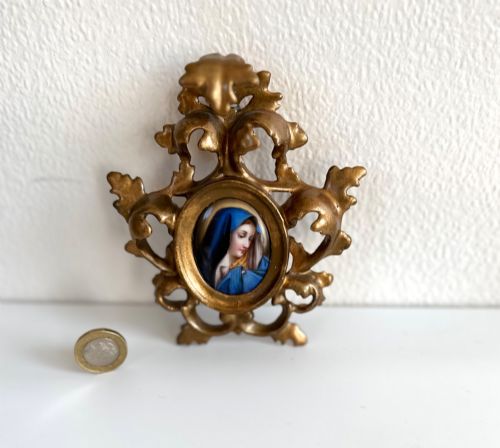


Framed Enamel Miniature Painting
A framed enamel miniature painting brings miniature portraiture and decorative plaques into domestic spaces through rich copper, porcelain, and metal settings spanning multiple centuries.
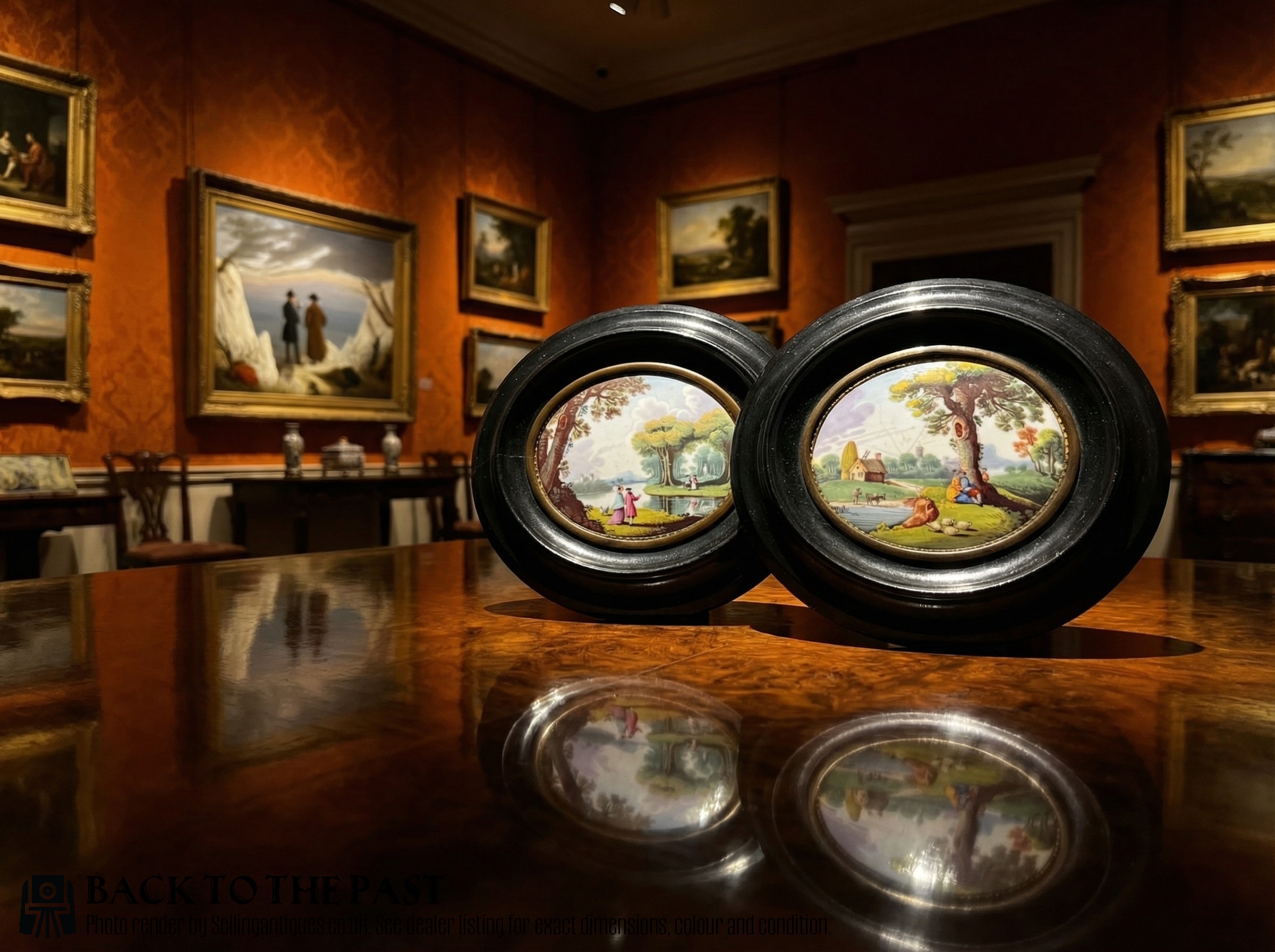
Framed Enamel Miniature Painting
The examples gathered here range from Georgian and Regency portraiture to Victorian and Edwardian revivals. Buyers encounter oval plaques depicting historical figures alongside rectangular scenes rendered with careful detail.
Makers and artists working in South Staffordshire and Limoges produced many of these surviving works. The selection reflects varied cultural influences including French Renaissance Revival and Victorian Rococo styles.
How they were made
Makers fused vitreous enamel directly onto copper plates, metal bases, or porcelain grounds through high-temperature firing. This technique allowed artists to achieve permanent colour and smooth glossy surfaces for detailed miniature painting.
Finished painted plaques received protective housings made from gilt metal, brass, or wood. Some Edwardian iterations incorporated additional elements such as eighteen-carat gold and pearls within the surrounding frames.
Sailors and Roman noblemen share wall space here.
What varies in quality
The integrity of the mounting also distinguishes the range. Original gilt metal, brass, or wooden frames that complement the period of the miniature elevate the overall character of the piece.
Horace Hone·Christian Friedrich Zincke·Samson·Henry Pierce Bone
The Framed Enamel Miniature Painting Glossary
- Enamel
- A glassy substance fused to a metal or porcelain substrate through firing. This material provides a durable and luminous surface for miniature painting.
- Gilt metal
- Metal coated with a thin layer of gold or gold-coloured wash. It appears frequently as a framing material for smaller plaques and portraits.
- South Staffordshire
- An English region known for producing eighteenth-century enamel items including snuff box lids and small plaques. These objects often feature transfer-printed or hand-painted decoration.
- Limoges
- A French city renowned for enamel production across multiple centuries. Works from this centre often depict classical or historical subjects on copper plates.
Framed Enamel Miniature Painting: Frequently Asked Questions
How do I date a framed enamel miniature painting?
Dating relies on stylistic clues within the portrait, the costume of the sitter, and the construction of the frame. Georgian and Regency pieces often show distinct clothing styles compared to later Victorian or Edwardian examples.
The materials used for the backing and surrounding metalwork also offer chronological markers. Examining the mounting technique helps place the object within its correct nineteenth or eighteenth-century context.
Where were these miniature paintings displayed?
Owners displayed these smaller works on interior walls as dedicated art pieces or kept them safely inside cabinets. Some examples served functional roles as decorative lids on boxes.
Portable formats like pendants allowed individuals to wear portraits close to the body. This dual nature made them both personal items and interior ornaments.
What is the difference between copper and porcelain bases?
Copper served as the primary metal foundation for traditional enamelling techniques used in Limoges and Staffordshire. The powdered glass fused directly to the metal surface under high heat.
Porcelain bases appeared in later nineteenth-century German and French works. These pieces relied on ceramic firing processes rather than metal backing plates.
How should I care for an antique enamel painting?
Keep these sensitive objects away from direct sunlight to prevent any fading of the delicate pigments. Dust them gently with a dry, soft cloth without applying moisture or cleaning agents.
Maintain stable room temperatures to protect both the painted enamel surface and the surrounding metal or wooden frame. Avoid placing them in areas subject to high humidity.