


18th Century Enamel Art
These pieces of 18th century enamel art combine copper, glass and precious pigments to bring centuries-old colour and portraiture directly into a modern room.
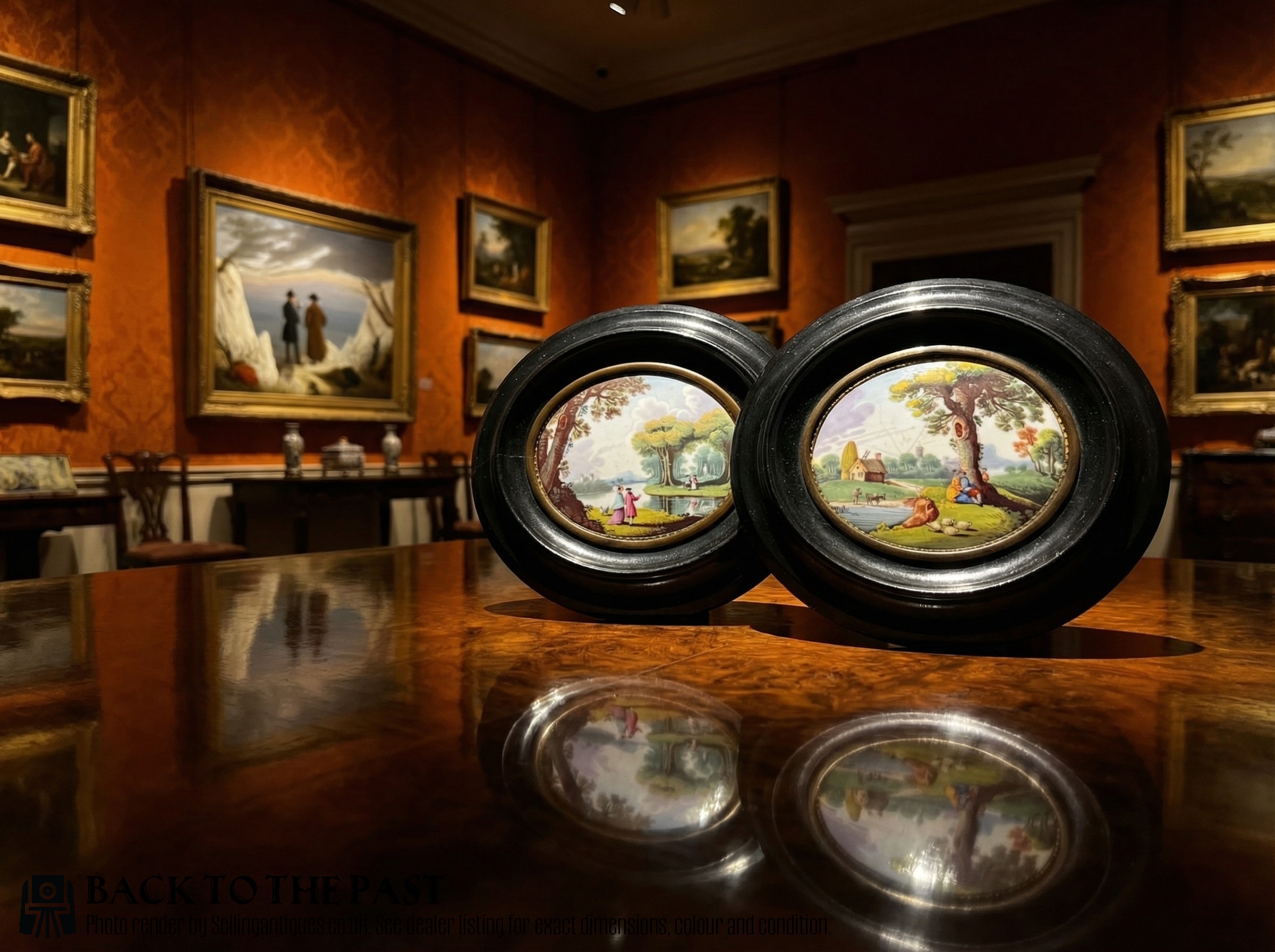
18th Century Enamel Art
When you search for 18th century enamel art, you encounter a specialised selection of wall plaques, portrait miniatures, decorative dishes and painted glass vessels originating from English, continental and Asian workshops. The selection frequently includes oval and rectangular wall plaques alongside miniature portraits and decorated flasks from the Georgian period and surrounding decades.
The objects span multiple distinct regional traditions, ranging from English South Staffordshire plaques to French Limoges pieces and Chinese Canton enamel dishes with Jesuit designs. Alongside these opaque enamel works, you also find painted and enamelled Bohemian and continental glass bottles and tumblers decorated with folk motifs and love hearts.
Domestic display and personal remembrance shaped these creations, with portrait miniatures designed to be carried or kept privately while plaques adorned panelled rooms. Their survival across centuries depends on the durable fusion of glass powder to metal or glass substrates through kiln firing.
How they were made
Craftsmen built these pieces by fusing powdered glass to copper or metal bases at high temperatures, often applying white or coloured enamel grounds as a canvas for subsequent painting. Polychrome enamels were meticulously layered and refired multiple times to vitrify the pigments and achieve permanent brilliance.
Glass vessels and bottles received direct enamel decoration using opaque and translucent pigments fixed by low-temperature firing, sometimes complemented by gilt metal mounts or frames. Portrait miniatures required microscopic precision, using fine brushes to apply enamel colours onto prepared metal plates before sealing the surface with a glossy flux layer.
Sailors returning from sea once gifted enamelled plaques featuring romantic farewell scenes to sweethearts back home.
What varies in quality
The refinement of the brushwork and the control of the pigment during firing distinguish master miniature painting from simpler folk decoration. Portrait miniatures attributed to named artists display subtle flesh tones and psychological depth that elevate them far above standard commercial production.
The structural integrity of the metal or glass body and the preservation of the original polychrome surface dictate the standing of a piece. Early plaques with crisp moulding, intact gilt metal mounts and vibrant cobalt blue enamel retain greater visual harmony than heavily worn or later-repaired examples.
Christian Friedrich Zincke
The 18th Century Enamel Art Glossary
- Enamel
- A durable glassy substance fused to a metal or glass substrate through kiln firing. It provides a smooth, glossy, and chemically stable surface for detailed painting.
- Polychrome
- Decorated or executed in several different colours. This multi-coloured approach defines the pictorial depth on eighteenth-century glass flasks and copper plaques.
- Portrait miniature
- A small, highly detailed portrait painting designed for intimate viewing or personal keepsakes. Artists often executed these on prepared enamel plates using microscopic brushstrokes.
- Gilt metal
- Metal that has been thinly coated with gold leaf or a gold wash. It frequently frames portrait miniatures and plaques to add decorative polish.
- Canton enamel
- Painted copper enamelware produced in southern China for domestic use and export markets. These pieces often feature intricate polychrome scenes executed in distinct palette styles.
18th Century Enamel Art: Frequently Asked Questions
What is 18th century enamel art?
It encompasses decorated objects created by fusing powdered glass to metal or glass supports during the seventeen-hundreds. These items include painted copper plaques, miniature portraits, and enamelled glass bottles.
Craftsmen across Europe and China produced these works using diverse regional palettes and decorative styles, ranging from folk art to court portraiture.
How were enamel plaques used?
Wall plaques served as decorative interior elements in period homes, often mounted in frames or displayed on panelled walls to introduce permanent colour.
Smaller pieces and portrait miniatures were handled intimately, worn as personal tokens, or kept within protective cases for private remembrance.
How do I care for antique enamel?
Keep pieces away from direct sunlight and sudden temperature fluctuations to protect the glass surface and the underlying metal or glass body from stress. Gentle dusting with a dry, soft cloth is sufficient for maintenance.
Avoid moisture, chemical cleaners, and abrasive materials, as enamel can chip or craze if dropped or subjected to harsh cleaning agents.
How can I tell periods apart?
Examine the substrate materials, mounting styles, and the chemical composition of the colours, as Georgian and eighteenth-century pieces utilise specific copper gauges and hand-mixed mineral pigments. Stylistic clues such as costume details in portraits or framing techniques also help narrow down the date of execution.
Folk art pieces display different regional characteristics compared to court workshop productions like Canton exports or Limoges revivals.