



Framed Dutch Impressionist Artwork
Framed dutch impressionist artwork brings atmospheric light and domestic calm into a room, framed in period wood and gilt.
Framed Dutch Impressionist Artwork
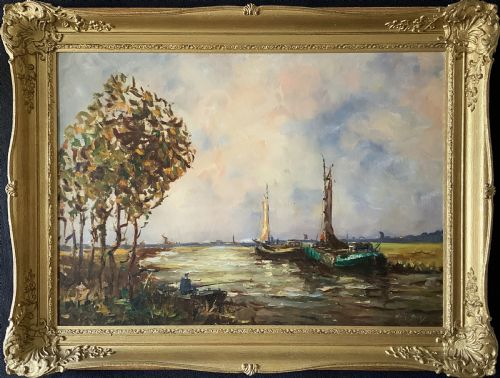
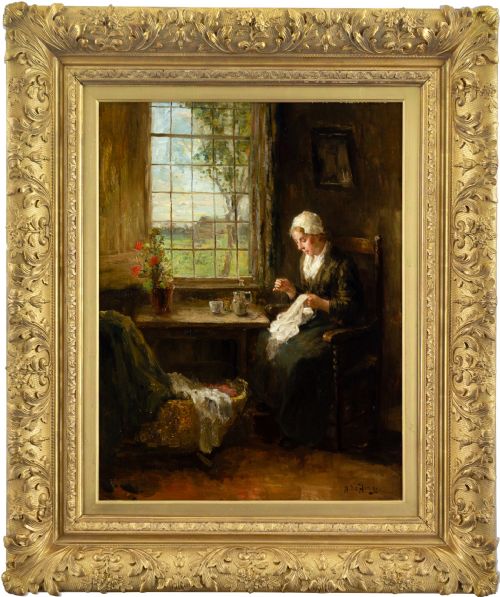
When you search for framed dutch impressionist artwork, you are looking at oil paintings, pastels and watercolours capturing everyday scenes, marine views and pastoral life. The pieces on this page span from the nineteenth century through the middle of the twentieth century, reflecting the enduring influence of the Hague School and related movements. Canvases and panels depict canalscapes, street scenes and quiet interiors rendered with loose, expressive brushwork.
The most common pieces you will meet here are early twentieth-century oil paintings on canvas, often housed in original gesso and gilt wood frames. These works showcase subjects such as windmills, sheep grazing and bustling city streets under muted northern skies. Makers and artists represented include Willem Bos, Bernard De Hoog and Willem Anton Alexander Knip.
What varies in quality
The distinction between ordinary and exceptional works rests upon the confidence of the brushwork and the handling of light across the canvas. Superior pieces capture atmosphere and movement with economy and precision, whereas lesser examples rely on formulaic repetition without personal observation.
Material preservation also sets works apart, particularly the stability of the oil paint, canvas and original gilt frame. Clean surfaces showing minimal past restoration and retaining their period frames command greater regard among collectors.
Framed Dutch Impressionist Artwork Retail Price Guide 2026
Typical asking prices for framed dutch impressionist artwork among the pieces listed under this phrase on Sellingantiques today, from the lower quarter to the upper quarter. They describe what is for sale here now, not the wider market.
Willem Bos·Bernard De Hoog·Willem Anton Alexander Knip·Jozef Israëls·Anthonij Anton Mauve·Frank Myers Boggs·David Adolph Constant Artz
The Framed Dutch Impressionist Artwork Glossary
- Hague School
- A group of nineteenth-century Dutch artists inspired by the realism of the Barbizon school who painted outdoors. They worked in muted palettes to capture the distinctive grey light of the Netherlands.
- Gesso
- A plaster-like mixture applied to wood frames to create a smooth surface for gilding. It provides the foundation for intricate moulded ornament.
- Impasto
- Paint applied thickly to a canvas or panel so that it stands out from the surface. This technique allows brush or palette knife marks to retain their physical shape and catch the light.
- Canvas
- Heavy woven fabric stretched across a wooden frame to serve as a support for oil painting. It remains the most prevalent medium for the works found here.
- Pastel
- A dry drawing medium consisting of powdered pigment and a binder. Artists use it on paper to achieve soft colour transitions and immediate texture.
Framed Dutch Impressionist Artwork: Frequently Asked Questions
What subjects appear in these paintings?
The subjects focus on everyday pastoral and domestic life, including canalscapes, marine views, sheep grazing and quiet interiors. Artists also recorded urban street scenes and coastal harbours under characteristic northern light.
These motifs reflect the naturalistic preoccupations of artists working in the Netherlands and surrounding regions during the late nineteenth and early twentieth centuries.
Are these works in their original frames?
Many pieces retain their period frames made of wood finished with gesso and gilt or gold leaf. These frames were selected to match the aesthetic of the painting.
Matching frames add historical context and complement the visual weight of the canvas.
How do I date an oil painting?
Dating relies on stylistic markers, artist biographical records, and the physical construction of the canvas and frame. Signatures and exhibition labels on the reverse also provide chronological evidence.
Evidence from the period points toward the nineteenth and early twentieth centuries as the primary eras for these works.
How do I care for an antique oil painting?
Keep the artwork away from direct sunlight, high humidity and dramatic temperature fluctuations to protect the canvas and paint layers. Dust the surface and frame gently with a soft, dry brush.
Avoid using liquid cleaners or household solvents on the paint or the gilt frame.