


Framed Cross Stitch
Framed cross stitch samplers and needlework panels preserve generations of personal handiwork behind glass in timber mouldings.
Framed Cross Stitch
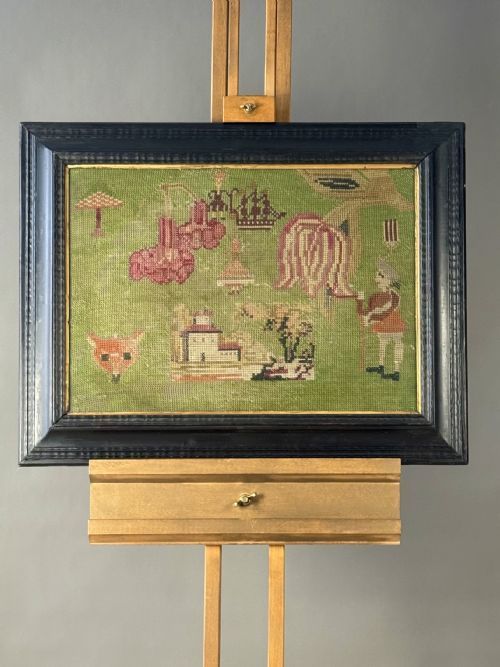
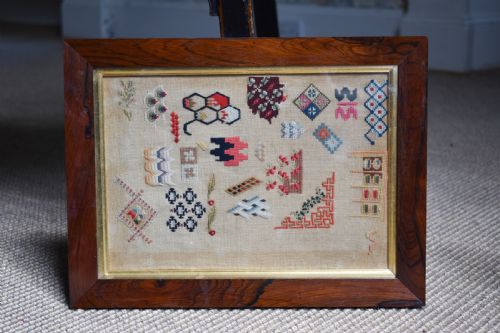
A framed cross stitch piece brings domestic needlework from past centuries into view as wall art. The selection here centres primarily on nineteenth century and Victorian examples, alongside earlier Georgian works.
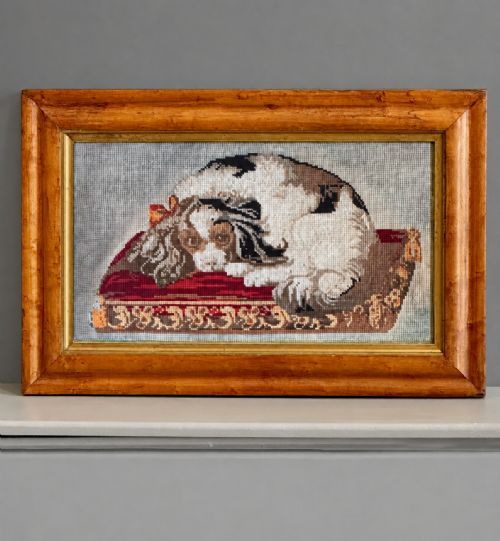
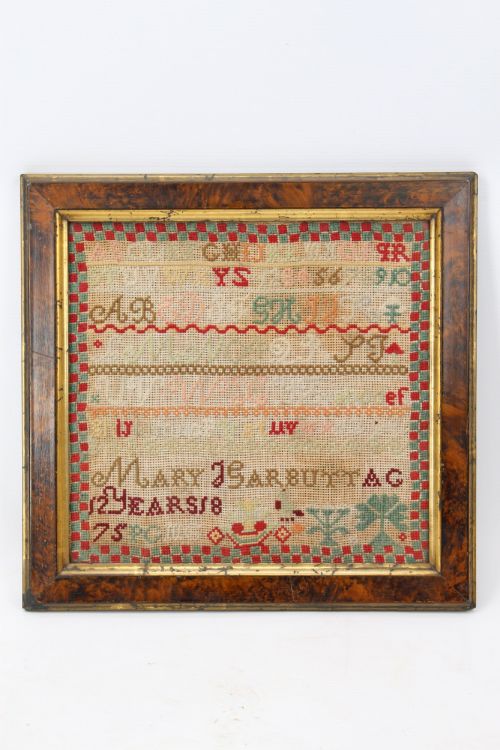
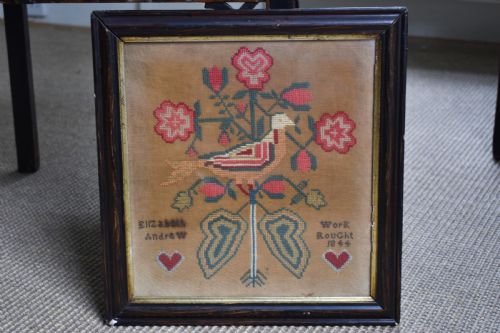
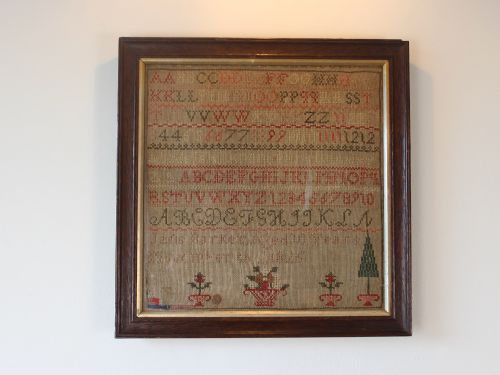
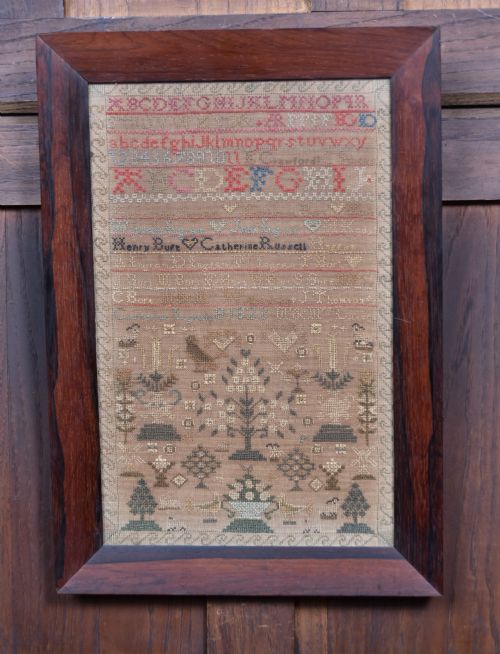
Most entries take the form of needlework samplers, displaying alphabets, numerals, moral verses, and names of young makers alongside decorative motifs. Alongside these traditional samplers appear wool work panels and Berlin wool work depictions of animals.
Makers often recorded their ages and dates of completion directly into the canvas, leaving personal records of girls and women in schools or homes. These textiles arrive protected behind glass within period wood frames, such as burr maple.
Materials and Construction
Needleworkers stitched coloured wools, silk threads, and plain threads onto woven linen grounds stretched across wooden supports. The choice of fibre dictated the texture and longevity of the pictorial or alphabetic design.
Framing protected these delicate textiles from atmospheric dirt and handling. Wood mouldings, particularly burr maple and simple timber frames, house the glass-fronted panels securely.
One Victorian Scottish sampler bravely records an intentional stitch error left behind by the young maker.
Judging Quality and Execution
Quality rests in the regularity of the stitching and the clarity of the composition. Finer threads and complex pictorial arrangements distinguish accomplished needlework from simpler schoolroom exercises.
The preservation of the textile ground and the originality of the frame influence the overall integrity of the piece. Clear lettering, well-maintained thread colours, and minimal fading elevate specific examples.
The Framed Cross Stitch Glossary
- Sampler
- A piece of canvas worked with various stitches, alphabets, and motifs to demonstrate needlework skill. These objects served as practice pieces and keepsakes for young makers.
- Berlin Work
- A style of coloured wool embroidery popular in the nineteenth century that used charted patterns printed on grid paper. This technique produced vivid depictions of animals and scenes.
- Linen
- A strong textile woven from flax fibres that served as the primary foundation fabric for early needlework. Its uniform weave allowed for precise counting of threads.
- Burr Maple
- A timber veneer showing distinctive knotty growths, highly prized for nineteenth-century picture frames. It provides a rich, mottled brown border around needlework panels.
Framed Cross Stitch: Frequently Asked Questions
How do I date an old sampler?
Many makers stitched their names, ages, and specific years directly into the composition. Style, lettering forms, and framing materials also offer clues for undated pieces.
Examining the reverse of the frame can reveal further evidence regarding the age of the mounting.
What materials were used for these textiles?
Needleworkers utilised linen as the primary fabric foundation for stitching. Coloured wools and silk threads formed the decorative alphabets and pictorial scenes.
Protective glass and wooden frames completed the construction to safeguard the fabric from damage.
Where should I hang needlework?
Textiles require placement away from direct sunlight to prevent the fading of silk and wool threads. Stable indoor humidity levels help preserve both the fabric and the wooden frame.
Wall space in studies or hallways provides suitable conditions for viewing these detailed panels.
What is Berlin work?
Berlin work is a style of embroidery executed with brightly coloured wools upon a canvas ground. It became particularly fashionable during the Victorian era for pictorial subjects.
These pieces often depict animals, such as spaniels, rendered with shaded wool threads.