
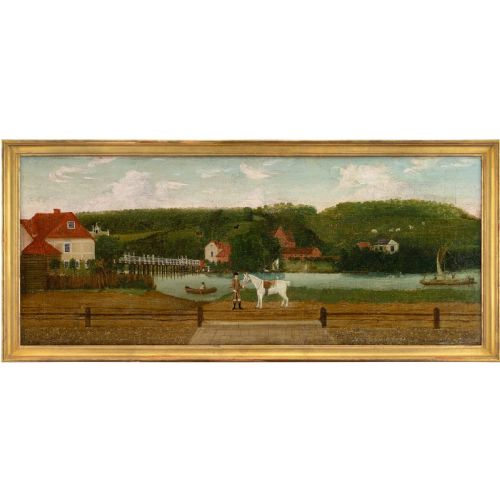


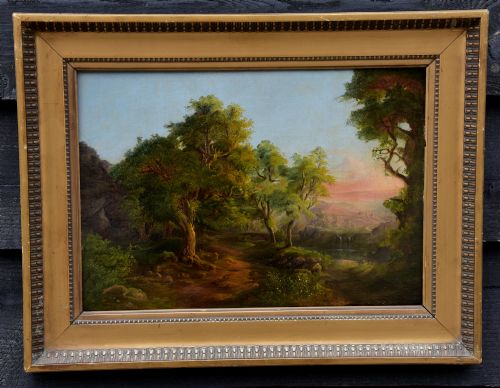
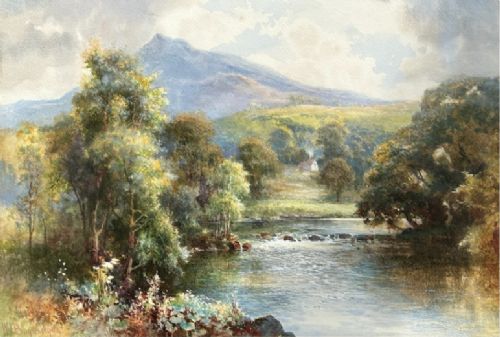

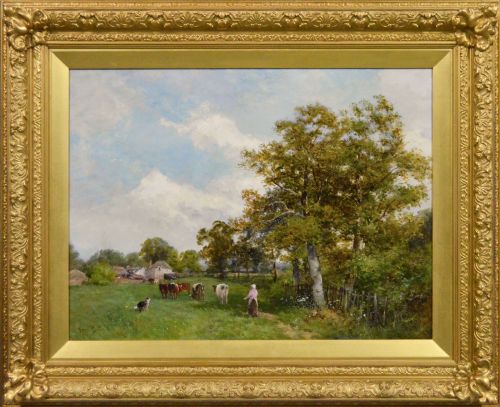


Framed Countryside Landscape Picture
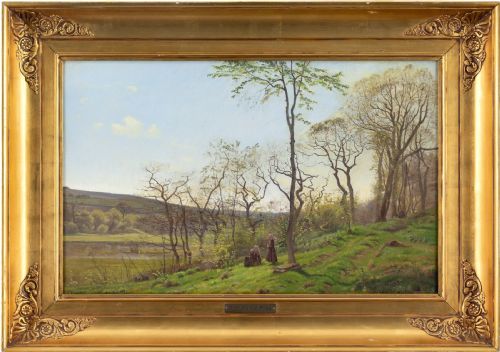
A framed countryside landscape picture brings the quiet of rural rivers, valleys and pastures directly onto a wall.
Framed Countryside Landscape Picture
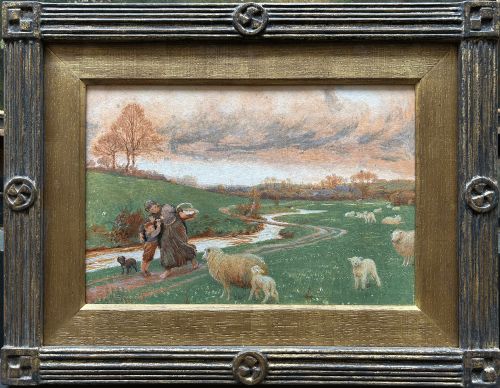
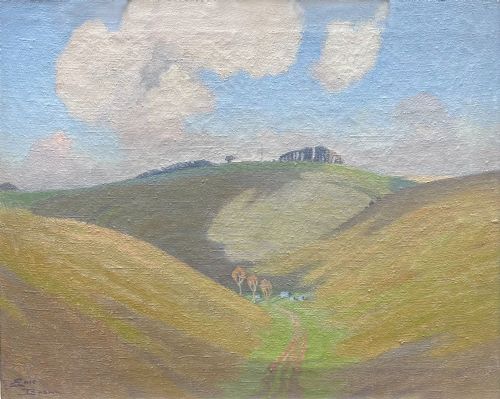
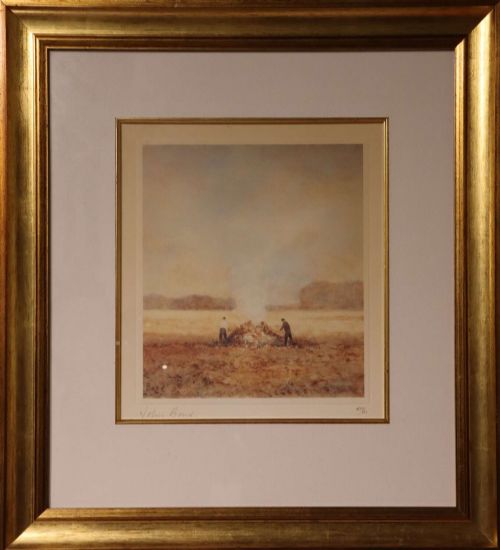
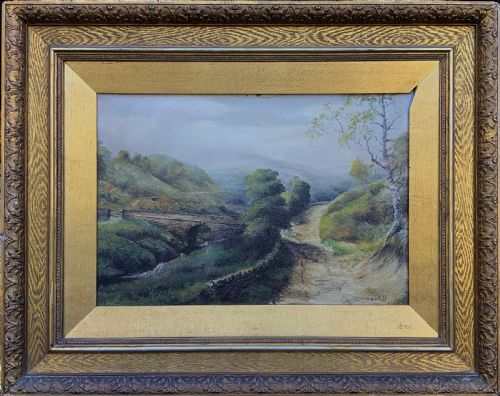
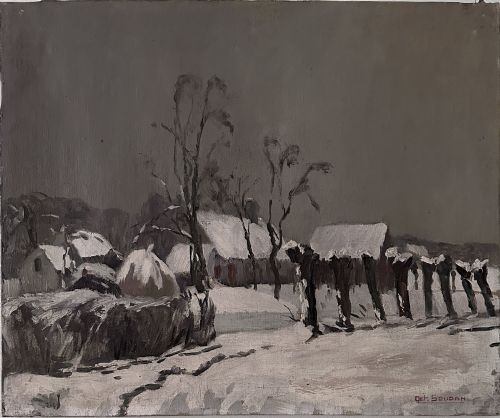
When someone searches for a framed countryside landscape picture, they encounter traditional oil and watercolour works spanning the nineteenth and twentieth centuries. These pieces typically depict British and European rural views, capturing rivers, woodland edges, cottages and agricultural life.
The selection on this page relies heavily on Victorian and Edwardian pastoral subjects alongside twentieth-century interpretations. Canvases, boards and watercolours on paper predominate, preserved within period wooden or gilt frames that complement the natural scenery.
Buyers find everything from expansive nineteenth-century river estates to intimate twentieth-century valley studies. Each work records a distinct rural locality, ranging from Welsh hills to Yorkshire harbours and West Country pastures.
Materials and technique
Artists painted these rural scenes using oil on canvas, oil on board, or watercolour on paper, applying pigments with brushes to build atmospheric depth. Oil mediums allowed for rich, layered textures in skies and foliage, while watercolours offered luminous washes for rivers and open skies.
Supports varied according to the period and scale, with stretched canvas and wooden panels supporting heavier oils, and stiff paper holding delicate watercolours. Giltwood and carved wooden frames were selected to enclose the compositions and protect the edges from damage.
Listings feature works created across the nineteenth and twentieth centuries, utilising oil, watercolour, and acrylic on canvas, board, and paper.
Variations in quality
Quality rests upon the artist's ability to render light, spatial depth and natural movement within the rural setting. Stronger pieces demonstrate confident brushwork and accurate proportion in figures, animals and architecture.
The condition of the paint surface and the originality of the frame influence the overall integrity of the piece. Works that retain their undisturbed primary support and period framing offer a more complete historical record.
William H Myers·William Joseph Boyes·David Bates·Harald Foss·Hubert Wellington·Charles Clair·Alfred George Morgan·Charles Walter Simpson·Charles Gregory·Samuel Timmins·Henry Charles Fox·Cuthbert Crossley·Arthur Tucker·Frederick Septimus Lewis·James Orrock·Johannes Philippus Galjaard·Giulio Cecchini·Walter J Watson·Robert Winchester Fraser
The Framed Countryside Landscape Picture Glossary
- Oil on canvas
- Pigment mixed with drying oil applied to a woven fabric support stretched over a wooden frame. This technique allowed artists to create rich textures and deep colour saturation.
- Watercolour
- Paint consisting of transparent pigment suspended in a water-based solution applied to paper. It relies on the white of the paper to provide luminosity and light.
- Giltwood
- Wood carved and coated with a thin layer of gold leaf or gold paint. It frequently forms the decorative outer boundary of traditional picture frames.
- Board
- A rigid flat panel, often wood or compressed material, used as a sturdy base for painting. It provides a firm surface that resists the flexing associated with stretched canvas.
Framed Countryside Landscape Picture: Frequently Asked Questions
How do I hang a heavy framed landscape?
Heavy framed paintings require secure wall anchors and sturdy picture wire attached firmly to the wooden frame stretcher. Ensuring the fixing matches the weight of the canvas prevents structural strain.
Position the picture at eye level away from direct sunlight and moisture to protect the pigments and the wooden frame over time.
Are watercolours more fragile than oil paintings?
Watercolours on paper are more sensitive to light exposure than oils on canvas because the paper and pigments can fade. Framing them behind glass provides essential protection against dust and atmospheric changes.
Oil paintings possess a tougher surface layer that tolerates ambient indoor environments better, though both benefit from stable temperatures.
How can I tell the period of a frame?
Period frames often display construction methods such as corner mitres joined with wooden splines and hand-carved gesso ornamentation. Older giltwood frames show genuine wear patterns and underlying red bole beneath the gold leaf.
Later replacement frames usually feature machine-cut mouldings and modern backing materials that differ significantly from historical examples.
What subjects are typical in these landscapes?
Common subjects include pastoral river scenes, livestock grazing in meadows, and rural cottages nestled among trees. Artists frequently recorded everyday agricultural tasks like ploughing fields or driving sheep along country lanes.
Coastal views, Welsh valleys, and woodland paths also feature prominently across nineteenth and twentieth-century works.