

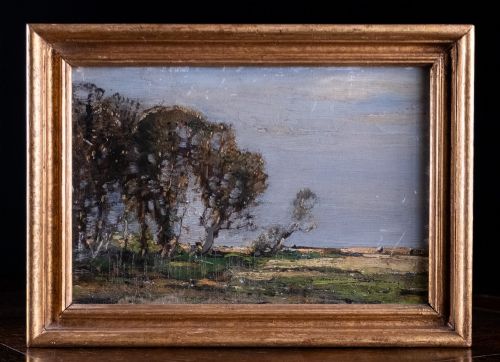
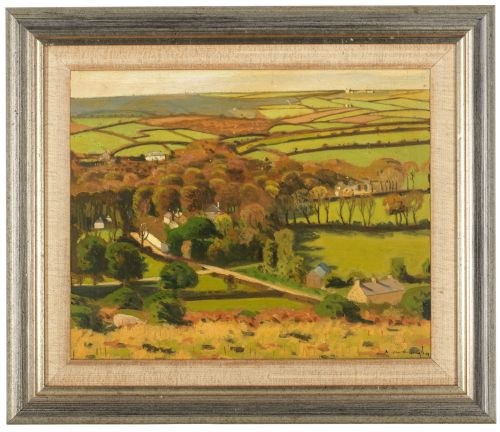
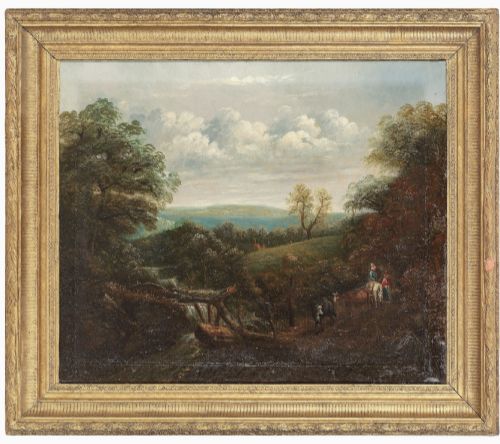
Framed Country Landscape Artwork
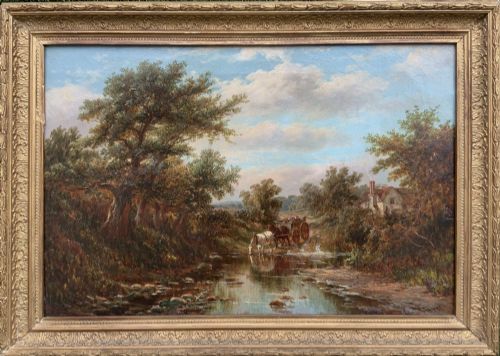
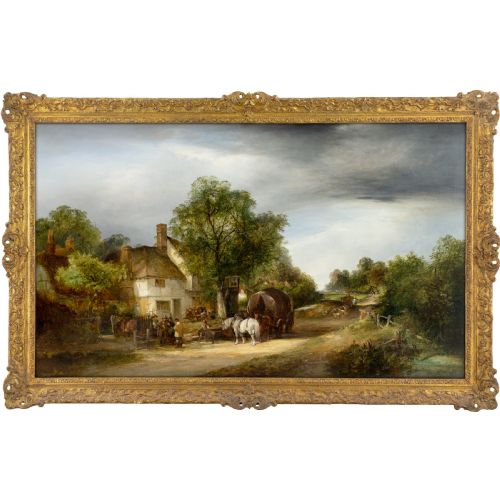
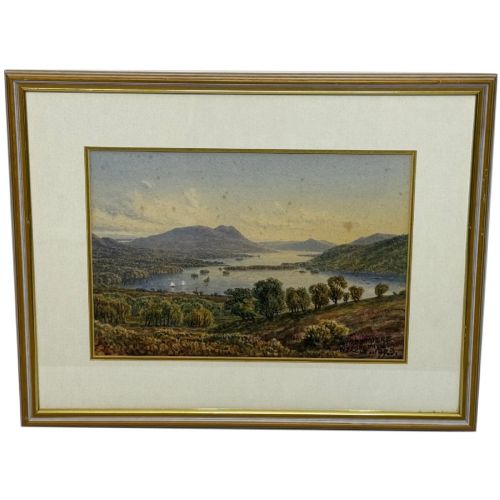
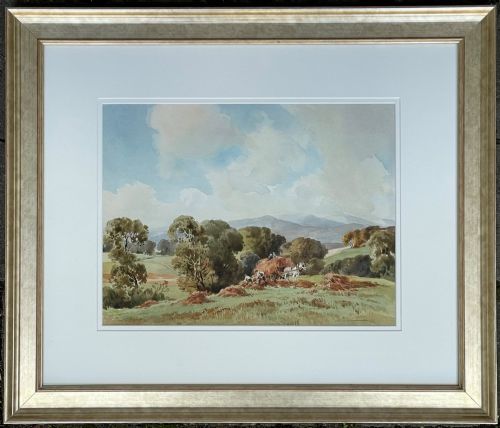
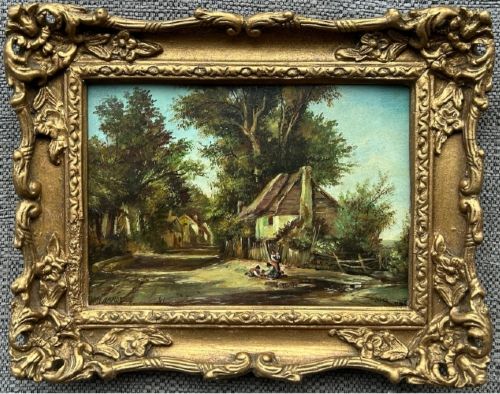
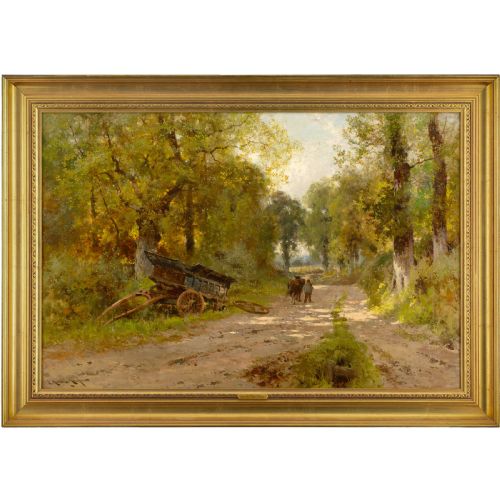
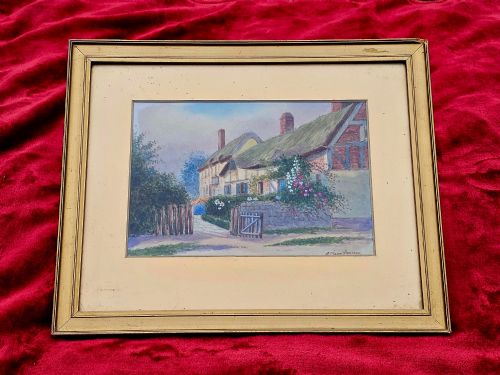
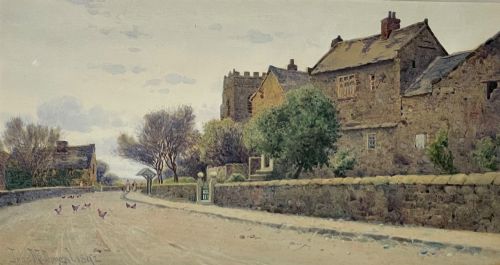
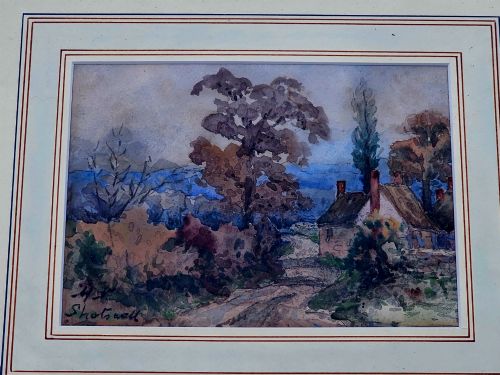
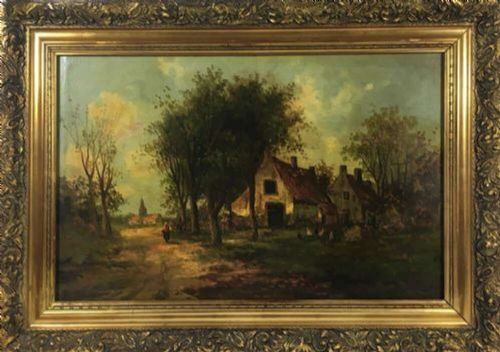
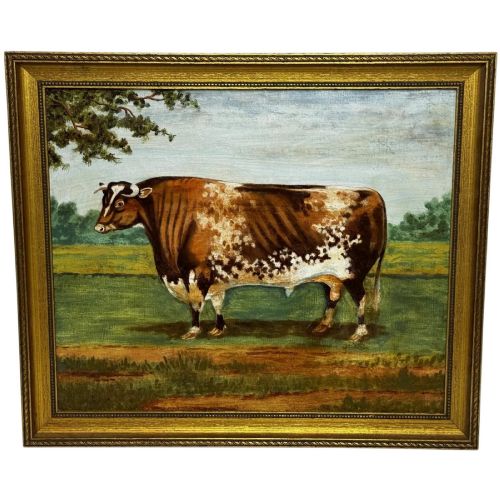
These framed country landscape artwork pieces bring rural fields, livestock and cottages indoors through oil and watercolour.
Framed Country Landscape Artwork
When you search for framed country landscape artwork, you encounter rural scenes captured across the nineteenth and twentieth centuries. The selection centres on oil paintings and watercolours depicting farmyards, cottages, rivers and working animals.
Most examples originate from British and European schools spanning the Victorian period to the mid-twentieth century. You meet depictions of harvest fields, cattle, and pastoral paths rendered by named artists and regional painters alike.
The formats range from intimate watercolours on paper to large oil paintings on canvas and panel. Each piece arrives within a period frame, typically wood or giltwood, completing the presentation of the rural subject.
Materials and technique
Artists painted primarily in oil or watercolour, applying pigment to canvas, paper, panel, card or board. Oil on canvas allows for rich texture and layered brushwork, while watercolour on paper achieves luminous washes of light.
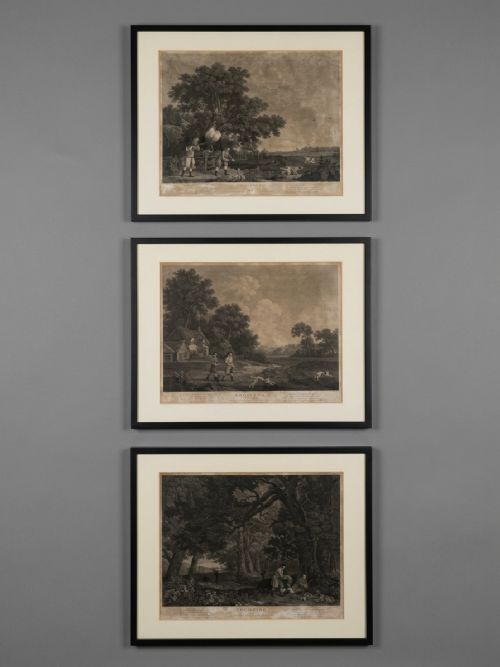
Support materials varied according to the medium and period, with card and wooden panels frequently utilised for smaller nineteenth-century studies. Etchings and ink drawings also appear, showing linear detail alongside tonal wash.
Protective framing relies on wood and giltwood enclosures, sometimes complemented by glass for watercolours and paper works. These frames secure the artwork while defining the perimeter of the rural scene.
Cattle, sheep and shire horses frequently wander into these fields, reminding viewers that rural art doubles as historical livestock census.
Factors of quality
Quality rests upon the handling of light, atmosphere and perspective by the artist. A stronger work captures the specific quality of afternoon sun, weather or seasonal change rather than relying on formulaic composition.
The skill evident in brushwork or watercolour wash distinguishes accomplished regional and academic painting from simpler decorative output. Details such as livestock anatomy, architectural accuracy in cottages, and spatial depth reveal the hand of a trained painter.
The harmony between the artwork and its period frame influences the overall integrity of the piece. Original or period-appropriate giltwood and wooden frames enhance the visual presence of the landscape.
Percy Lancaster·John Horace Hooper·John McDougal·Kershaw Schofield·Robert Morson Hughes·Arthur Gué·Robert John Hammond·Walter Heath Williams·Fred Lawson·Robert Thorne Waite·John Smith Atherton·Lucy Pratt·Thomas Sidney Cooper·Raymond Booth·Ernest Arthur Rowe·Frederick Walker·Frederick James Kerr·Sir Edwin Henry Landseer·George Wright·Herbert Royle·Rene Levrel
The Framed Country Landscape Artwork Glossary
- Watercolour
- A painting method where fine pigment is suspended in water-based solution, typically applied to paper. This medium produces translucent washes and delicate tonal shifts.
- Oil on Canvas
- A technique utilising pigments bound in drying oil applied to stretched fabric. This combination permits deep colour saturation and visible brush texture.
- Giltwood
- Wood carved and coated with a thin layer of gold leaf or metallic gilt. It frequently frames nineteenth-century paintings to catch and reflect light.
- Pastel on Paper
- A dry medium consisting of powdered pigment rolled into sticks, applied directly to paper supports. It creates soft, velvety textures and subtle colour blending.
- School
- A group of artists working in a similar style, region or period, often sharing techniques. Attributions to a specific school indicate regional or stylistic influence.
Framed Country Landscape Artwork: Frequently Asked Questions
How do I care for framed country landscape artwork?
Keep paintings away from direct sunlight and damp environments to protect both the canvas and the paper supports. Maintain stable indoor temperatures to prevent wood warping and pigment cracking.
Dust wooden and giltwood frames gently with a dry cloth. Avoid using liquid cleaners on painted surfaces or exposed canvas.
How can I tell the period of a landscape painting?
Examine the materials, stretcher bars, canvas weave and framing style for clues regarding age. Pigment types and paper characteristics also help narrow down the date of creation.
Signatures, dates, and handwritten inscriptions on the reverse often provide direct evidence of the artist and year. Comparing the subject dress and agricultural tools to historical eras confirms the timeframe.
Where should I hang these landscape artworks?
Display them on interior walls away from moisture sources like kitchens and bathrooms to protect the paper, canvas and wood. Position them at eye level to appreciate the brushwork and composition.
Consider room lighting so that natural or artificial sources illuminate the surface without causing glare on the glass or varnish.