
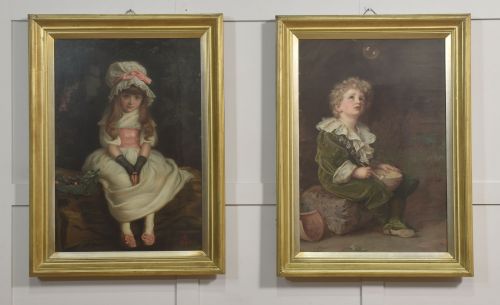
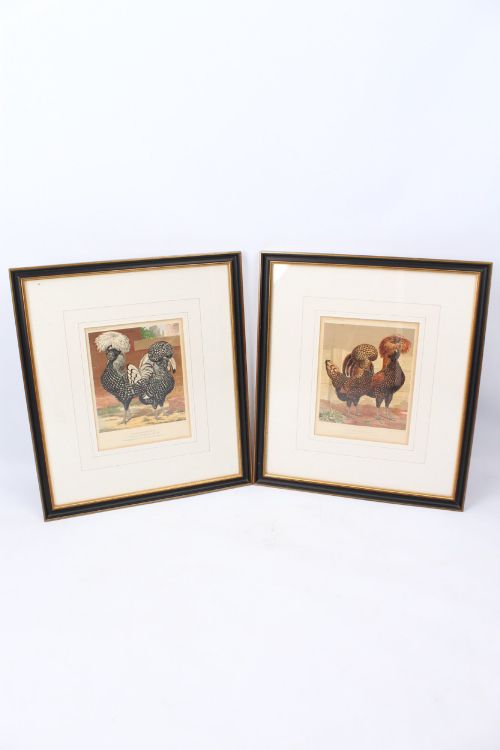
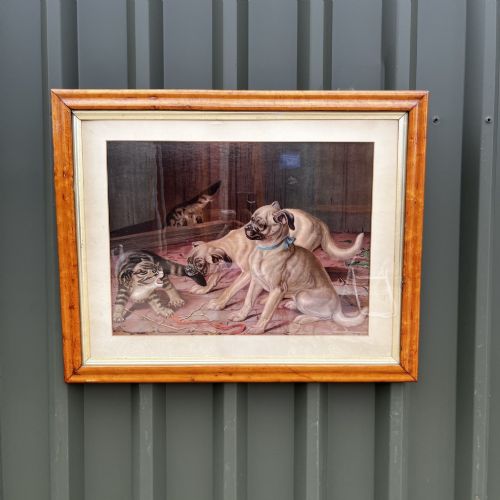
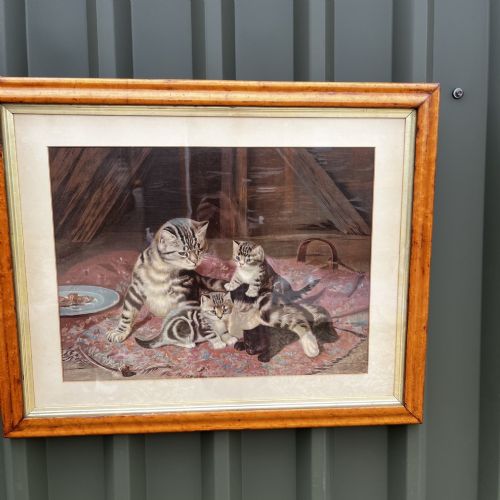



Framed Chromolithograph Print
These framed chromolithograph print examples bring rich Victorian and Edwardian colour to your walls through layered lithographic inks preserved behind glass.
Framed Chromolithograph Print
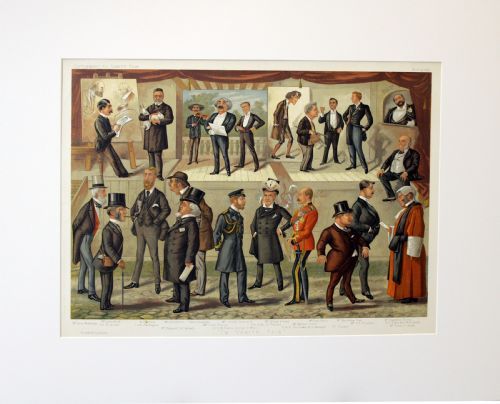
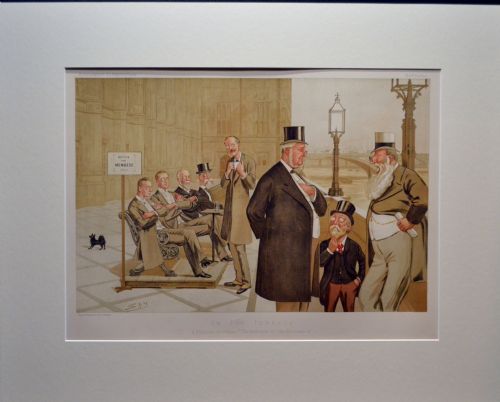
When you search for a framed chromolithograph print, you encounter multi-coloured commercial and fine art imagery produced primarily during the nineteenth and early twentieth centuries. These works span domestic advertising ephemera, periodical supplements such as Vanity Fair, and reproductive fine art.
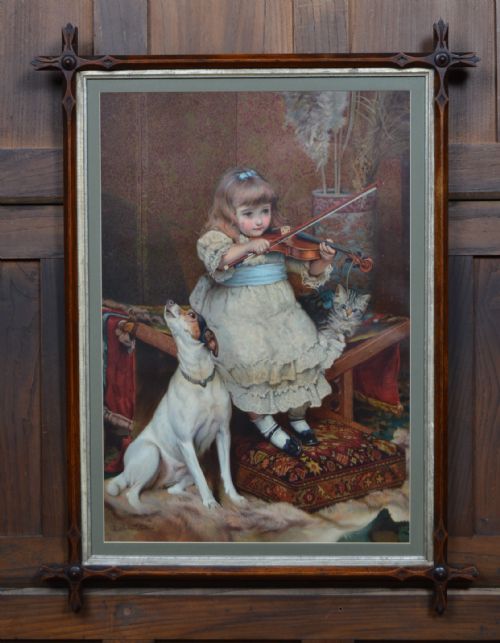
The selection here encompasses Victorian and Edwardian subjects ranging from animal studies and botanical plates to satirical portraiture and advertising icons. They arrive mounted and housed behind glass within period wood frames, often retaining original gilt or carved embellishments.
What varies in quality
The fidelity of the colour registration distinguishes finer impressions from simpler commercial outputs, as precise alignment preserves crisp outlines across complex multi-plate compositions. Faded pigments or heavy dot patterns under close inspection indicate lesser reproductive methods.
The integrity of the framing materials also elevates a piece, with original period oak frames, intact gold leaf, and authentic mount boards commanding greater appreciation than later replacements.
The selection includes works attributed to Victorian, Edwardian, and nineteenth-century French artistic traditions.
Horatio Henry Couldrey·Charles Burton Barber·Frank Algernon Stewart
The Framed Chromolithograph Print Glossary
- Chromolithograph
- A multi-coloured print produced by applying a sequence of lithographic stones or plates, each bearing a different ink colour. This method created vibrant reproductions before modern offset printing became widespread.
- Vanity Fair print
- A satirical portrait published as a periodical supplement, frequently featuring caricatures by artists such as Spy. These double-page spreads remain sought after by collectors of political and social history.
- Lithograph
- An image printed from a flat stone or metal plate treated to repel ink everywhere except where the drawing exists. It forms the technical foundation for chromolithography.
- Gilt
- A thin layer of gold leaf or gold paint applied to the surface of wood frames. It provides a luminous border that complements the saturated colours of the print within.
Framed Chromolithograph Print: Frequently Asked Questions
How do I care for my framed chromolithograph print?
Keep the piece away from direct sunlight to prevent the multi-coloured lithographic inks from fading over time. Maintain a stable indoor environment to protect the historic paper and wooden frame from moisture.
Dust the glass gently with a soft dry cloth and avoid using liquid cleaners directly on the frame or exposed paper edges.
What subjects appear in these antique prints?
The subjects range widely from satirical magazine character studies and sporting scenes to domestic animal portraits and botanical illustrations. Advertising subjects also feature prominently among nineteenth-century examples.
Many reflect the popular tastes and social interests of the Victorian and Edwardian eras.
Are these prints original period pieces?
The listings comprise authentic nineteenth- and early twentieth-century print productions housed in period framing materials. Each item reflects the specific printing technology and aesthetic standards of its respective decade.
Examine the paper texture and ink application to appreciate the traditional lithographic process used in their creation.
How do I distinguish a chromolithograph from a standard print?
Under magnification, a chromolithograph reveals a continuous pattern of blended ink layers rather than the uniform dot matrix found in modern halftone reproductions. Each hue was laid down by a separate printing pass.
This overlapping build-up of opaque and translucent inks gives the surface a distinctive depth and richness.