



Framed Chromolithograph Art
Framed chromolithograph art offers rich multi-coloured printing from the nineteenth and early twentieth centuries, bringing vibrant historic illustration directly to your walls.
Framed Chromolithograph Art
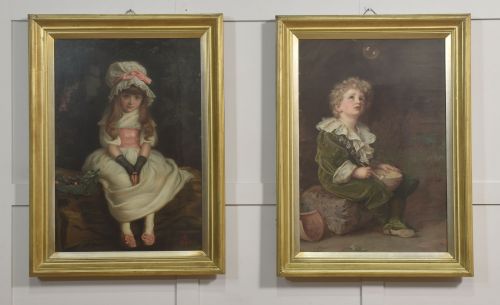
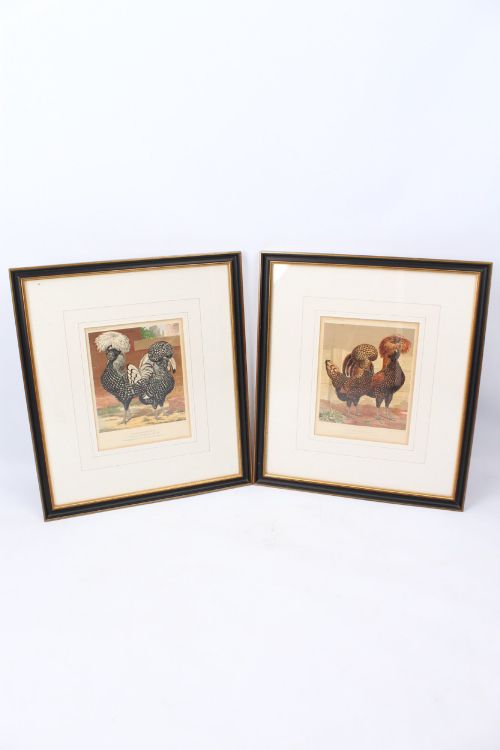
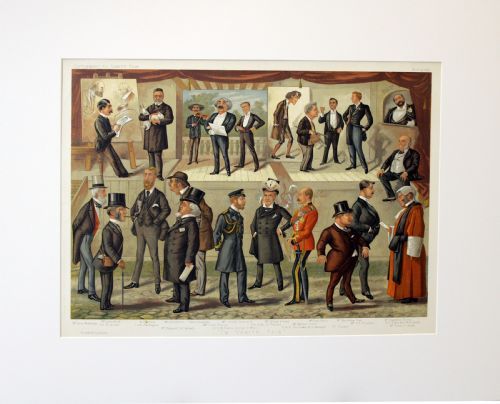
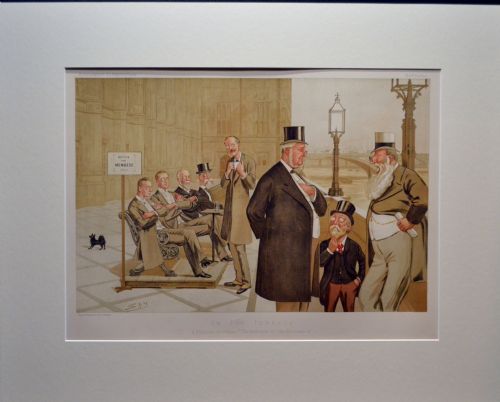
When you search for framed chromolithograph art, you encounter a distinct category of historic wall decoration originating mostly from the nineteenth century and the Edwardian era. These pieces span commercial advertising, satirical portraiture, sporting scenes, and botanical studies.
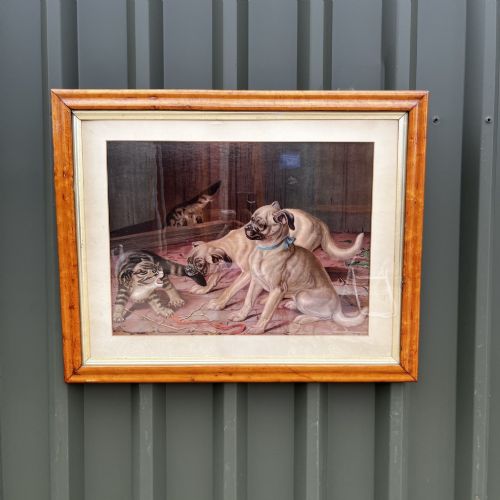
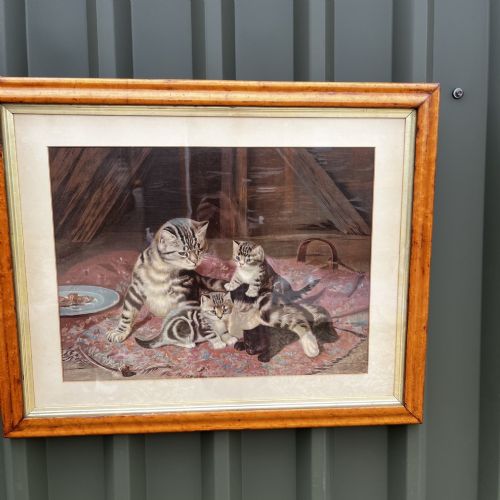
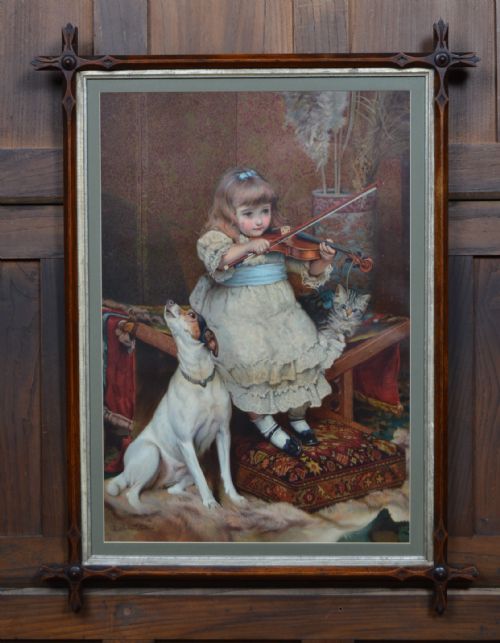
The selections on this page are dominated by Victorian and Edwardian works, including Pears soap advertisements, Vanity Fair caricatures, and animal subjects by artists such as Horatio Henry Couldrey and Charles Burton Barber. You also meet Renaissance revival subjects and botanical engravings.
These works typically arrive behind glass within wooden, oak, or gilt frames, often accompanied by mount boards. They preserve the bold hues and detailed register marks characteristic of multi-stone lithographic printing.
How they were made
Production relied on lithography, using separate limestone blocks or metal plates for each distinct colour applied to paper. Artisans meticulously aligned successive ink layers to build up a rich, painterly palette.
Finished prints were secured beneath glass within wooden frames, frequently incorporating gold leaf, gilt finishes, or carved details. Mount boards were utilised to separate the fragile paper surface from the protective glass.
The inventory records distinct artistic categories, including British sporting art, French nineteenth-century scenes, and Pears soap advertising.
What varies in quality
Quality rests in the precision of the colour separation and the brilliance of the surviving ink tones across the paper. Finer examples display crisp registration without bleeding between hues, preserving the intended depth of the original artwork.
The framing contributes significantly to the overall standard, distinguishing simple timber surrounds from elaborately carved gilt or gold leaf frames. The preservation of the original paper and the stability of the mount board determine the longevity of the piece.
Horatio Henry Couldrey·Charles Burton Barber·Frank Algernon Stewart·House of Wentzel Wissembourg
The Framed Chromolithograph Art Glossary
- Chromolithograph
- A multi-coloured print produced through the application of several lithographic stones, each bearing a different ink colour.
- Lithograph
- An image printed from a flat stone or metal plate treated to repel and accept ink in designated areas.
- Gilt
- A thin layer of gold or gold-like material applied to wooden frames to provide a brilliant metallic finish.
- Mount board
- Heavy paperboard placed around the print inside the frame to prevent the paper from touching the glass directly.
- Chrystoleum
- A historic technique where a coloured print is made transparent, applied to glass, and hand-painted from behind.
Framed Chromolithograph Art: Frequently Asked Questions
What is a chromolithograph?
A chromolithograph is a planographic print created using multiple limestone blocks or plates, with a separate stone dedicated to each individual ink colour.
This method allowed publishers to produce vibrant, multi-coloured reproductions of paintings and illustrations for popular consumption during the nineteenth century.
How do I identify Vanity Fair prints?
Vanity Fair prints typically feature satirical caricatures of notable Victorian and Edwardian public figures, often accompanied by biographical text on the reverse.
Many of these plates were issued as double-page spreads in the weekly magazine and are signed with pseudonyms such as Spy.
How should I hang framed prints?
Hang these framed paper artworks away from direct sunlight to prevent the coloured inks and paper supports from fading over time.
Ensure they are displayed in rooms with stable humidity levels to protect the wood frames, glass, and underlying paper from moisture damage.
What is the difference between a lithograph and an engraving?
A lithograph relies on a chemical flat-surface printing process using grease and water on stone or metal, resulting in smooth tonal areas.
An engraving involves cutting lines directly into a metal plate with a sharp tool, producing crisp, linear details when pressed into paper.