
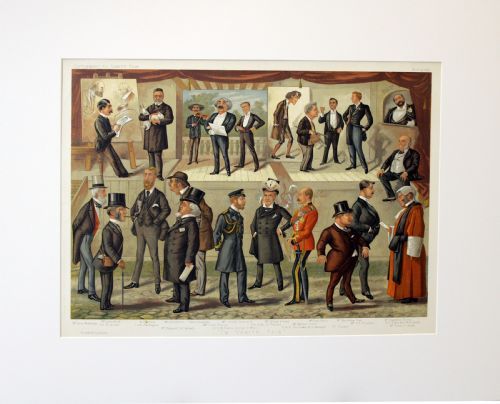


Vintage Satirical Paper Print
These vintage satirical paper print pieces capture sharp social and political wit across centuries, offering collectors a direct window into historical commentary.
Vintage Satirical Paper Print
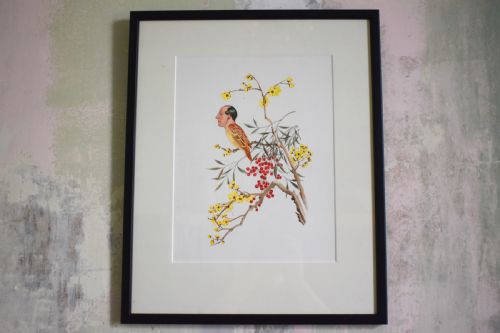
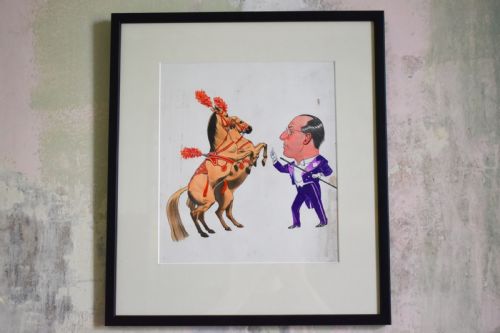
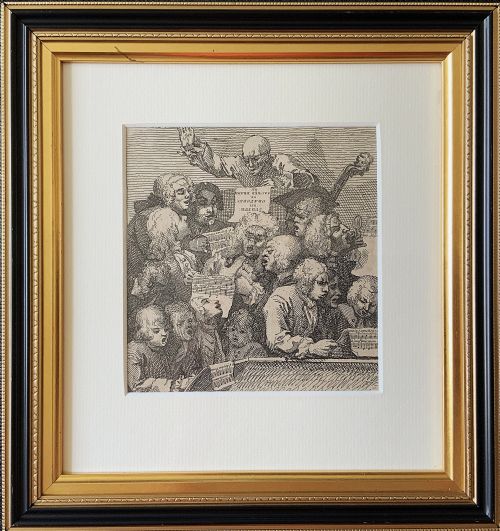
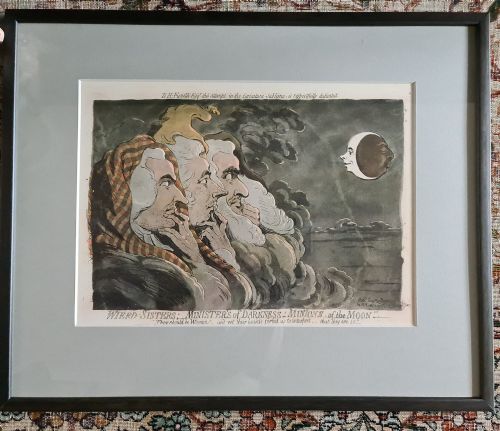
A vintage satirical paper print spans centuries of social commentary, political critique, and caricature. Buyers searching this phrase encounter works ranging from eighteenth-century copper engravings to twentieth-century chromolithographs and watercolour cartoons.
Most examples arrive framed, utilising mount board and glass to protect fragile paper surfaces. Collectors find everything from individual Vanity Fair caricatures to complete series of historical engravings.
Materials and Techniques
These works rely on traditional printmaking and illustration methods on paper, utilising copper engraving, etching, and chromolithography. Artists applied ink and watercolour pigment by hand to enhance the visual impact of the caricature.
Framing materials commonly include wood and glass, paired with mount board to preserve the delicate paper sheets. The physical construction ranges from simple nineteenth-century frames to more recent protective mountings.
The selection includes styles ranging from Georgian satire and Victorian caricature to American political prints and art deco illustration.
Markers of Quality
Quality rests upon the clarity of the line work, the richness of the ink or watercolour pigment, and the preservation of the paper sheet. Early impressions from copper plates retain crisp detail that later reprints lose.
The integrity of the original paper surface, free from excessive fading or damage, dictates the standing of a piece. Complete portfolios and genuine period colouring elevate the desirability of individual prints.
William Hogarth·E.L. Riepenhausen·Thomas Worth
The Vintage Satirical Paper Print Glossary
- Chromolithography
- A planographic printing technique used to produce multicoloured images. It relies on multiple lithographic stones, one for each colour applied.
- Copper engraving
- A meticulous intaglio process where an artist cuts lines directly into a copper plate with a burin. The resulting incisions hold the ink for transfer to paper.
- Etching
- A method where acid bites lines into a metal plate prepared with an acid-resistant ground. This technique allows for fluid, expressive marks compared to direct engraving.
- Mount board
- Heavyweight paperboard used to frame and support works on art. It separates the fragile paper print from direct contact with the glass.
- Watercolour pigment
- Finely ground colour particles suspended in a water-soluble binder. Artists applied these washes by hand to monochrome prints for added vibrancy.
Vintage Satirical Paper Print: Frequently Asked Questions
What is a vintage satirical paper print?
These works are historical illustrations, engravings, and lithographs created to mock politicians, social trends, and public figures. They served as early mass media commentary before modern digital satire.
Today, collectors preserve them as windows into past cultural attitudes and early graphic art traditions.
How should I hang these prints?
Keep framed pieces away from direct sunlight to prevent the ink, watercolour pigment, and paper from fading over time. Stable indoor humidity protects the delicate paper from warping.
Ensure the glass does not touch the surface of the print directly by using proper mount board.
Are these prints original period pieces?
The inventory includes genuine eighteenth-century copper engravings, nineteenth-century chromolithographs, and early twentieth-century illustrations. Each listing reflects the specific era of its production.
Examine the paper quality, printing technique, and period style to understand the age of the work.
How do I identify different print periods?
Eighteenth-century examples often display plate marks from copper engravings, while Victorian pieces frequently utilise chromolithography for vibrant colour. Twentieth-century works introduce distinct art deco illustration styles and watercolour cartoons.
Paper texture and framing conventions also offer clues regarding the date of creation.