





Framed Cherub Wall Art
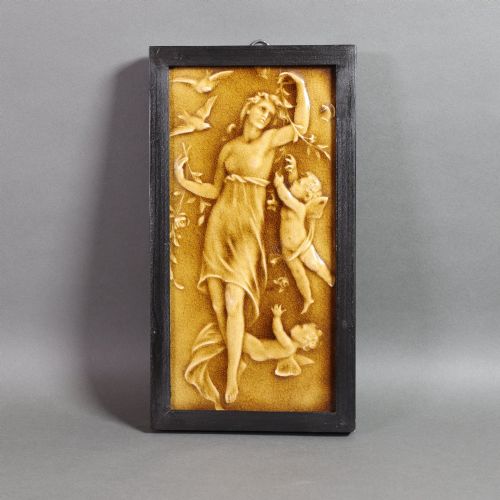
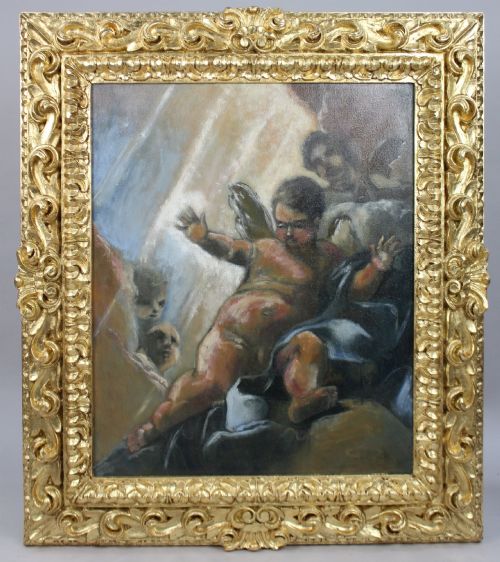
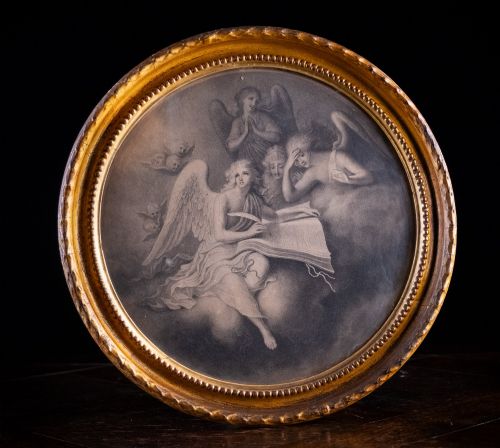
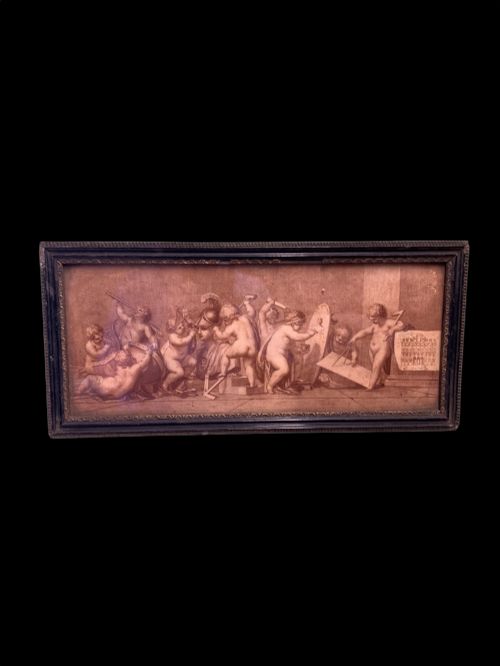
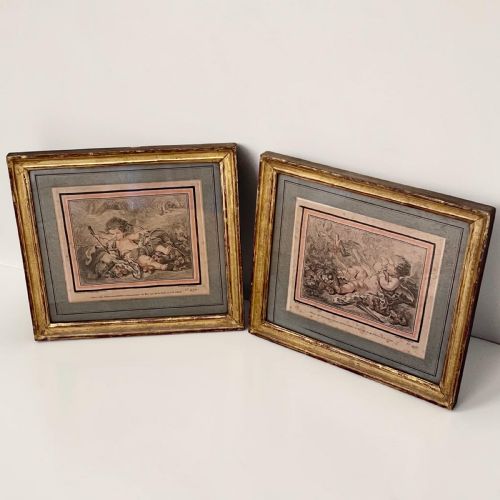
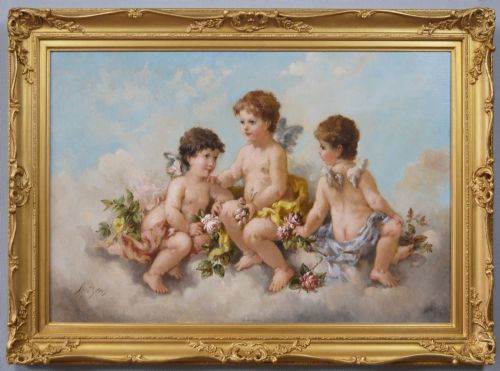
Framed cherub wall art brings classical imagery and putti motifs into interiors through oil paintings, engravings, and relief plaques.
Framed Cherub Wall Art
Framed cherub wall art encompasses oil paintings, engravings, and relief plaques depicting winged figures, putti, and angels. These decorative works draw upon historical periods ranging from the seventeenth century through to the Edwardian era and mid-twentieth century. Buyers encounter compositions influenced by Italian Baroque, French Rococo, and Neoclassical styles.
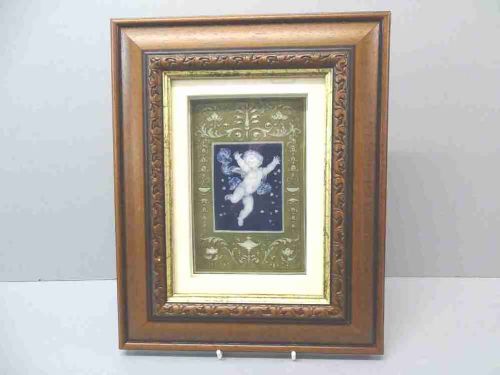
The pieces on this page lean heavily towards oil on canvas and framed wall plaques executed in wood and giltwood. Examples span intimate eighteenth-century engravings after French designers to nineteenth-century Italian school canvases and Arts and Crafts ceramic reliefs. Each object preserves a classical artistic vocabulary focused on mythological and religious motifs.
How they were made
Makers utilised traditional canvas supports, oil pigments, and paper for engravings, paired with carved wooden and giltwood frames finished with gold leaf. Relief plaques incorporate ceramic and pate-sur-pate techniques, building up layered porcelain designs against contrasting backgrounds.
Carving and gilding techniques define the presentation of these works, particularly in frames designed to complement the period aesthetic of the central artwork. Printmakers employed engraving plates on paper, while painters layered oils to capture the flesh tones and drapery characteristic of putti and angel subjects.
Listings feature works spanning from the seventeenth century through to the nineteen-sixties, incorporating oil on canvas, wood, glass, and gold leaf.
What varies in quality
The depth of detail in the painting or engraving determines the distinction between standard decorative pieces and finer works. Masterly handling of anatomy, expression, and drapery in the figures separates skilled studio output from basic production.
The integrity and period compatibility of the frame influence the overall standard of the piece. Hand-carved giltwood frames with original gold leaf sit at the upper end of the range, whereas later or replacement mouldings alter the character of the object.
Jean Baptiste Isabey·Charles Augustus Henry Lutyens·Orsola Maddalena Caccia·Reginald Robert Tomlinson
The Framed Cherub Wall Art Glossary
- Putti
- Depictions of chubby, winged male infants, often mistaken for cherubs in classical art. They appear frequently in Renaissance and Baroque compositions.
- Giltwood
- Wood that has been covered with a thin layer of gold leaf or gesso and gold paint. This finish is common on period frames.
- Pate-sur-pate
- A ceramic decorating method where liquid clay is painted in successive layers onto a dark body. This builds up a cameo-like relief effect.
- Engraving
- A printmaking process where an artist cuts an image into a metal plate using a burin. The inked lines transfer to paper under pressure.
Framed Cherub Wall Art: Frequently Asked Questions
How do I hang heavy framed paintings safely?
Heavy oil paintings in carved giltwood frames require wall anchors and screws suited to your wall type, rather than standard picture hooks.
Ensure the hanging wire or D-rings on the reverse are securely fastened to the wooden frame stretcher rather than the moulding alone.
What is the difference between a cherub and a putto?
Cherubs derive from biblical descriptions with multiple wings and faces, whereas putti originate from classical mythology as secular winged infants.
Art historians generally use putto for the playful child figures seen in Renaissance and Baroque art, though the terms merge in common usage.
How should I clean antique giltwood frames?
Dust giltwood frames gently with a soft, dry brush to remove surface particles without disturbing the delicate gold leaf finish.
Avoid all water, liquid cleaners, and chemical solvents, as moisture lifts historical gilding from the underlying gesso and wood.
Where should I place wall plaques in a room?
Wall plaques benefit from placement at eye level in well-lit areas away from direct sunlight, which fades oil pigments and paper.
Keep ceramic and pate-sur-pate plaques away from high-moisture zones like kitchens or unventilated bathrooms to protect the body and glaze.