


Rococo Style Cherub Painting
These rococo style cherub painting works and sculptural pieces capture playful putti in elaborate revivalist settings.
Rococo Style Cherub Painting
When you search for rococo style cherub painting, you encounter both oil paintings on canvas and painted porcelain depicting winged figures. The works appearing here span the eighteenth century and subsequent revival periods through the early twentieth century.
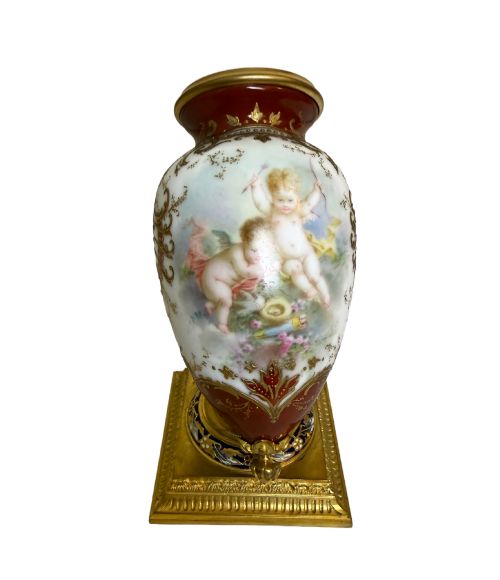
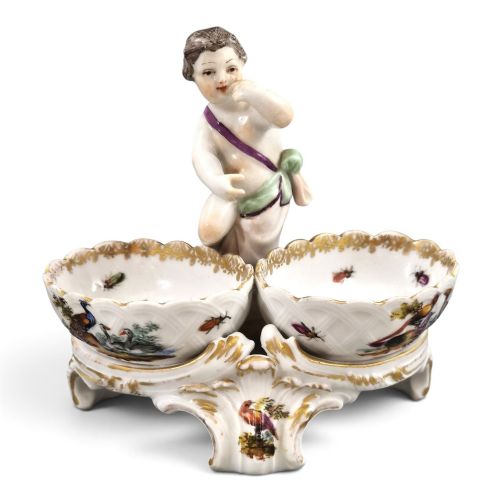
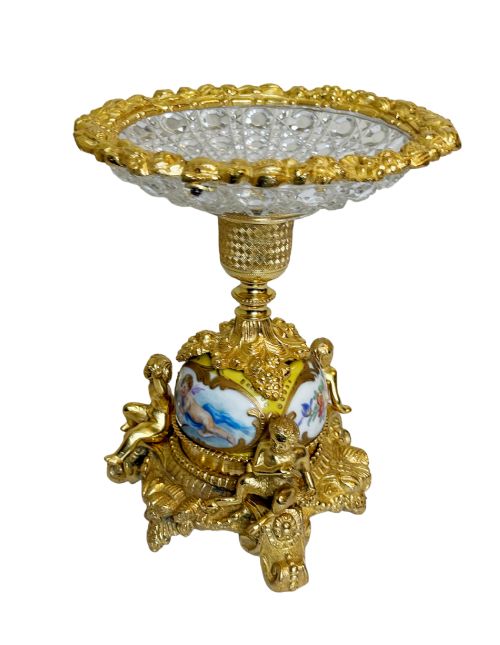
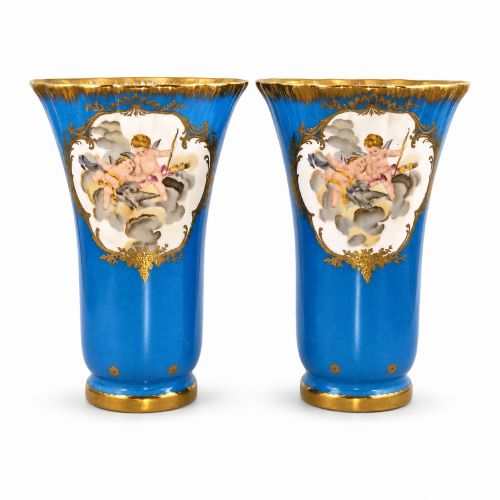
Oil paintings portray cherubs and putti in classical or allegorical scenes, whilst related decorative objects combine painted porcelain and gilt bronze. These pieces range from framed canvases to centrepieces, vases, and salt cellars featuring modelled cherubs.
The physical objects frequently adopt French Rococo and Victorian Rococo Revival forms, showing asymmetrical scrolls and gilded mounts. Buyers typically find nineteenth century porcelain figures and oil paintings produced in continuation of eighteenth century aesthetics.
Materials and construction methods
The material evidence demonstrates a clear division between oil on canvas paintings and modelled porcelain or ceramic artefacts. Painters applied oil pigments to canvas supports, while porcelain pieces involved hand-painted details upon fired ceramic bodies.
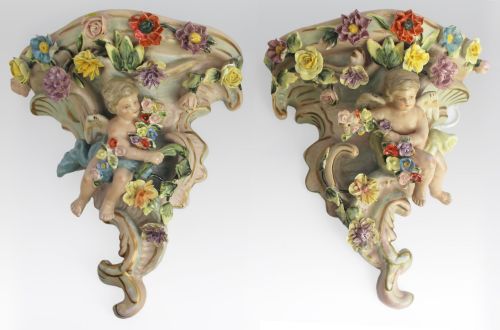
Metalwork components incorporate gilt bronze, ormolu, and gold leaf to accent porcelain vessels, vases, and wall brackets. These gilded mounts and fixtures complement the painted surfaces through cast and chased decorative detailing.
Cherubs frequently appear wrestling with goats or balancing precariously on giant seashell vessels.
Factors distinguishing quality across the range
The integration of materials determines the refinement of decorative objects, particularly where porcelain meets gilt bronze or ormolu mounts. Finer pieces demonstrate harmonious proportion between the painted or modelled figures and their supporting frames or bases.
Sevres·Meissen·KPM Berlin·Samson Paris·Schierholz·Dresden·Charles Augustus Henry Lutyens
The Rococo Style Cherub Painting Glossary
- Putto
- A plump, naked male child figure often depicted in classical art, frequently winged and interchangeable with the term cherub.
- Ormolu
- Gilded bronze used for mounts on furniture, porcelain, and decorative objects during the eighteenth and nineteenth centuries.
- Gilt
- A thin layer of gold applied to the surface of wood, metal, porcelain, or stone.
- Comport
- An ornamental dish or bowl raised on a stem, used for serving fruit or sweets on a dining table.
- Corbel
- A structural or decorative bracket projecting from a wall to support a weight.
Rococo Style Cherub Painting: Frequently Asked Questions
What distinguishes an oil painting from a porcelain piece?
Oil paintings utilise pigments on canvas to depict pictorial scenes of cherubs. Porcelain pieces involve ceramic forms with hand-painted enamel decoration.
Both categories fall under the stylistic umbrella of the revival periods represented here.
How do nineteenth century revival pieces differ from original eighteenth century works?
Nineteenth century revival pieces adopt the ornamentation, asymmetrical scrollwork, and motifs of the earlier period. They utilise nineteenth century manufacturing techniques and porcelain bodies.
Examination of the paste, gilding, and canvas helps differentiate the production era.
Where were these porcelain cherub figures and centrepieces displayed?
Owners placed these decorative objects on mantelpieces, side tables, and as dining table centrepieces. They served as ornamental displays within drawing rooms and formal reception spaces.
Wall brackets and corbels were fixed directly to walls to support smaller porcelain figures.
What is the significance of gilt bronze mounts?
Gilt bronze and ormolu mounts provided structural enhancement and ornate framing for porcelain vessels. They matched the opulent aesthetic favoured in French Rococo and revival interiors.
Craftsmen cast and chased the metal to complement the curves of the porcelain.