


Framed Cathedral Art
Framed cathedral art brings historic ecclesiastical architecture into domestic interiors through oils, watercolours, and engravings spanning multiple centuries.
Framed Cathedral Art
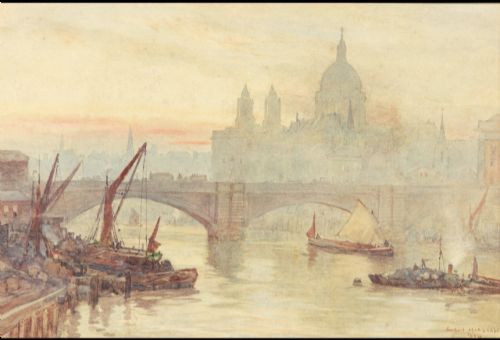
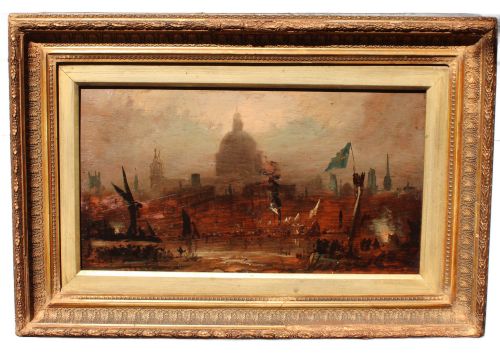
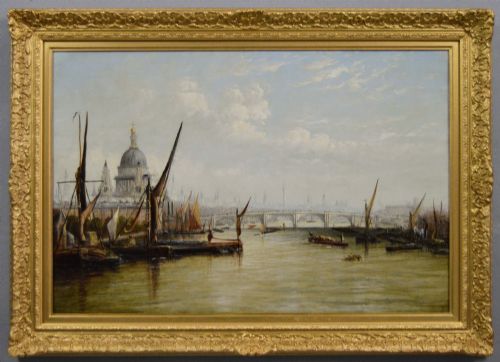
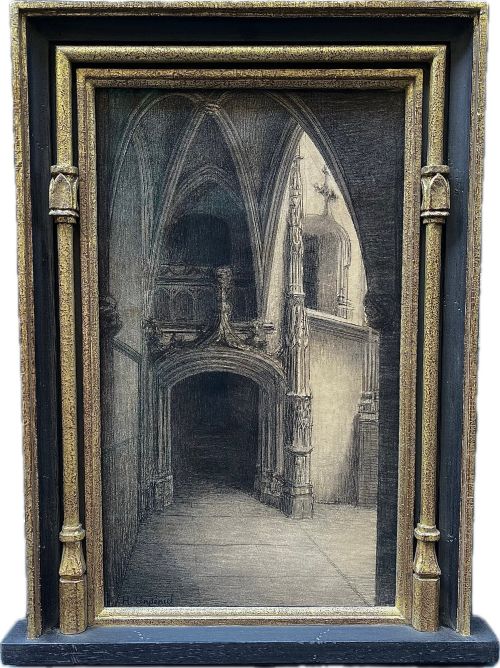
When buyers search for framed cathedral art, they encounter historic depictions of ecclesiastical architecture rendered across various mediums from the eighteenth century onwards. These works capture major British and continental sites, including St Paul's, York, Durham, Lincoln, and Norwich cathedrals, alongside French subjects.
The selection on this page relies heavily on nineteenth-century watercolours and oils, complemented by early twentieth-century drypoint etchings and archival engravings. Many pieces combine structural studies of Gothic and architectural subjects with surrounding townscapes or river views.
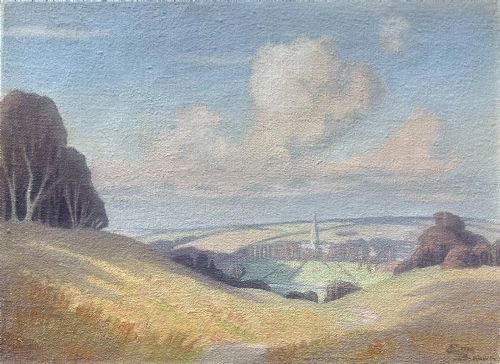
Smaller drawings in ink, charcoal, and pencil sit alongside larger oil paintings on canvas and panel, giving collectors diverse options for wall display. These depictions range in scale from detailed topographical records to atmospheric landscape settings.
Materials and construction methods
Artworks in this category utilise traditional supports such as paper, canvas, and wooden panels, combined with mediums including oil paint, watercolour, ink, charcoal, and gold leaf. Engravings and etchings employ inked metal plates pressed onto paper to capture fine architectural lines.
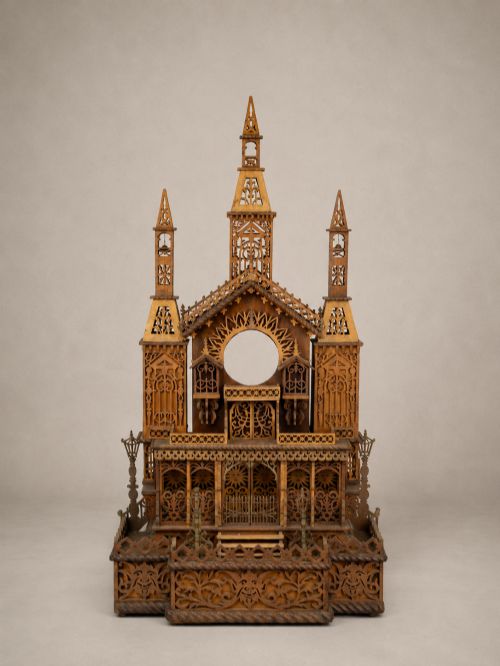
Frames incorporate materials like wood, glass, and gesso, frequently featuring applied surface decoration or gilding to complement the artwork. Structural pieces such as clock cases and marquetry wall panels utilise specialised woodwork techniques alongside traditional imagery.
Art forms include oil paintings, watercolours, drypoint etchings, engravings, and marquetry wall panels.
Factors influencing quality
The skill of the draughtsman or painter determines the precision of architectural perspective and the handling of light across stone and sky. Finer watercolours and oil paintings demonstrate confident brushwork and accurate proportion in complex Gothic facades.
The preservation of the medium, the clarity of ink or print impressions, and the integrity of the original frame contribute significantly to the overall standing of each piece.
Francis Moltino·Paul-Jean Anderbouhr·Leopold Halvoet·Fred Lawson·Lewis J Wood·Robert Lesley Howey·R. P. Phillimott·Francis Dodd·Edgar J Maybery·Henry John Kinnaird·George De Paris·William Sidney Cooper·Frank Greenwood·Edward Fletcher·Allan Douglass Mainds·Henry Schafer·Arthur F E Poley
The Framed Cathedral Art Glossary
- Gothic Revival
- An architectural and artistic movement reviving medieval Gothic forms, prevalent in the nineteenth century. It heavily influences the style of many cathedral depictions.
- Drypoint etching
- A printmaking technique where an image is scratched directly onto a metal plate with a sharp needle. This process produces characteristically soft, velvety lines.
- Gesso
- A plaster-like mixture applied to wood or canvas as a base for painting or gilding. It often forms the decorative moulded details on antique frames.
- Marquetry
- The art of applying pieces of veneer to a structure to form decorative patterns. In these listings, it creates pictorial wood panel scenes.
- Watercolour
- A painting method where paints are made of pigments suspended in a water-based solution. It is frequently applied to paper for topographical views.
Framed Cathedral Art: Frequently Asked Questions
What periods do these pieces date from?
The inventory spans the eighteenth, nineteenth, and twentieth centuries, incorporating works created during the Victorian and Edwardian eras.
Specific dates within the listings range from early eighteenth-century architectural engravings through to mid-twentieth-century modernism and wartime pieces.
How should I display framed art at home?
These framed works suit traditional study spaces, hallways, or living rooms where architectural subjects complement classic interior schemes.
Keep pieces away from direct sunlight to protect watercolours, paper drawings, and canvas pigments from fading over time.
What is the difference between an etching and an engraving?
Engravings are incised directly into a metal plate using a sharp tool called a burin, creating clean and precise lines.
Etchings utilise acid to bite the lines into the metal plate through a protective ground, yielding a freer line quality.
Are all the artworks original pieces?
The page includes a mix of unique original works, such as oil paintings and watercolours, alongside period engravings and etchings.
Listings specify the exact medium, whether an oil painting, drypoint, watercolour, or engraved print.