


Framed Canvas Narrative Art
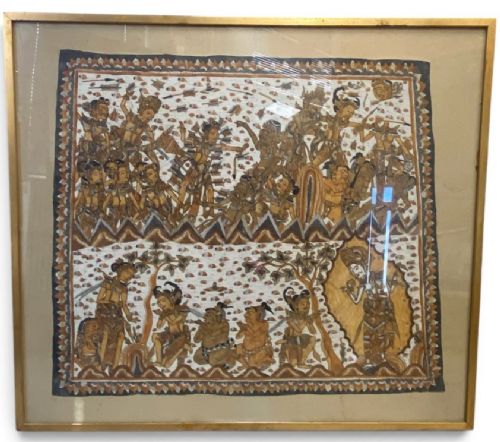
Framed canvas narrative art brings human stories, myths, and historical scenes onto the wall through oil paint on canvas.
Framed Canvas Narrative Art
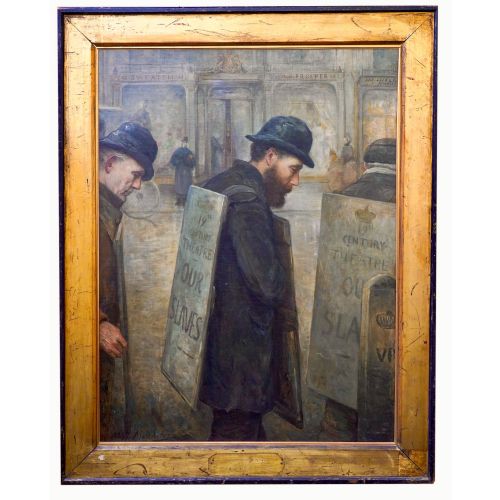
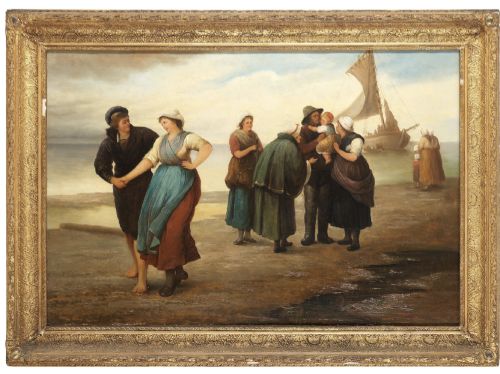
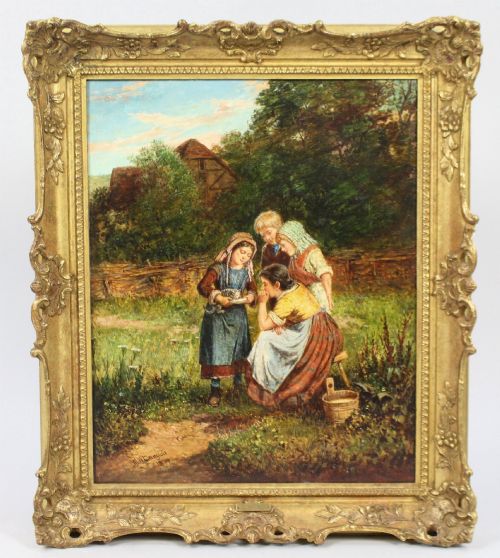
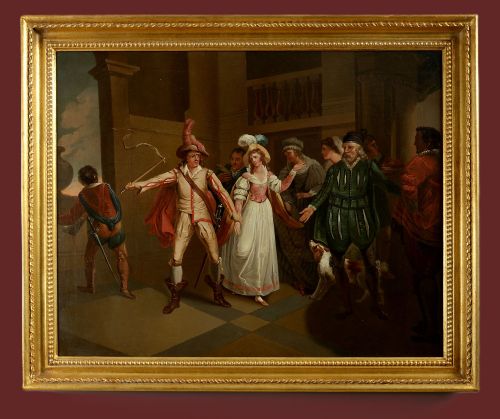
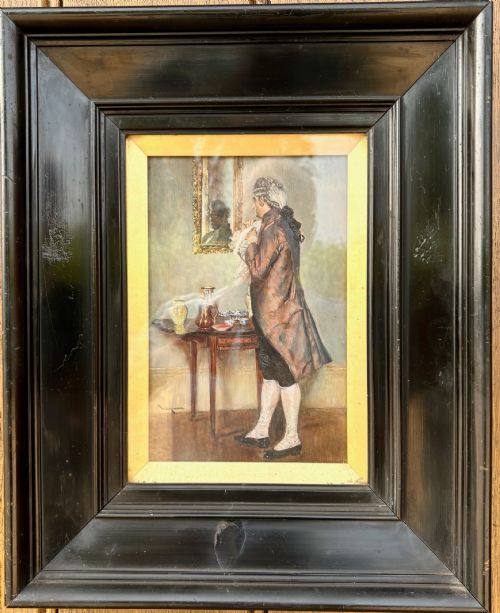
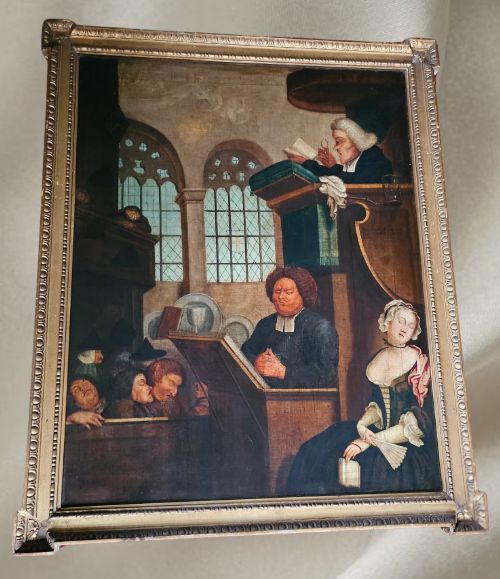
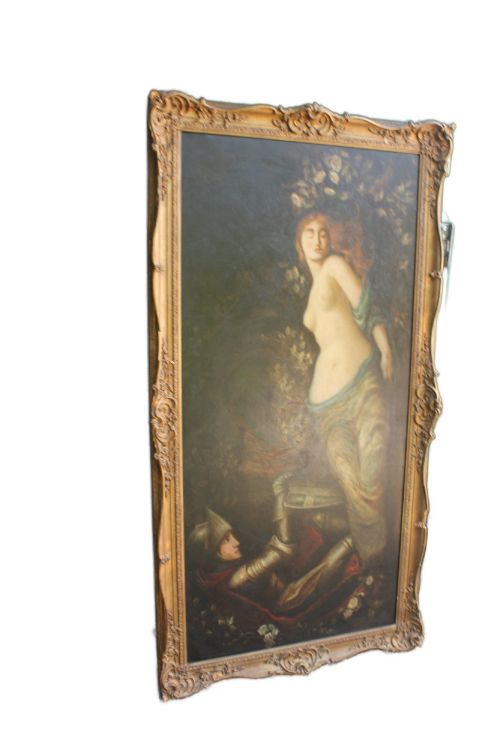
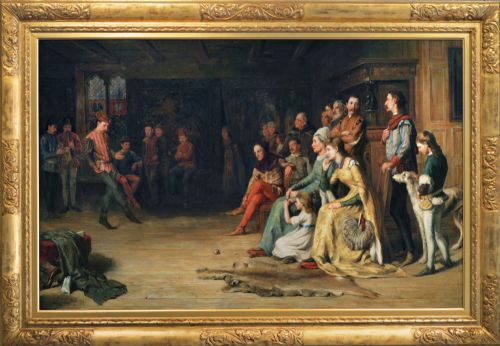
When you search for framed canvas narrative art, you encounter works that tell stories from literature, history, and daily domestic life. These pieces span from the seventeenth century through the Victorian era up to the early twentieth century, capturing human dramas and genre scenes.
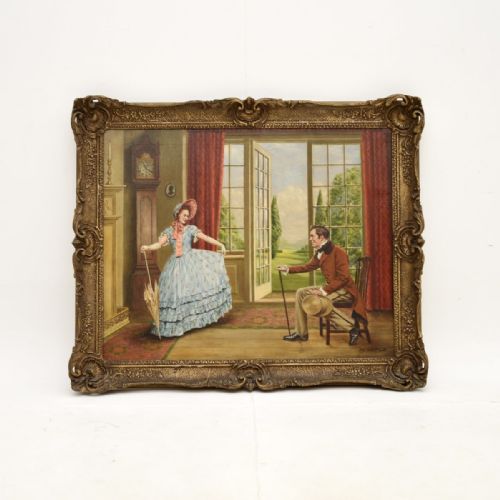
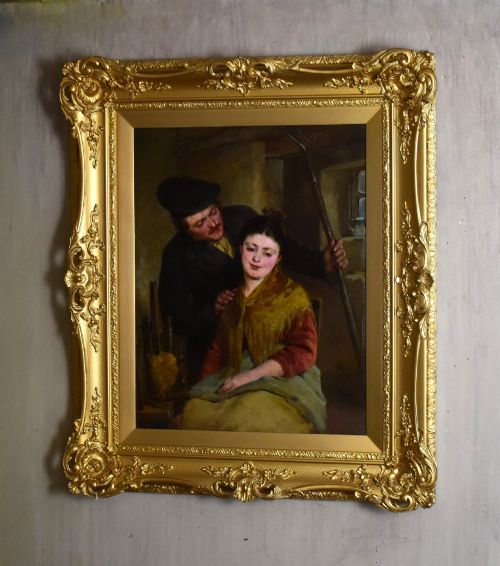
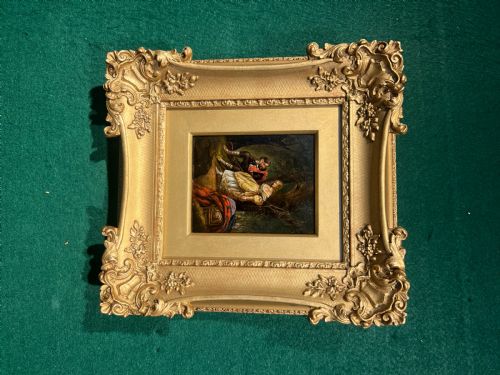
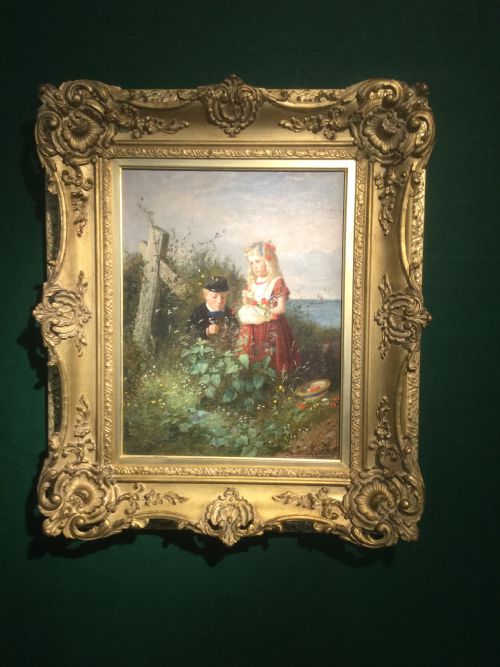
The versions most frequently met on this page are nineteenth century Victorian oil paintings on canvas depicting literary adaptations, social history, and cottage interiors. Creators utilised canvas stretched over wooden frames, often housing the works within ornate giltwood and gesso surrounds.
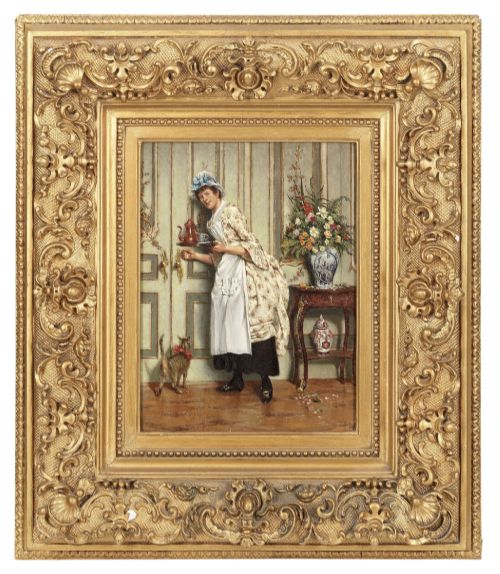
Subjects range from biblical scenes and classical mythology to quiet tea time moments inside country houses. Each piece serves as a visual chapter, recording the social attitudes and artistic ambitions of its period.
How they were made
Makers applied oil paint onto woven canvas substrates stretched across rigid wooden support frames. The oil medium allowed artists to build rich layers of pigment, creating depth in interiors, figures, and dramatic lighting.
Many canvases sit inside heavy wooden frames finished with moulded gesso and gold leaf or gilt wood. These surrounds provided structural support and enhanced the visual weight of the narrative scenes.
Several canvases capture Victorian domestic pets receiving unexpected attention during tea time and quiet interior moments.
What varies in quality
Quality rests in the handling of human anatomy, expression, and the believable arrangement of figures within a narrative space. Superior canvases reveal confident brushwork that brings depth to fabric textures, facial expressions, and interior light sources.
The integrity of the original giltwood and gesso frame contributes significantly to the overall preservation and aesthetic impact of the piece. Well-balanced compositions with careful attention to narrative detail separate masterworks from ordinary studio output.
Sir Joseph Noel Paton·Felix Stone Moscheles·Stephen Samuel Lewin·Mark William Langlois·Alfred Lyndon Grace·Howard Helmick·James Hamilton·Abraham Cooper·Delapoer Downing·Harry Brooker·Byam Shaw·Alexander Rosell·William Arthur Breakspeare·John Arthur Lomax·George Bernard O'Neill·Charles Haigh Wood·Haynes King·James Kyd·Friedrich von Kaulbach·Léon Joseph Voirin·Edwin Thomas Roberts·Robert Alexander Hillingford·George Smith
The Framed Canvas Narrative Art Glossary
- Genre painting
- A style depicting scenes from everyday life, ordinary people, and domestic interiors. These works capture domestic moments rather than grand historical or mythological events.
- Giltwood
- Wood carved and covered with a thin layer of gold leaf or gold paint. This finish creates the bright, reflective borders common on nineteenth century frames.
- Gesso
- A paint mixture consisting of a binder mixed with chalk, plaster, or pigment. Makers applied this substance to wooden frames to create smooth surfaces for moulding decorative relief patterns.
- Oil on canvas
- A painting technique using pigments suspended in a drying oil applied to a woven fabric support. This medium permits subtle blending and long-lasting colour retention.
- Pre-Raphaelite
- An artistic movement focused on detailed observation, bright colours, and complex literary or religious subjects. Paintings from this circle emphasise intense narrative drama and symbolic detail.
Framed Canvas Narrative Art: Frequently Asked Questions
What is framed canvas narrative art?
These works are paintings on stretched canvas that illustrate specific stories, historical events, or literary moments. They use visual elements to capture human drama and domestic life.
Most examples date from the Victorian period and earlier centuries, often presented in decorative gilt frames.
How were these paintings displayed?
Owners historically hung these canvases in principal rooms, parlours, and country house galleries to spark conversation and display cultural literacy.
The heavy giltwood frames were designed to complement period interior decor and project status.
How do I care for an oil painting?
Keep canvases away from direct sunlight, extreme temperature shifts, and high humidity to prevent cracking in the paint and canvas.
Dust the surface and frame gently with a soft, dry brush without applying liquid cleaners.
How do I identify the period?
Dating relies on stylistic clues, costume details, artist signatures, and the construction methods of the stretcher frame and canvas.
Frame styles and biographical records of the painters also help narrow the decade of creation.