



Framed Cameo Casts
Framed cameo casts are classical relief medallions mounted behind glass for display, offering miniature classical sculpture for the wall.
Framed Cameo Casts
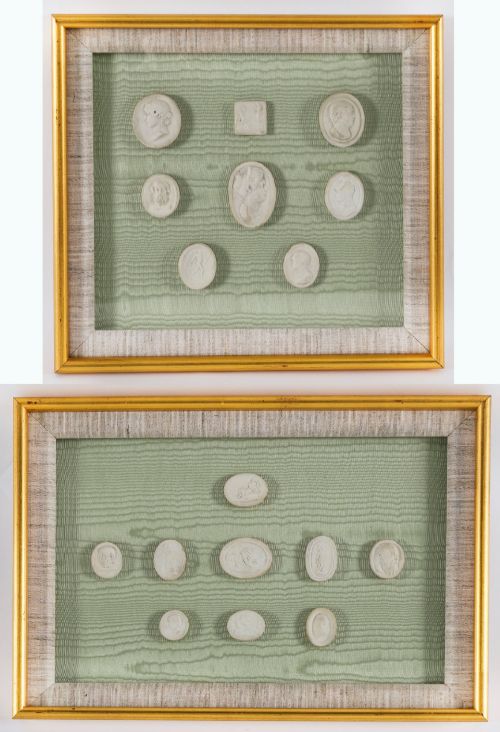
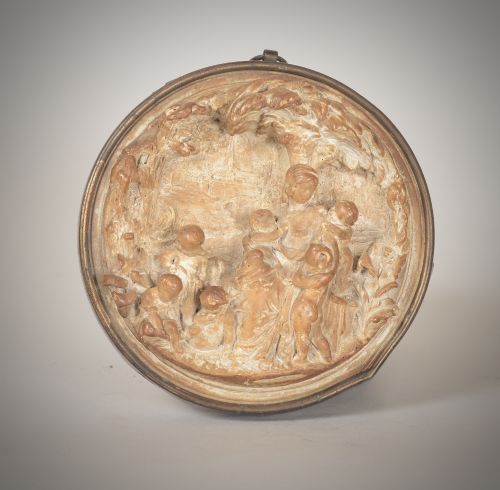
Framed cameo casts bring classical sculpture into domestic interiors through collections of miniature plaster reliefs, commonly known as framed cameo casts. These pieces originate primarily from the nineteenth century and the Edwardian period, capturing the enduring European fascination with antiquity.
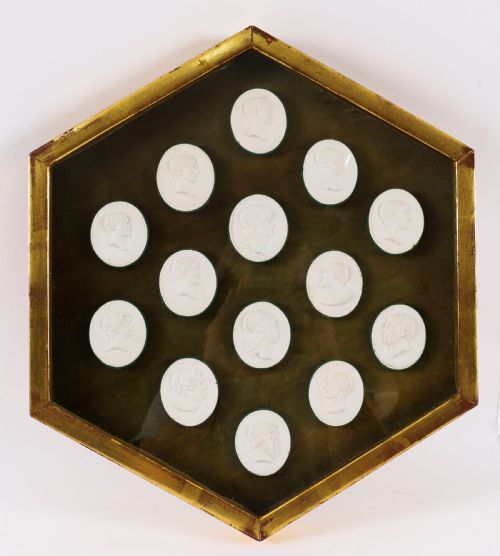
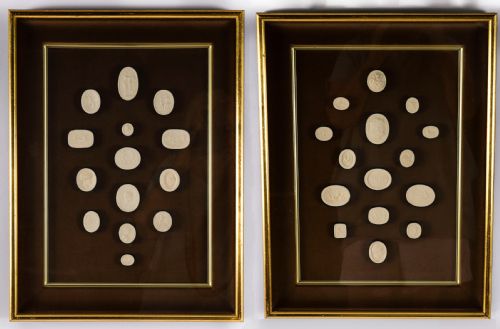
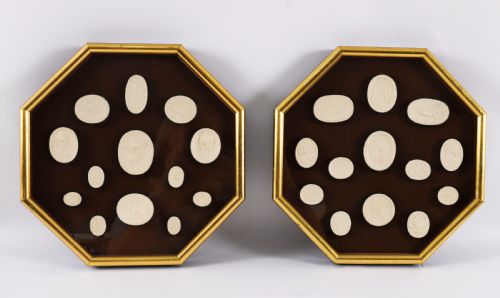
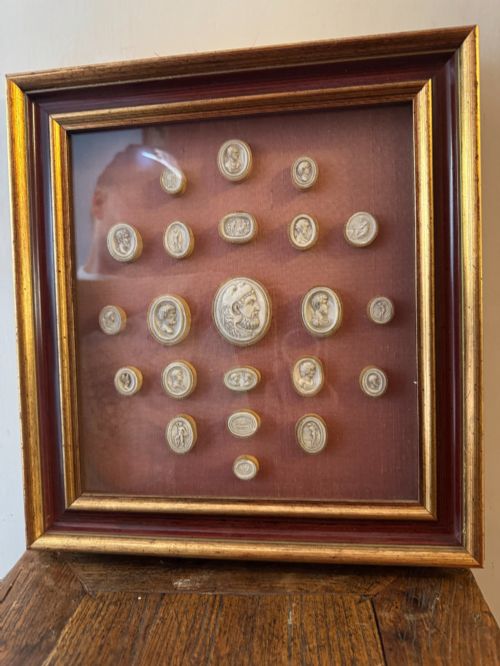
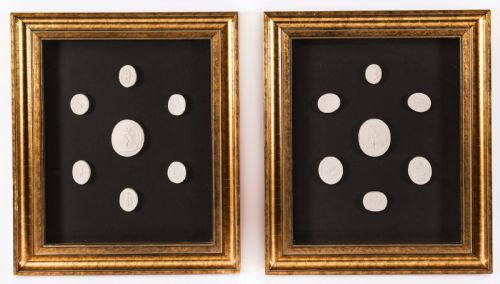
Most examples found here take the form of Grand Tour souvenirs brought back by travellers from Italy. They appear as individual wall plaques, pairs of octagonal frames, or extensive collections arranged systematically inside glazed boxes.
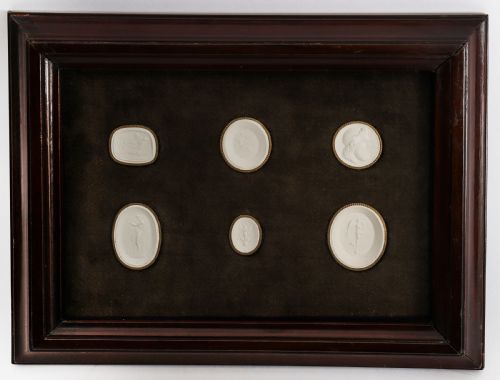
The aesthetic is distinctly neoclassical, reflecting archaeological discoveries that shaped nineteenth-century taste. Makers arranged these white plaster casts against dark velvet or fabric backgrounds to emulate museum displays.
Materials and construction
The medallions themselves consist of fine plaster or gypsum, poured into moulds taken directly from antique gems, coins, and statuary. This technique allowed workshops to reproduce intricate classical details with high fidelity.
Makers mounted these white reliefs onto backing materials such as fabric and velvet to create contrast and hold them securely in place. The entire arrangement sits within frames constructed from wood, finished with gold leaf, gilt wood, or giltwood.
Travellers returning from Italy needed a way to prove they visited the ruins, so they bought thirty-five plaster noses in a box.
Distinctions in quality
Quality rests primarily on the crispness of the plaster cast and the depth of the classical relief. Sharp edges and legible miniature inscriptions indicate moulds taken closer to the original carved gems.
The framing and internal arrangement also distinguish the work, ranging from simple wooden surrounds to elaborate giltwood boxes housing dozens of coordinated specimens. Master makers exercised particular care in the harmonious layout of multi-piece collections.
Giovanni Liberotti·Pietro Bracci
The Framed Cameo Casts Glossary
- Intaglio
- A gem or medallion carved in reverse so that the design sinks below the surface, acting as a mould for positive relief casts. Plaster versions of these were mounted in frames for study and display.
- Grand Tour
- An extended educational journey through Europe, particularly Italy, undertaken by wealthy young men in the eighteenth and nineteenth centuries. Travellers collected plaster casts and intaglios as tangible proof of their classical education.
- Gypsum
- A soft sulphate mineral used to create fine plaster casts of classical antiquities. It captures minute surface details from ancient carved gems.
- Giltwood
- Wood carved and covered with a thin layer of gold leaf or gold paint. It provides a reflective, ornate border for framed classical reliefs.
- Neoclassical
- A Western cultural movement drawing inspiration from the art and culture of classical antiquity. This style dominates the design of nineteenth-century plaster casts and their architectural frames.
Framed Cameo Casts: Frequently Asked Questions
What are framed cameo casts?
Framed cameo casts are collections of miniature plaster or gypsum reliefs modelled on classical sculptures, coins, and carved gems. They were mounted behind glass in wooden or giltwood frames for wall display.
Originating largely from nineteenth-century Italy as Grand Tour souvenirs, these pieces allowed collectors to curate private museums of classical art within their homes.
How were they used historically?
These framed sets served as educational tools and conversation pieces for educated travellers returning from Italy. They condensed classical art history into portable formats suitable for domestic display in studies and drawing rooms.
Arranged carefully against velvet or fabric backgrounds, the white plaster casts demonstrated the owner's refined taste and classical knowledge.
How should I hang them?
Hang these framed pieces at eye level on walls with stable environmental conditions, away from direct sunlight to protect the fabric backings and paper elements. Because many examples incorporate delicate plaster reliefs behind glass, secure wall fixings are essential.
Pairing smaller octagonal frames or grouping collections together creates a focal point that respects their historical origins as cabinet displays.
How do I identify periods?
Nineteenth-century and Edwardian pieces show distinct framing techniques, ranging from simple wooden mouldings to elaborate giltwood boxes. The materials used for the backing, such as period velvet or woven fabric, often provide clues to the exact era of assembly.
Examination of the plaster casts themselves reveals the style of the workshop, with earlier nineteenth-century examples often bearing signatures or labels from prominent Italian makers.