
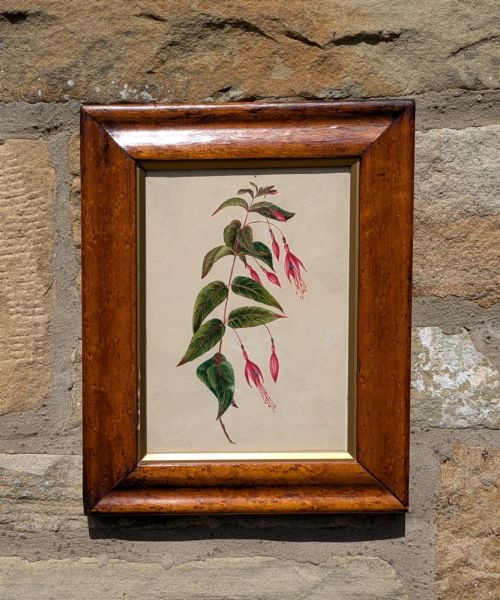
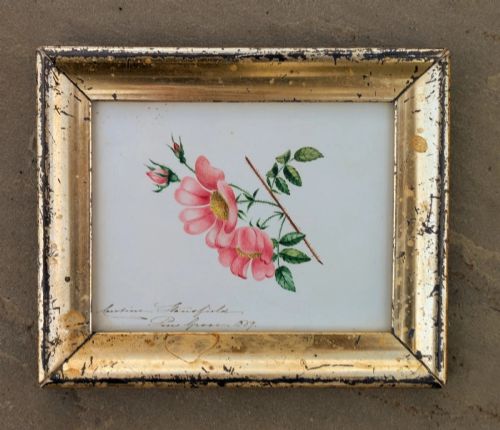
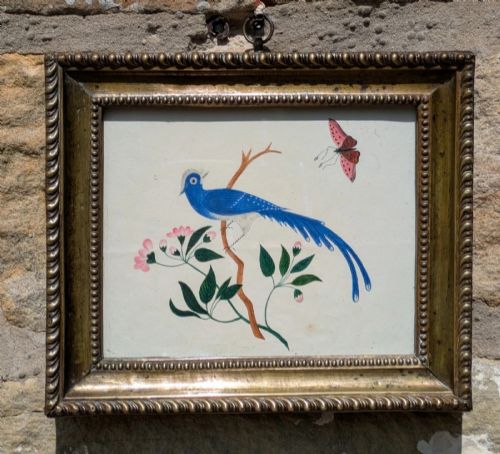
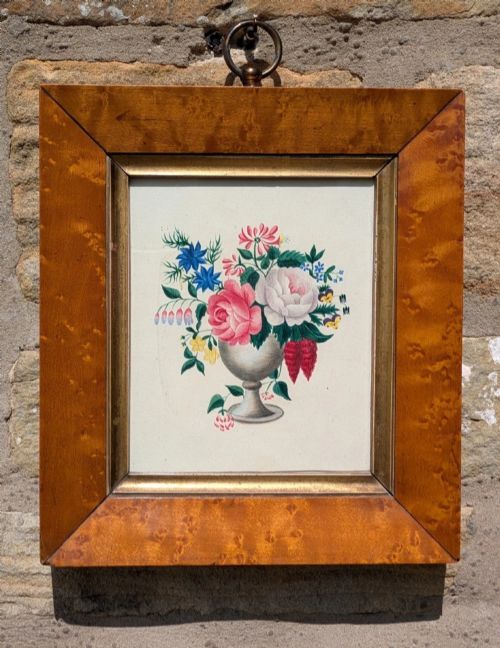
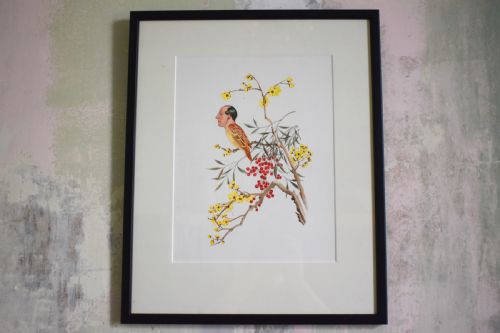


Framed Botanical Watercolour Artwork
These framed botanical watercolour artwork pieces bring natural history and garden studies into interior spaces through hand-painted paper works preserved behind glass.
Framed Botanical Watercolour Artwork
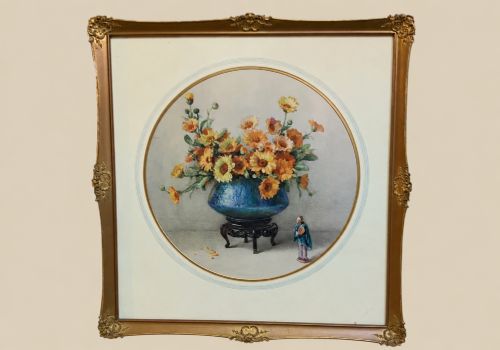
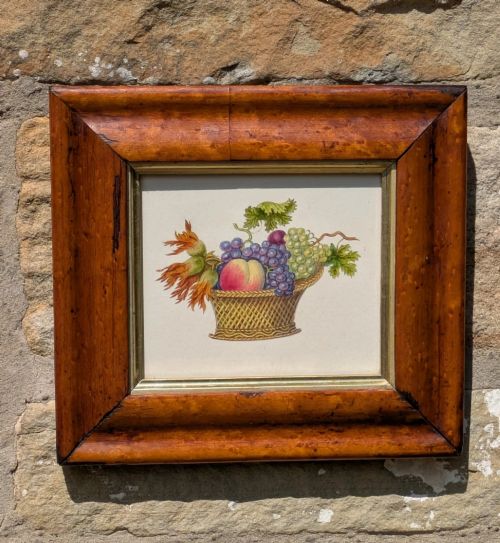
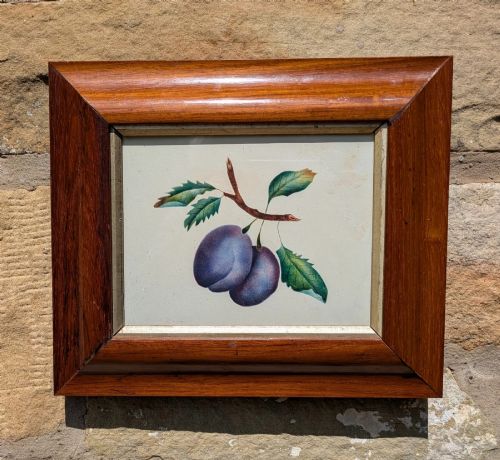
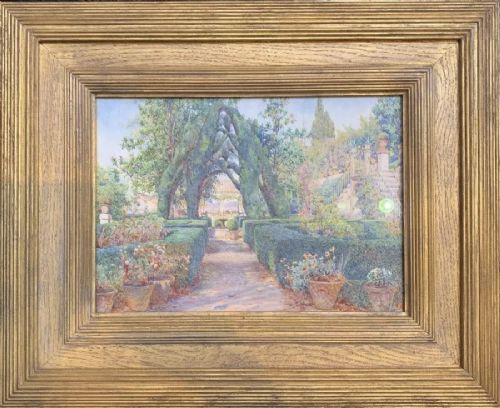
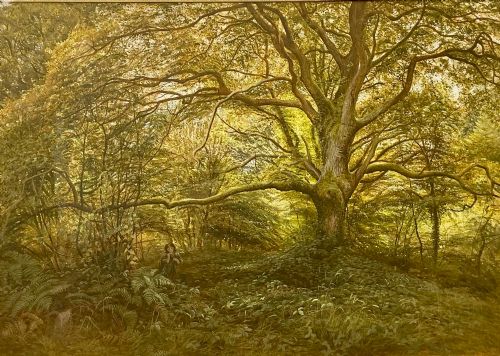
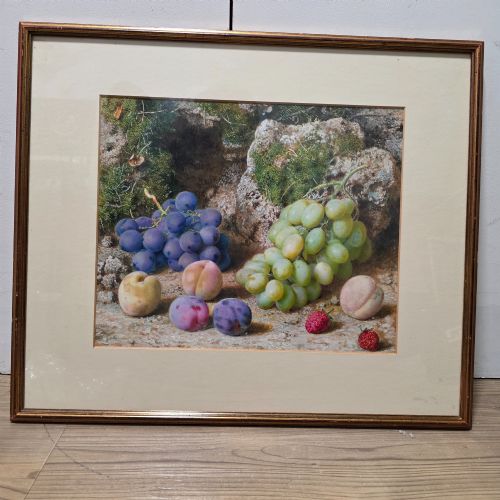
When buyers search for framed botanical watercolour artwork, they encounter original paintings depicting flowers, fruit, and garden scenes rendered in watercolour and gouache on paper. The selections span from the Regency era and Victorian period through to the mid twentieth century, capturing detailed studies of roses, plums, and wild flowers.
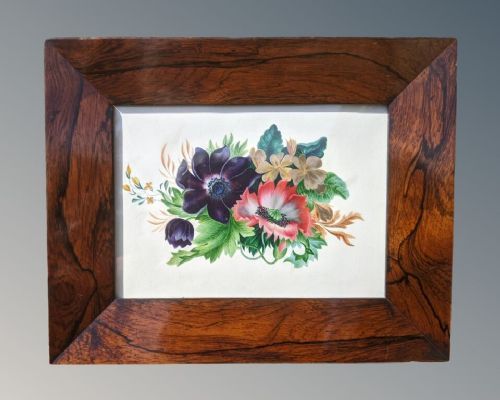
The most common examples on this page are nineteenth century studies, often housed in period timber or rosewood frames complete with protective glass. These works range from intimate single flower studies to multi-stem floral arrangements and garden landscapes.
Represented origins include English school studies alongside pieces by named artists working across various periods, bringing historical hand-rendered plant documentation directly to domestic walls.
Materials and Techniques
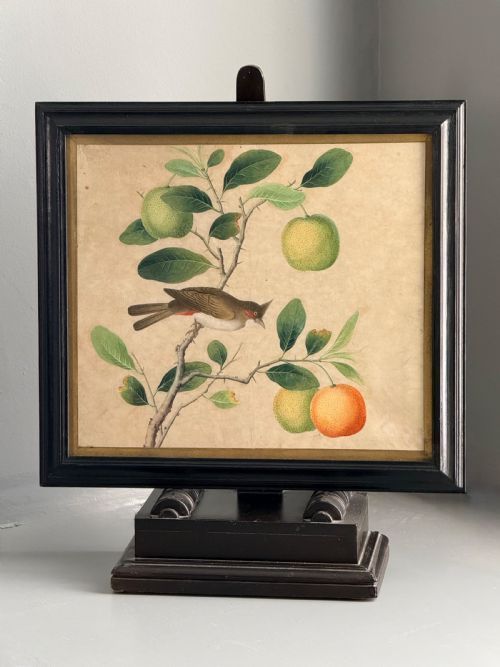
Makers utilised watercolour pigment and gouache applied to paper, occasionally combining pencil underdrawing with opaque bodycolour to build depth in petals and foliage. Pith paper also appears in select oriental export works.
Framing typically involves wood, rosewood, or gilt wood surrounds fitted with glass to protect the delicate water-soluble pigments from moisture and light damage over the centuries.
An exotic blue bird and a determined macaw occasionally sneak in to perch among the botanical roses and plums.
Evaluating Quality
Quality rests upon the precision of the brushwork, the botanical accuracy of the plant study, and the harmonious composition of the floral arrangement across the paper surface. Finer works display meticulous control of wash and pigment density, capturing the subtle tonal shifts in petals and leaves.
The integrity of the original frame also influences the piece, with period rosewood or gilt wood surrounds offering greater historical cohesion than later replacements.
Ernest Arthur Rowe·Bonomi Edward Warren·John Sherrin·James Tower·Alice Anne Renshaw·Harry Wanless·Henrietta Creswell·William Edward Fox·William Andrews Nesfield·Lilian Stannard·William Hough·Eloise Harriet Stannard·Rowland Henry Hill·Grace Hastie·Margaret Laing·Phyllis I Hibbert·Marian Chase·Jabez Bligh·Owen Bowen·Charlotte Isa James·Arthur Wardle·Alice Macallan Swan·Beatrice Parsons
The Framed Botanical Watercolour Artwork Glossary
- Gouache
- An opaque watercolour paint made from pigment mixed with a water-binding agent and a white filler material. This technique provides heavier coverage and brighter highlights than translucent watercolour washes.
- Pith paper
- A delicate material formed from the spongy interior of the rice paper plant pith. It accepts watercolour and gouache readily, producing a luminous velvet-like surface texture.
- Regency
- An architectural and design period spanning the early nineteenth century. Works from this era often display clean botanical observation coupled with refined framing choices.
- Victorian
- A period spanning the nineteenth century defined by industrial expansion and a distinct fascination with natural history. Floral painting flourished during this time as a standard gentleman or gentlewoman pursuit.
- Aesthetic movement
- A late nineteenth century design style emphasising visual beauty over narrative or moral themes. Frames from this movement often incorporate distinctive metallic finishes or decorative motifs.
Framed Botanical Watercolour Artwork: Frequently Asked Questions
How should I hang these watercolours?
Keep framed botanical watercolour artwork away from direct sunlight to prevent the pigments from fading over time. Normal room lighting and stable indoor humidity levels protect both the paper support and the timber frame.
Ensure pieces are hung securely using appropriate fixings for your wall type. Glass protection means avoiding damp environments such as unheated spaces.
Are these works original paintings?
The listings comprise hand-painted original works on paper using watercolour and gouache rather than modern mechanical prints. Each brushstroke is applied directly by the artist.
Signatures or period inscriptions often accompany the artwork, confirming their status as unique historical pieces.
How do I identify the period?
Dating relies on stylistic clues within the painting technique, framing materials, and any accompanying artist attribution or labels. Regency and Victorian works typically display specific palette choices and framing profiles.
Paper characteristics and handwritten notes on the reverse provide further clues regarding the era of creation.
What is gouache?
Gouache is an opaque water-based paint that dries to a matte finish, allowing artists to layer light colours over dark backgrounds. It frequently appears alongside traditional translucent watercolour in botanical studies to add opaque highlights.
This technique creates solid areas of colour that give petals and leaves a three-dimensional quality.