

Framed Botanical Still Life
A framed botanical still life captures the quiet study of flora and fruit, offering a lasting focal point for domestic walls.
Framed Botanical Still Life
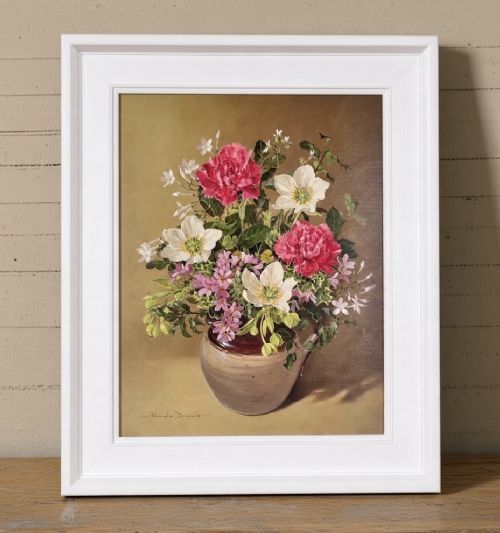
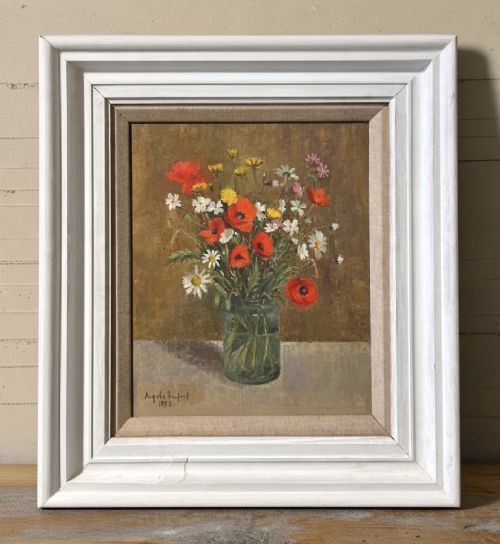
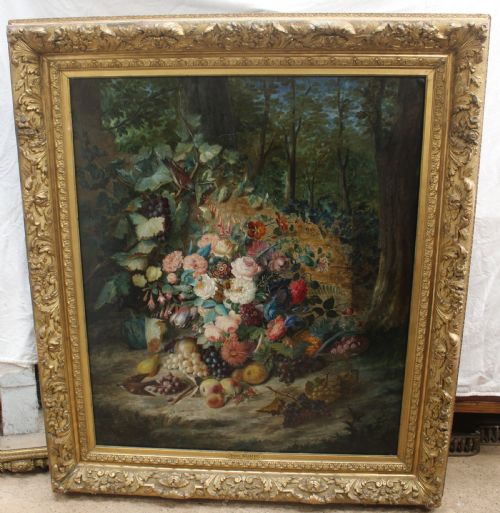
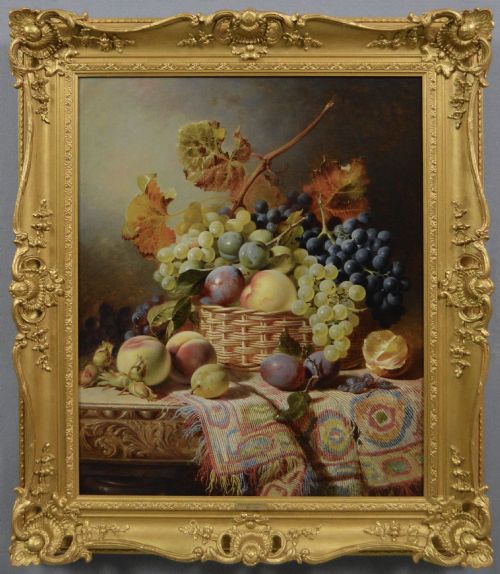
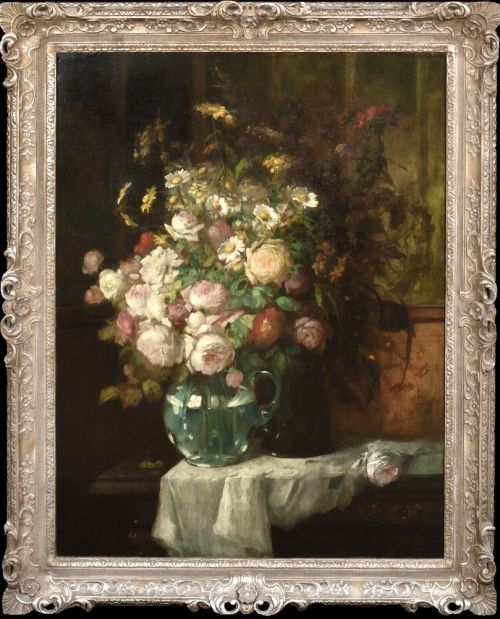
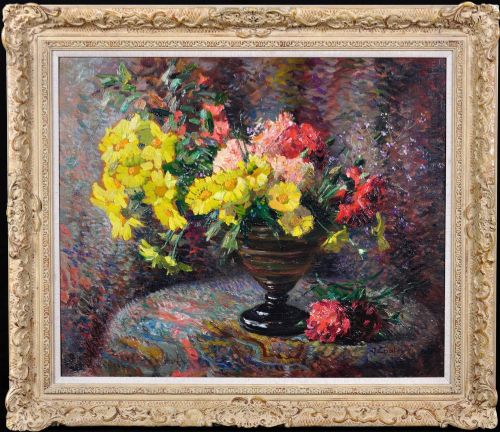
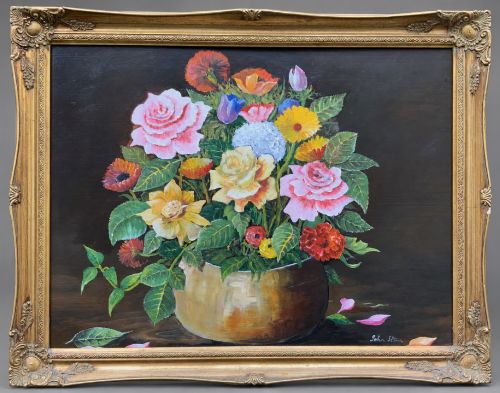
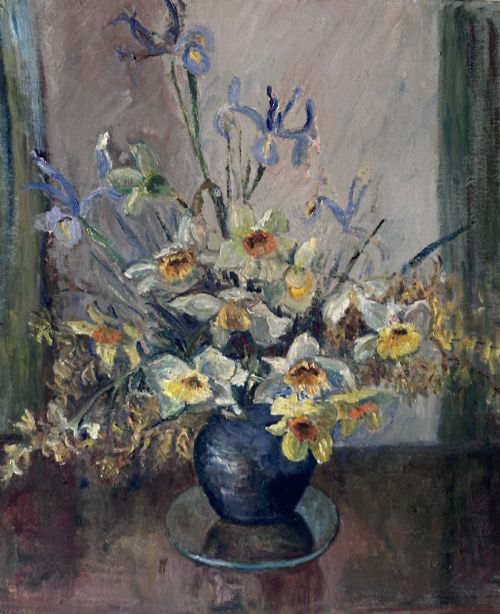
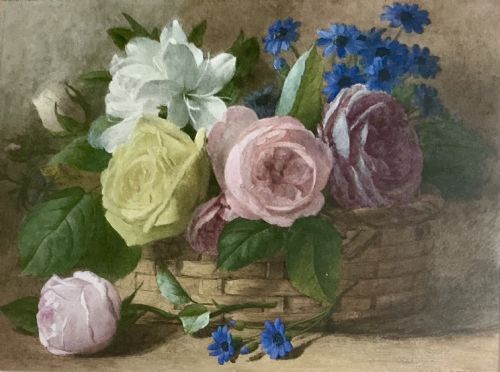
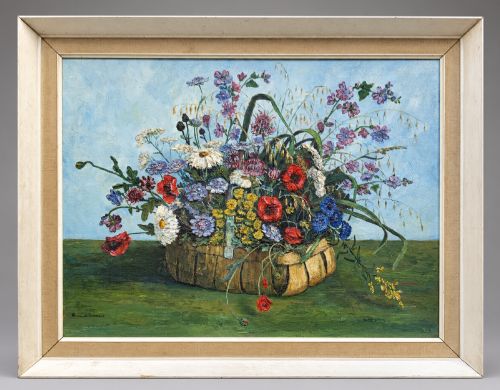
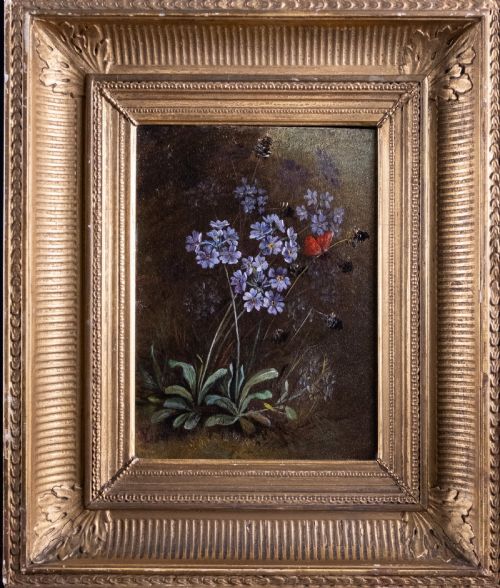
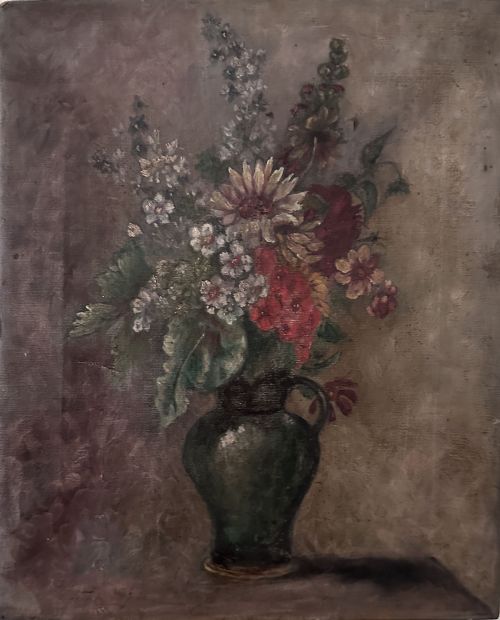
When you search for a framed botanical still life, you encounter depictions of flowers, fruit, and foliage rendered in various mediums across multiple periods. The selection spans nineteenth-century Victorian canvases and watercolours down to mid-century modern and impressionist interpretations.
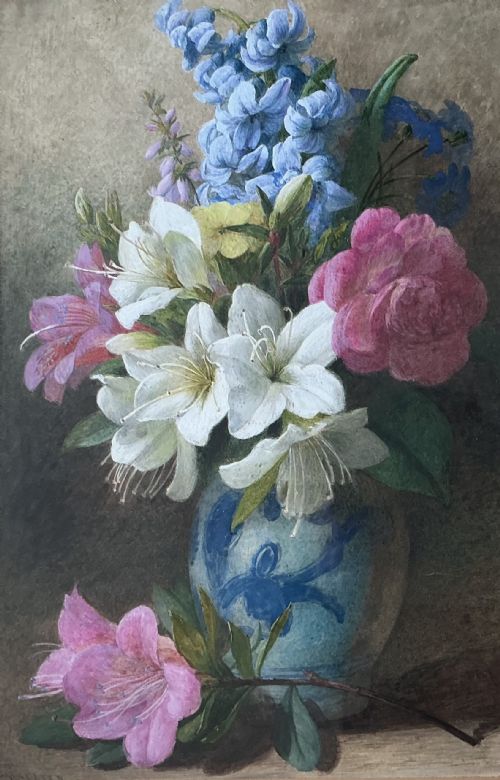
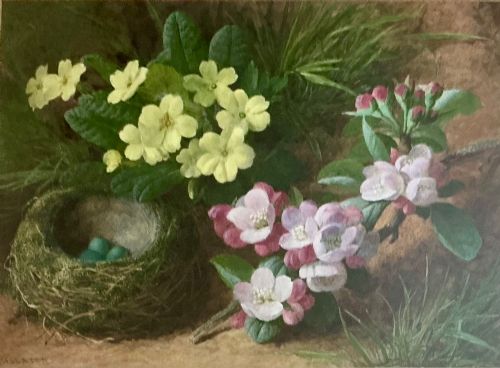
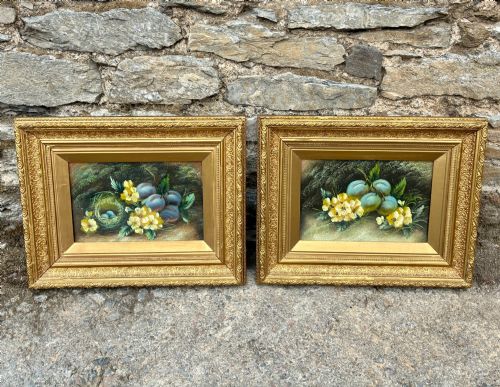
You are most likely to meet nineteenth-century oil paintings and watercolours featuring baskets of summer flowers, birds' nests, and autumn fruit alongside mid-century floral compositions. These pieces typically arrive ready to hang in period wood or gilt frames.
Materials and Method
Artists painted these subjects primarily with oil on canvas or panel, or applied watercolour and gouache to paper, utilising wood and gilt gesso frames to enclose the finished work. The physical support often dictates the texture, with oil paints building rich impasto on canvas while watercolours achieve a lighter clarity on paper.
The framing employs traditional joinery and carved wood, frequently finished with gilt leaf or gesso detailing that complements the natural subject matter within.
Framed Botanical Still Life Retail Price Guide 2026
Typical asking prices for framed botanical still life among the pieces listed under this phrase on Sellingantiques today, from the lower quarter to the upper quarter. They describe what is for sale here now, not the wider market.
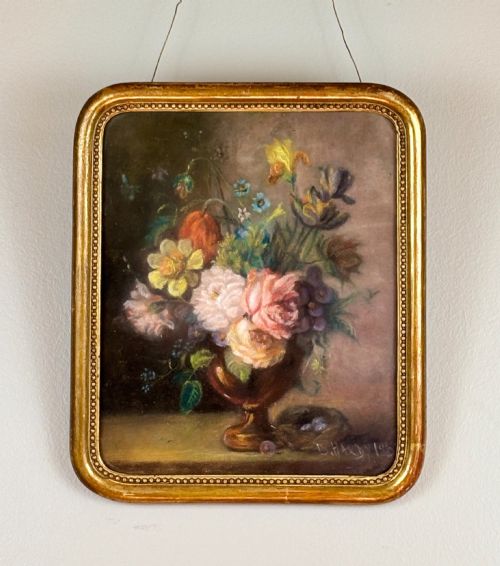
Artists frequently tucked a discarded bird's nest filled with delicate blue eggs beside their summer roses just to show off.
Distinctions in Execution
Quality rests upon the sureness of the brushwork, the depth of colour harmony, and the fidelity of the botanical observation. A superior piece demonstrates careful control of light across petals and fruit, whereas lesser examples rely on formulaic repetition.
The integrity of the physical components also matters, from the stability of the canvas and panel to the original craftsmanship of the surrounding wooden frame.
Pamela Davis·Angela Burfoot·William Duffield·Konstantin Stoitzner·Jean Chaleye·Charles Henry Slater·John Stone·Irene Christobelle Pownoll Williams·Theude Gronland·Oliver Clare·Edward Ladell·Emma Fordyce MacRae·Ian Parker·Manuela Bonati
The Framed Botanical Still Life Glossary
- Giltwood
- Wood that has been coated with a thin layer of gold leaf or gilt powder. This finish appears frequently on frames housing nineteenth-century floral oils.
- Impasto
- Paint applied thickly to a canvas, standing out from the surface. This technique brings physical texture to depictions of petals and fruit.
- Gouache
- An opaque watercolour paint mixed with a white pigment binder. It yields solid, flat areas of colour found in eighteenth and nineteenth-century botanical studies.
- Oleograph
- A mechanical colour lithograph printed on canvas to imitate an oil painting. Examples occasionally replicate mid-century still life compositions.
Framed Botanical Still Life: Frequently Asked Questions
How should I clean a vintage oil painting?
Surface dust can be removed gently with a soft, dry brush, avoiding any moisture or pressure on the canvas.
Professional restoration is required for deeper cleaning or removal of aged varnish to prevent damage to the underlying pigment.
Are these works original paintings?
The selection includes hand-painted works in oil, watercolour, and gouache alongside occasional period print reproductions on canvas.
Checking the listing details confirms whether a piece is an original brush study or a secondary print.
What rooms suit a botanical still life?
These works add warmth and traditional character to living rooms, studies, and dining spaces, complementing natural wood furnishings.
Placing them away from direct sunlight protects the pigments from fading over time.
How do I date an antique frame?
Construction methods, such as hand-carved wood, corner mitres, and the composition of the gesso, indicate the period of the framing.
Frames are frequently contemporary to the artwork, though some pieces acquired new housing in later decades.