


Framed Watercolour Set
A framed antique watercolour set brings grouped narrative charm to a wall, offering matched studies from the eighteenth to the mid twentieth century.
Framed Watercolour Set
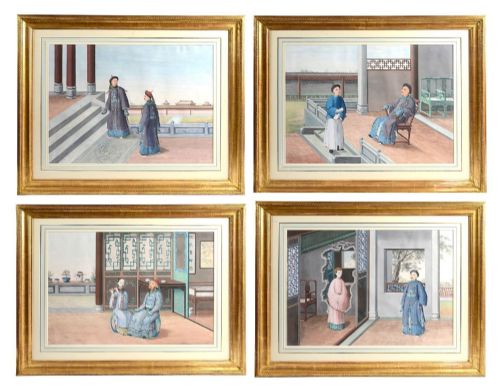
A framed antique watercolour set brings together multiple paper works under glass, ranging from botanical studies and landscape scenes to military subjects and maritime views. Buyers examining a framed antique watercolour set encounter groupings created across the nineteenth and twentieth centuries, often united by a common theme or artist's hand.
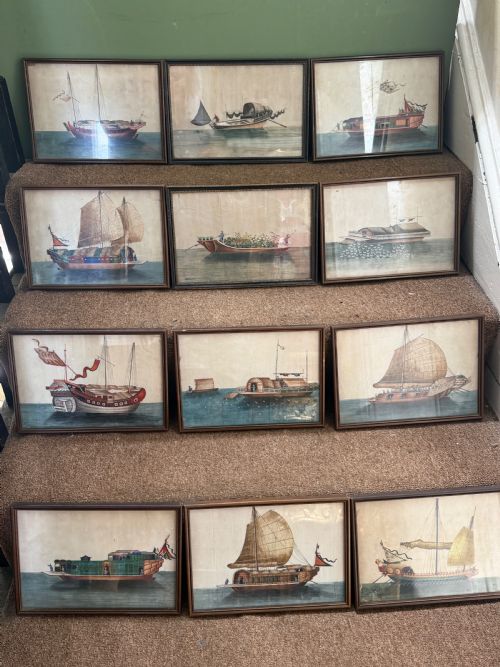
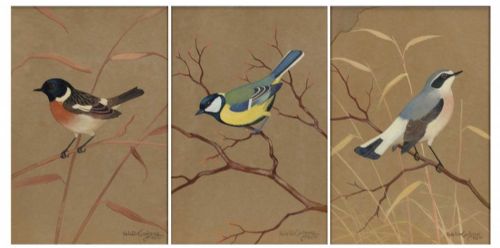
The configurations vary considerably, from pairs and triads of pastoral scenes up to sequences of twelve Chinese export gouaches or botanical studies. These works span English regional art, Chinese export traditions, and European schools, offering matched visual rhythms for wall display.
Materials and Construction
Watercolour and gouache pigments are applied to paper, pith paper, or card, frequently supported by preliminary pencil sketching and ink detailing. The delicate media demand physical protection under glass within traditional wood frames.
Mounting and framing methods vary from period housing to later conservation setups, while gold leaf frequently highlights the borders of more formal nineteenth century presentations.
Listings feature paper, glass, wood, watercolour, gouache, pith paper, gold leaf, and ink across various periods.
Assessing Quality and Execution
The precision of brushwork and the vibrancy of surviving pigment dictate the visual success of each sheet within a grouped series. Finer examples display confident handling of line and tone, whether depicting intricate Italian landmarks, garden birds, or maritime junks.
The integrity of the complete set depends upon the uniformity of the surviving sheets and the harmony of their presentation under glass. Matching frames and consistent preservation across all items elevate the standing of the entire group.
Ralston Gudgeon·Thomas Mackay·Charles Johnson Payne Snaffles·George Goodwin Kilburne
The Framed Watercolour Set Glossary
- Pith Paper
- A fragile material prepared from the pith of the Tetrapanax papyrifer plant, commonly utilised for Chinese export painting during the nineteenth century. It possesses a velvety texture that absorbs water-based pigments with exceptional brilliance.
- Gouache
- An opaque watercolour medium containing pigment mixed with a binding agent and a white filler, producing a heavier and more solid surface than transparent washes. It is frequently combined with ink and pencil in botanical and export studies.
- Chinese Export
- Artworks produced in China specifically for Western markets, encompassing maritime subjects, birds, and trades executed on paper or pith. These pieces often arrived in structured sets documenting local life and shipping.
Framed Watercolour Set: Frequently Asked Questions
How should I hang a multi-part framed watercolour set?
Maintain consistent spacing between each frame to preserve the visual rhythm of the sequence across the wall surface.
Keep grouped works away from direct sunlight to prevent the fading of delicate pigments on paper.
What subjects appear most frequently in these sets?
Botanical studies, pastoral landscapes, military campaigns, and Chinese export shipping scenes form the bulk of the surviving groupings.
Natural history subjects like garden birds and ducks also populate these multi-piece wall displays.
Why are some works painted on pith paper?
Pith paper was favoured by nineteenth century Chinese export artists for its unique ability to hold dense gouache and watercolour pigments with a velvety depth.
This fragile plant-based material requires careful framing under glass to ensure its long-term survival.
How do I identify the period of an antique watercolour set?
Examine the framing materials, the type of paper support, and the stylistic conventions of the handwriting and costume depicted in the scenes.
Mid-nineteenth century works often display distinct regional British or export characteristics compared to later Edwardian or mid-century productions.