

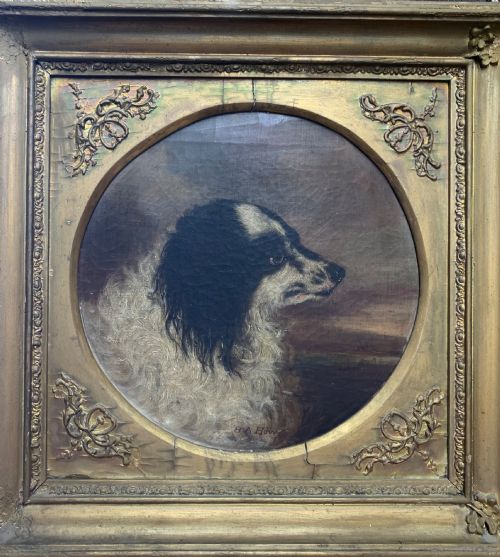
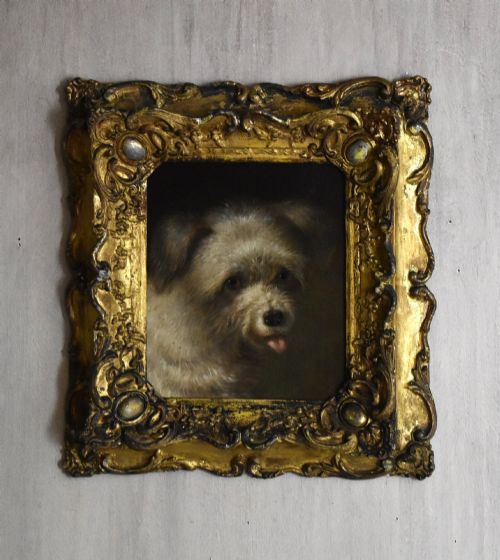
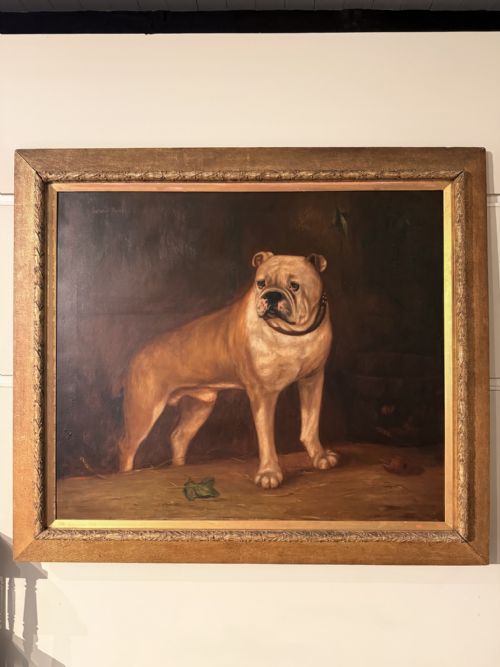
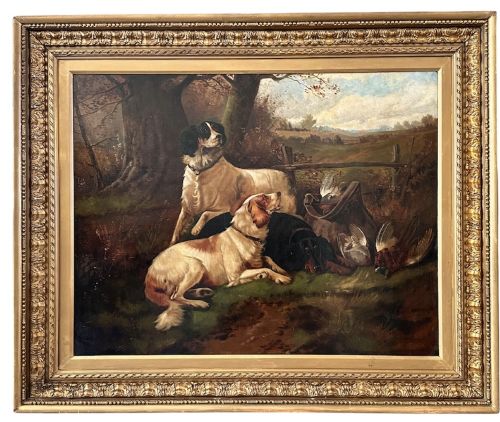


Framed Canine Portrait
A framed antique canine portrait captures the character and loyalty of dogs through centuries of fine art and craft.
Framed Canine Portrait
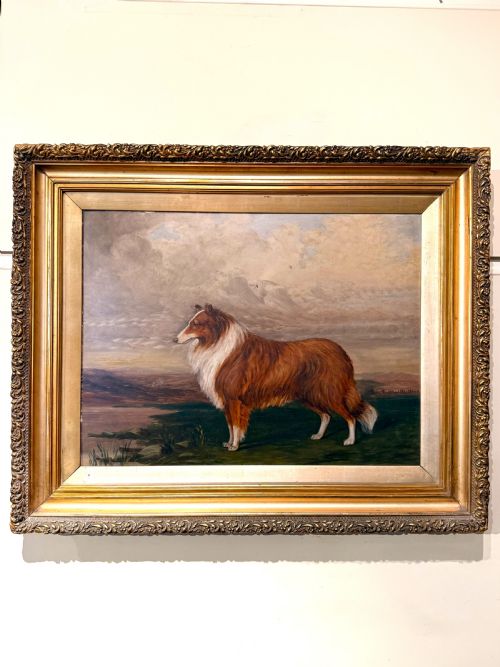
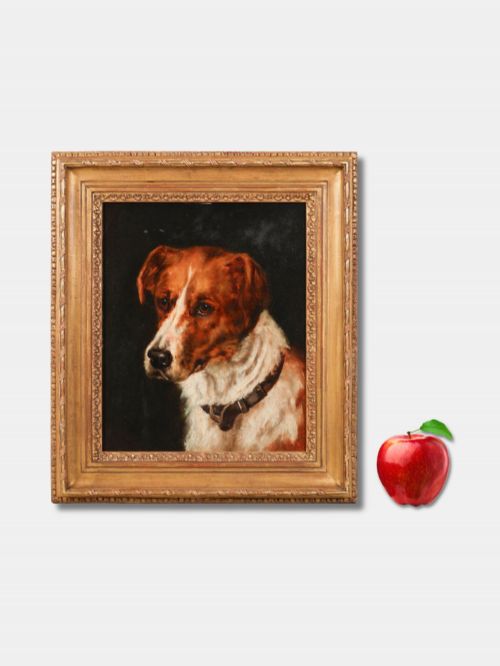
A framed antique canine portrait represents a study in animal companionship, capturing dogs through historical periods ranging from the Georgian and Regency eras through the Victorian age and into the mid-twentieth century.
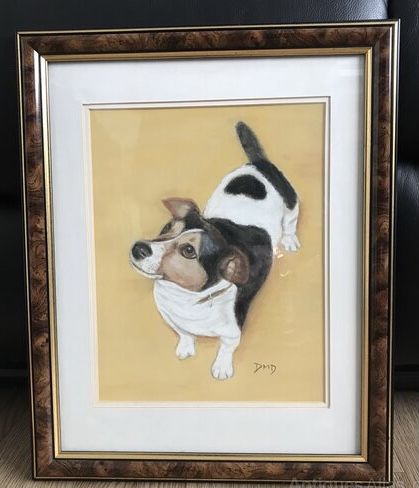
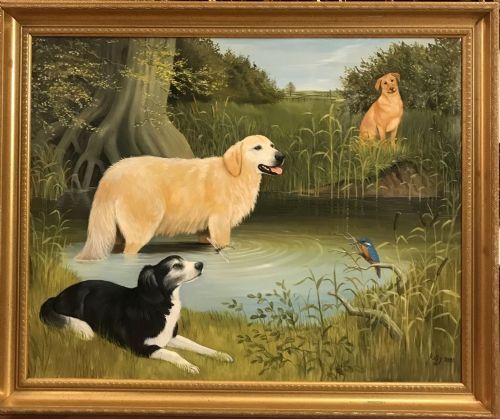
Buyers seeking a framed antique canine portrait most frequently encounter oil paintings on canvas or board, alongside works on paper such as watercolours, pastels, gouache, drawings, and original etchings.
These works span various British and continental schools, encompassing sporting art, realism, and domestic animal studies created by named painters as well as accomplished anonymous hands.
How They Were Made
Artists applied oil paint to stretched canvas, wooden board, or paper, building texture and depth with brushwork suited to rendering fur, expression, and musculature.
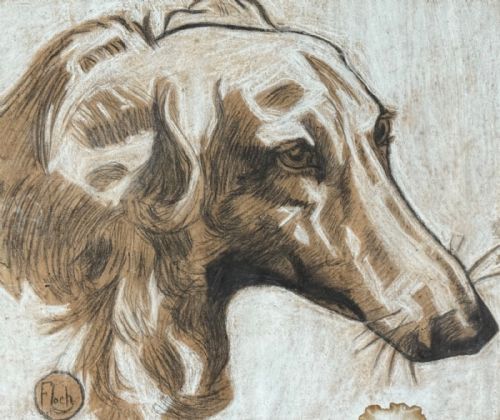
Works on paper utilised mediums such as charcoal, gouache, pencil, pastel, and ink, while graphic techniques like etching captured fine linear detail.
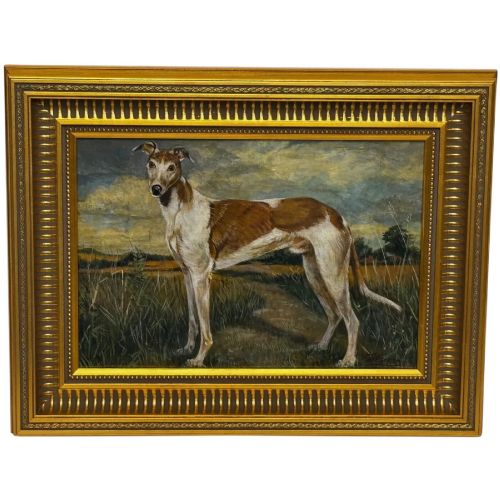
Portraits typically sit within period frames finished in wood, giltwood, or gold leaf, completing the presentation of the artwork.
Several portraits capture dogs caught mid-action, guarding trapped rats, or posing patiently alongside their daily hunting bag.
What Varies in Quality
The anatomical accuracy and individual expression of the animal separate standard decorative works from pieces executed by skilled hands who understood canine form and temperament.
The integration of the subject within its setting, whether a pastoral landscape, a courtyard, or a simple interior, dictates the compositional success of the portrait.
The preservation of the original paint surface or paper medium, coupled with the harmony of the period frame, influences the overall integrity of the piece.
Valentine T. Garland·Martin Theodore Ward·John Sargent Noble·John Emms·John Frederick Herring Senior·Arthur Wardle·Herbert Dicksee·William Barraud·Augustin Edouart·Sir Edwin Landseer·Samuel Raven·Colin Graeme Roe·John Trivett Nettleship·Jules Chardigny
The Framed Canine Portrait Glossary
- Oil on Canvas
- Pigment suspended in drying oil applied to a woven fabric support. This traditional medium allowed artists to achieve rich colour depth and subtle tonal shifts in animal coats.
- Sporting Art
- Genre depicting field sports, hunting scenes, and working animals. These works record hounds, gundogs, and terriers in active rural settings.
- Giltwood
- Timber carved and coated with a thin layer of gold leaf or metallic powder. Such frames provide a traditional, reflective border for historical paintings.
- Etching
- Intaglio printmaking technique where lines are bitten into a metal plate with acid. This process produces fine, precise marks used in detailed animal studies.
- Gouache
- Water-based paint made opaque by the addition of a white pigment. It permits flat areas of vibrant colour alongside fine linear work on paper.
Framed Canine Portrait: Frequently Asked Questions
What periods do these portraits cover?
The listings span from the Georgian and Regency eras through the Victorian and Edwardian periods into the mid-twentieth century. Pieces reflect the shifting artistic styles of these decades.
Victorian and Edwardian works appear most frequently, capturing both working gundogs and beloved domestic pets.
How were these dog portraits displayed?
Historically, these artworks hung in country houses, sporting estates, and domestic parlours to commemorate prized working dogs or family pets. They served as both personal tributes and decorative statements.
Today, they suit similar residential spaces, adding historical character and a classical focal point to a room.
Are all the dogs working breeds?
The selection includes a wide variety of subjects, ranging from spaniels, terriers, pointers, and hounds bred for the field to lapdogs and family pets. Artists painted whatever dogs their patrons or personal lives presented.
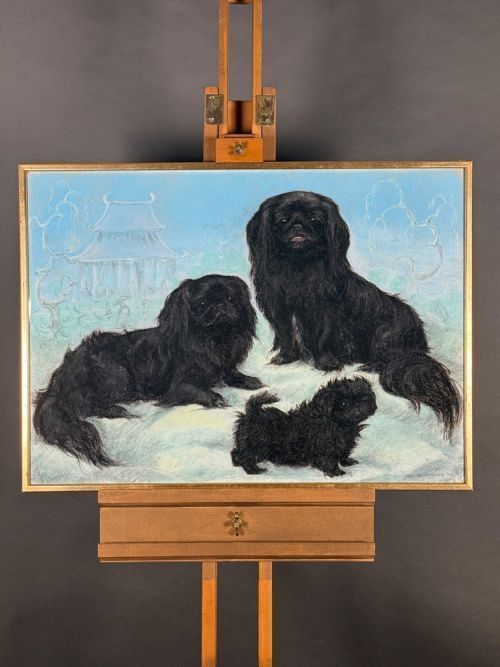
Breeds represented run from Borzois and St Bernards to collies, pexingese, and mixed terriers.
How do I identify the medium used?
Close inspection under good light reveals the texture of brushstrokes on canvas or board, versus the flat or matte finish of pencil, charcoal, and pastel on paper. Etchings show the characteristic plate mark and fine inked lines.
Most listings specify the exact medium, distinguishing between oil paintings, watercolours, drawings, and prints.