



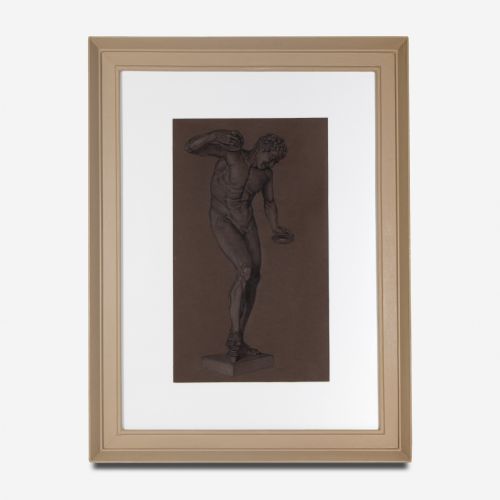


Framed Academic Nude
A framed academic nude is a meticulous study of the human form originating from rigorous art school training, prized for its draftsmanship and historical context.
Framed Academic Nude
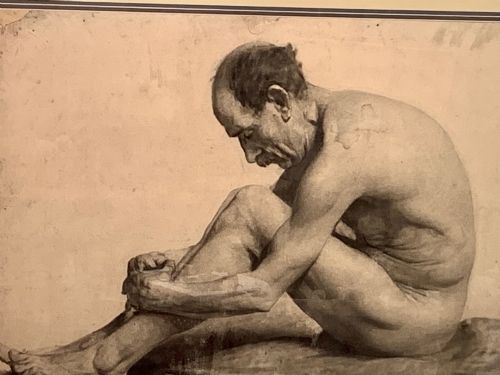
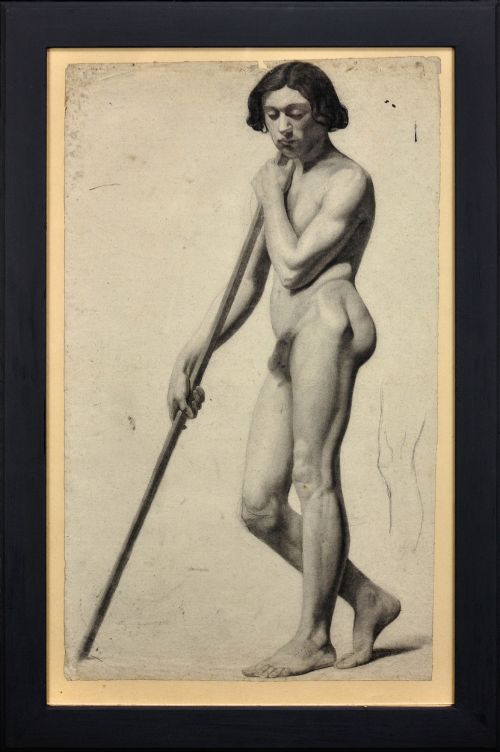
A framed academic nude represents a disciplined exercise in figure drawing and painting executed within traditional art institutions. These works capture the human form through direct observation of live models, often following classical proportions and heroic poses.
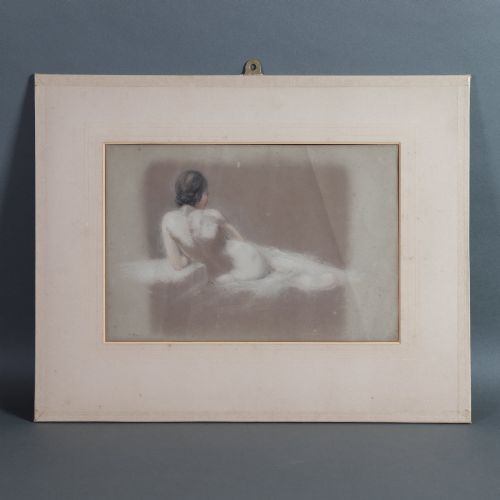
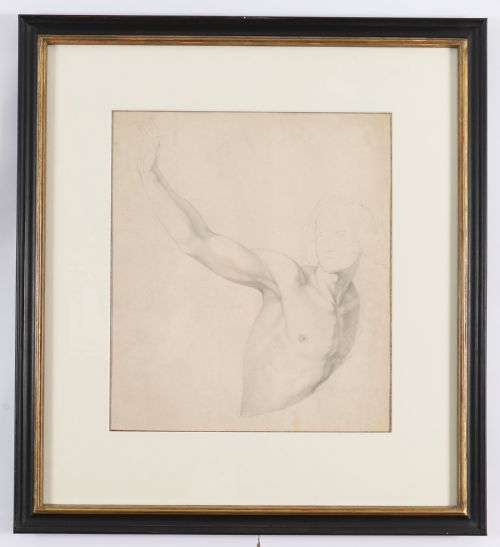
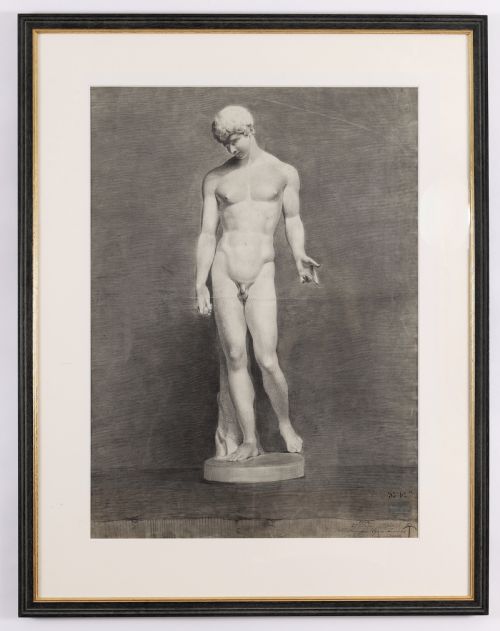
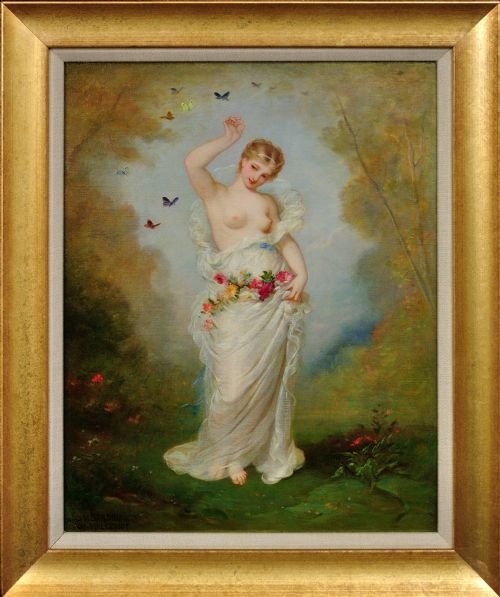
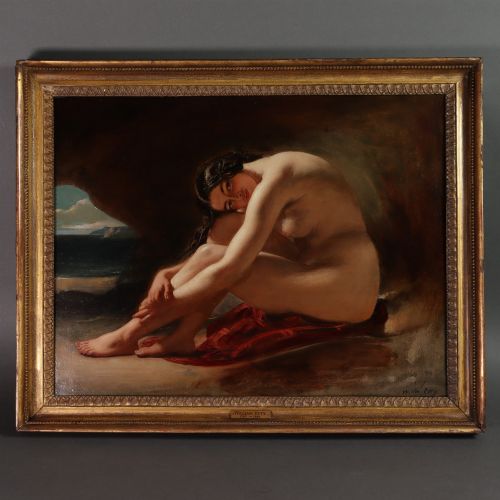
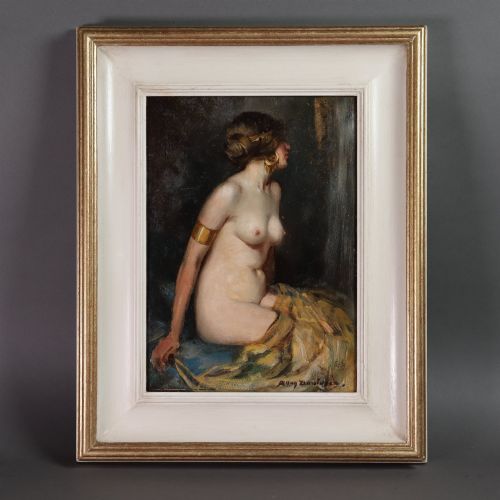
Buyers encounter a variety of forms on this page, ranging from detailed graphite and charcoal life studies on paper to oil paintings on canvas and panel. Many examples reflect nineteenth-century and early twentieth-century academic traditions, alongside occasional post-war studio pieces.
The origins span British, French, Belgian, and Italian schools, encompassing styles such as Academic Realism, Neoclassical, and Victorian Romanticism. Pieces frequently arrive in period wooden frames behind glass, preserving delicate media like chalk and pastel.
Materials and Techniques
Artists executed these works using dry media such as graphite, charcoal, and chalk on paper, building tone and shadow through careful hatching and smudging. Other examples employ oil paint on canvas, panel, or board, utilising layered glazes and opaque pigments to render musculature and flesh tones.
Preparatory studies often began as rapid line sketches before developing into fully modeled figures with precise light sources. Framing typically involved traditional timber mouldings, occasionally finished with gilt leaf or painted surfaces to complement the artwork.
The selection includes academic life studies originating from British, French, Belgian, and Italian schools.
Distinctions in Quality
Quality rests upon the precision of anatomical rendering and the confidence of the line work. Superior pieces demonstrate a profound understanding of skeletal structure, musculature, and weight distribution, whereas lesser examples struggle with proportion.
The handling of light and shadow creates depth that separates accomplished studio exercises from routine classroom practice. Furthermore, the integration between the artwork and its period frame influences the overall integrity of the piece.
William Etty·Augustus John·Henry Arthur Roberts·André Charles Voillemot·Alexandre Louis Martin·Allan Douglas Davidson·James Clark·William Edward Frost·Arthur Hacker·Fernand Jean Barbier·Winifred Eugene Ballard
The Framed Academic Nude Glossary
- Academic Realism
- A style of painting and drawing produced under the influence of European academies of art, combining neoclassical discipline with realistic observation.
- En Grisaille
- A method of painting executed entirely in shades of grey or neutral monochrome, often used to simulate sculpture or as a preliminary underpainting.
- Life Study
- A work of art created directly from a live human model, serving as a fundamental exercise in academic training.
- Recumbent
- Lying down or reclining in a horizontal position, a frequent posture for classical figure studies.
- Grand Prix de Rome
- An annual scholarship competition in Paris that required students to produce historical and academic compositions.
Framed Academic Nude: Frequently Asked Questions
What is an academic nude?
An academic nude is a study of the human body produced as part of formal training in European art schools. These pieces served to teach proportions, lighting, and anatomy.
Students drew or painted live models under strict institutional guidelines, resulting in works that emphasise technical skill over expressive freedom.
How were these drawings used?
Art students created these studies to master the complexities of human anatomy and tonal gradation. Many works functioned as preparatory exercises for larger history paintings.
Instructors evaluated these drawings for admission to advanced classes or competitive prizes within academies like the École des Beaux-Arts.
How do I hang a framed academic nude?
These works suit traditional or eclectic interiors where traditional draftsmanship can be appreciated at close range. Pair them with neutral walls to highlight the monochrome tones of charcoal and graphite.
Ensure placement avoids direct sunlight to protect vulnerable works on paper from fading over time.
How do I identify the period?
Dating relies on the style of the framing, the medium, and the handling of the subject matter. Nineteenth-century pieces often lean toward neoclassical rigour, while early twentieth-century examples introduce softer impressionistic tendencies.
Inscribed dates, artist signatures, and collector stamps on the reverse provide definitive chronological markers.