


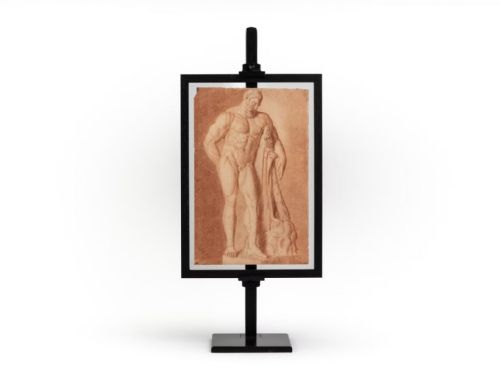


Classical Academic Drawing
A classical academic drawing captures the rigorous study of the human form and antique sculpture through precise draftsmanship.
Classical Academic Drawing
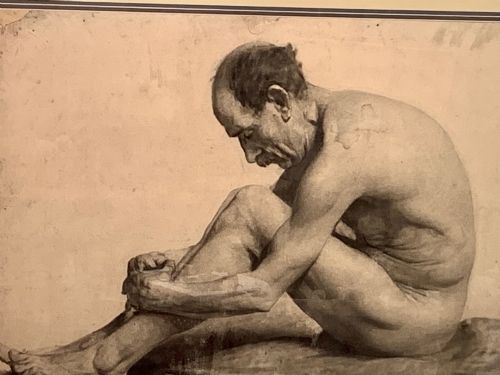
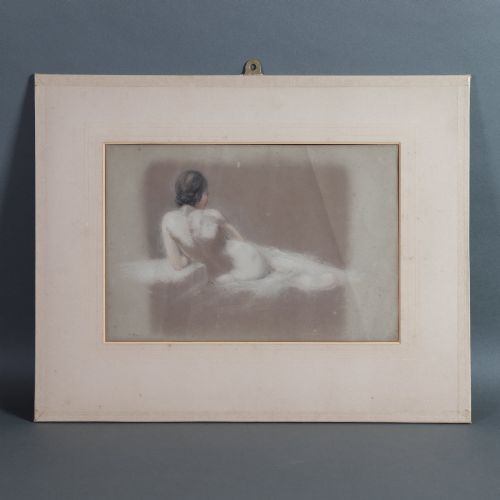
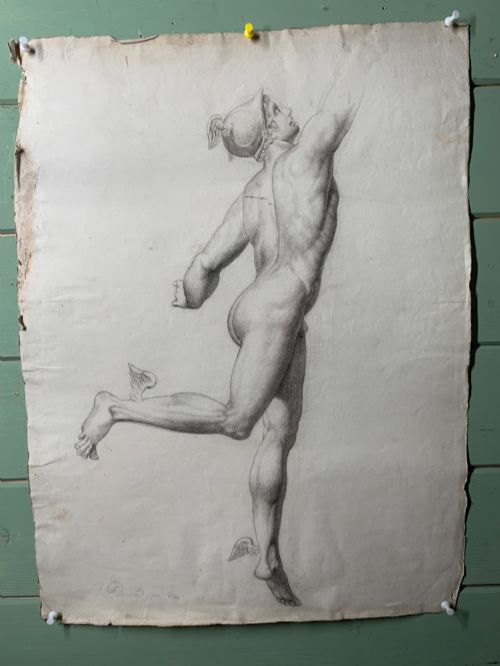
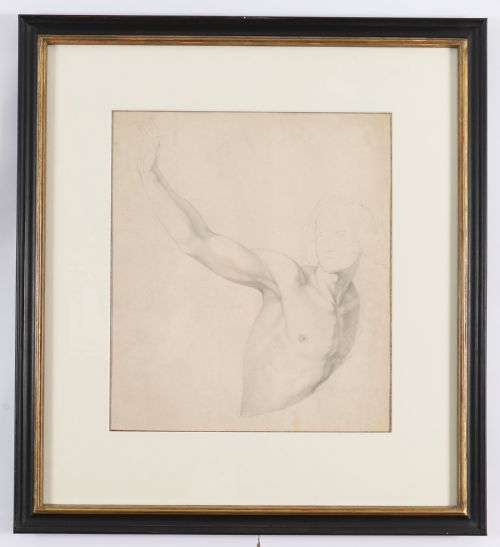
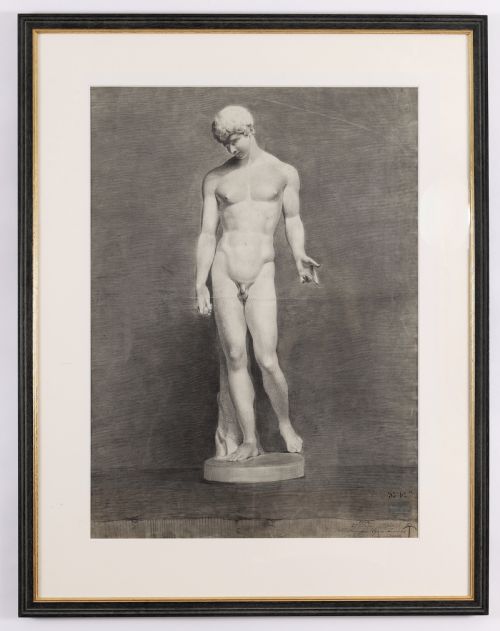
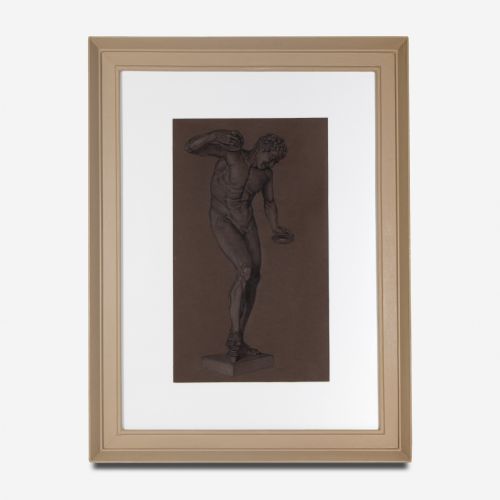
A classical academic drawing represents rigorous training in drawing the human figure and antique sculpture, often produced within European art academies during the eighteenth and nineteenth centuries. These works focus heavily on anatomy, proportion, and tonal volume, developing from preliminary sketches into finished studies of nudes and mythological figures.
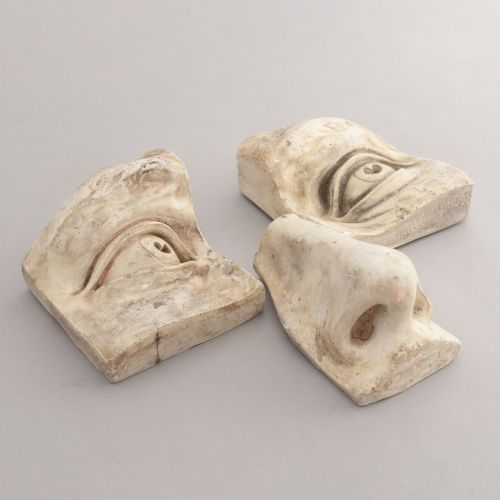
Buyers meeting this material will encounter graphite, charcoal, red chalk, and ink on paper, alongside related plaster casts of classical subjects like the eye of David or the Capitoline Antinous. Many of these sheets record students copying masterworks or recording live models in academic poses.
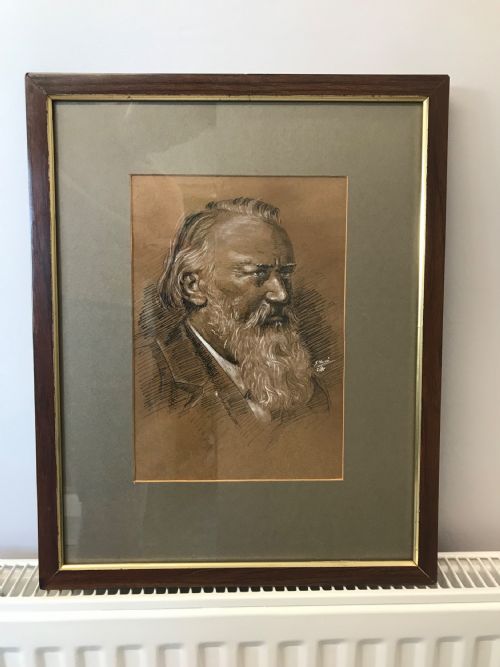
The selection ranges from Georgian and eighteenth-century Italian studies to later nineteenth-century French and English school examples. These varied formats include single figural studies, portraits, and framed works in antique gilt wood frames.
What varies in quality
Quality rests upon the sureness of the line, the accuracy of anatomical proportion, and the subtlety of tonal modelling across the paper. Stronger examples display a confident understanding of light and shadow that defines bone structure and muscle tension convincingly.
The sophistication of the composition and the fidelity of the rendering separate routine student exercises from accomplished academic works. Materials also play a role, as finely preserved sheets utilising red chalk or layered wash demonstrate greater artistic ambition.
Listings feature works spanning the eighteenth century, nineteenth century, and twentieth century, executed in graphite, charcoal, chalk, ink, and plaster.
William Etty·Johannes Brahms·Henry Arthur Roberts·Pierre Paul Prud hon·William Edward Frost
The Classical Academic Drawing Glossary
- Academic Realism
- A style of painting and drawing produced under the influence of European academies of art, emphasising traditional standards, precise anatomy, and classical subjects.
- Plaster Cast
- A rigid copy of a sculpture made in plaster of Paris, widely used in art academies for students to learn drawing through the analysis of light and shadow.
- Recto and Verso
- Terms designating the front and the back of a single sheet of paper or drawing, where sketches appear on both sides.
- Sanguine
- A drawing technique utilising red chalk, favoured by artists for sketching the human body due to its warm, flesh-like tone.
Classical Academic Drawing: Frequently Asked Questions
What is a classical academic drawing?
These works are detailed studies of the human figure and classical sculpture created within the training systems of European art academies. They emphasise precise anatomy and tonal control.
Such drawings served as foundational exercises for artists mastering the human form before progressing to complex historical or mythological paintings.
How were these drawings used?
Artists and students utilised these studies to understand proportion, musculature, and light by drawing directly from live models or antique plaster casts.
They functioned primarily as training tools, though finished submissions were also prepared for academic competitions like the Prix de Rome.
How should I live with these works?
Drawings on paper require careful placement away from direct sunlight to prevent the fading of graphite, chalk, and ink media.
Framing behind glass with conservation materials helps protect these delicate surfaces from atmospheric moisture and dust.
How do I identify different periods?
Stylistic shifts and framing materials offer clues to age, moving from eighteenth-century red chalk Italian sheets to nineteenth-century graphite and mixed media studies.
Inscriptions, dates, and recorded schools of artists further help contextualize whether a piece originates from the Georgian era or later nineteenth-century movements.