


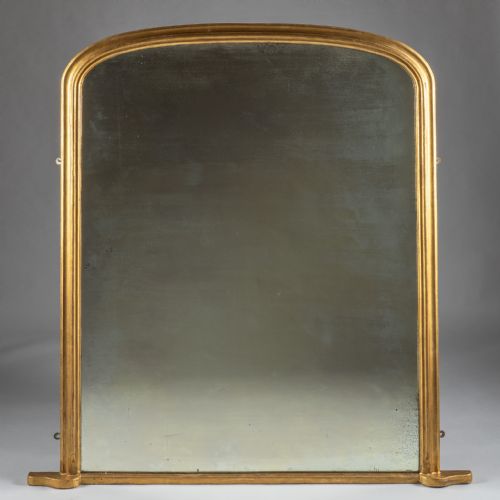


Foxed Glass Overmantel Mirror
A foxed glass overmantel mirror brings atmospheric depth and historical character to a room through plates marked by time.
Foxed Glass Overmantel Mirror
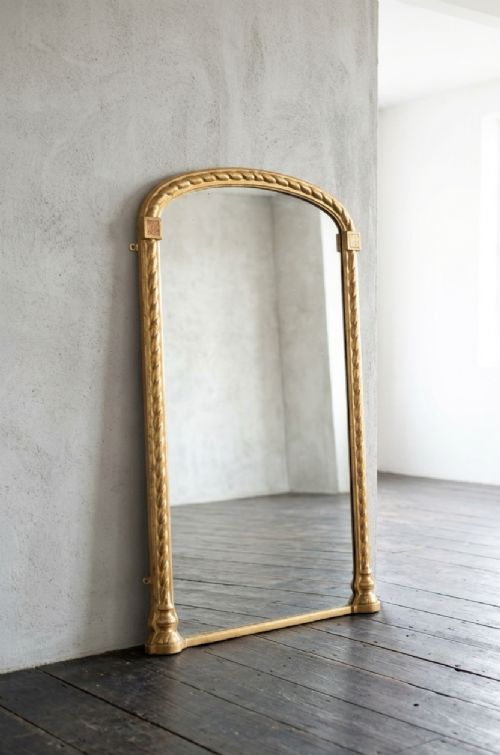
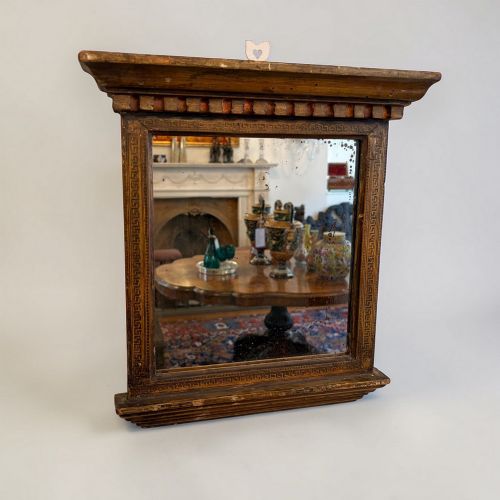
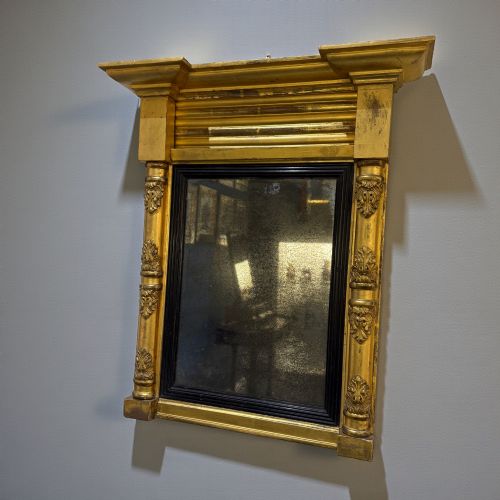
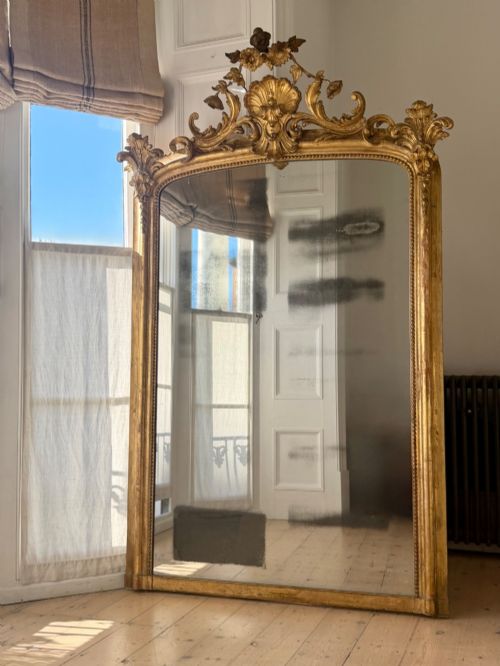
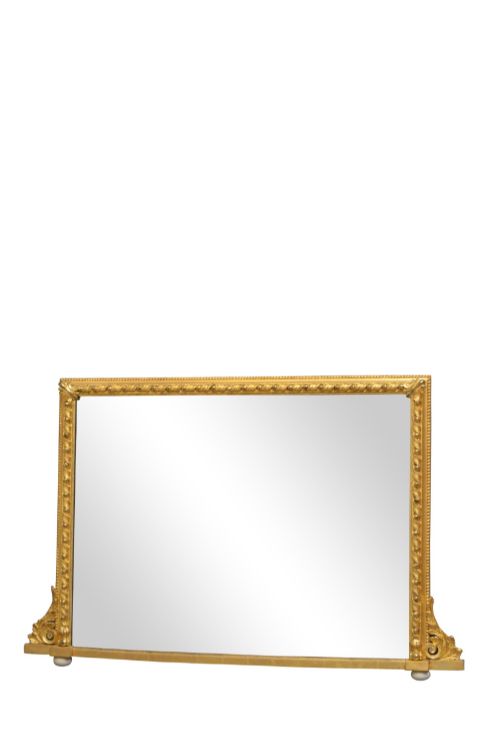
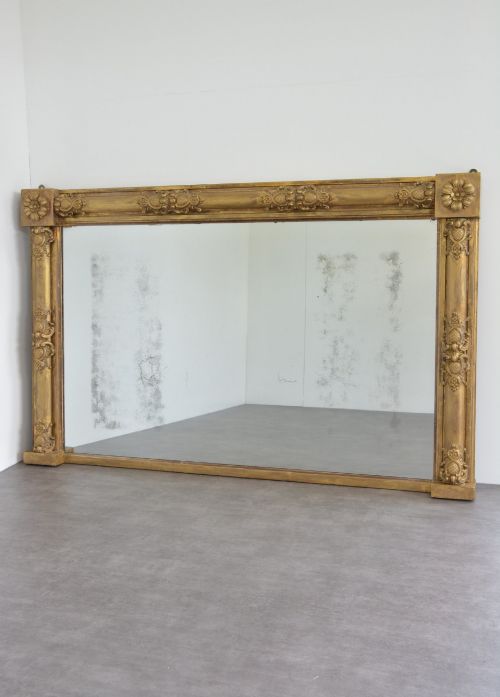
A foxed glass overmantel mirror is a wide looking glass designed to sit above a fireplace, though many survive simply as generous wall hangings. These plates span the eighteenth, nineteenth and early twentieth centuries, drawing on styles from Victorian England and provincial France.
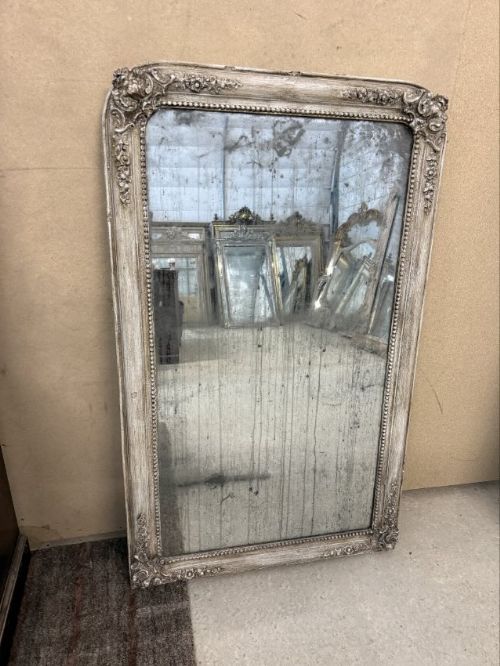
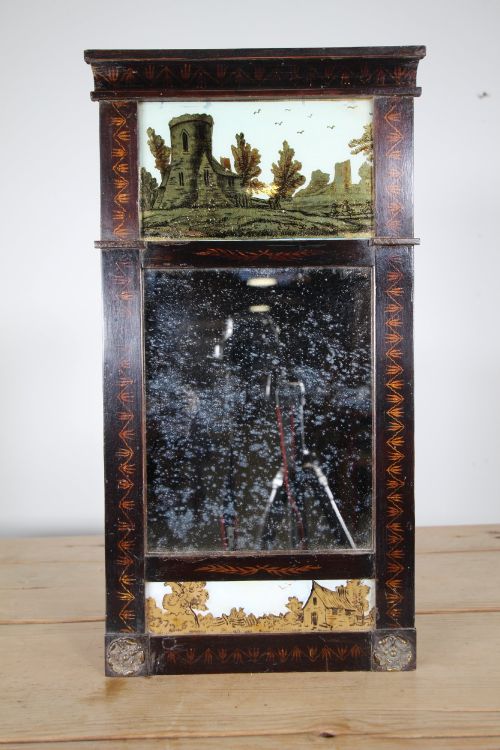
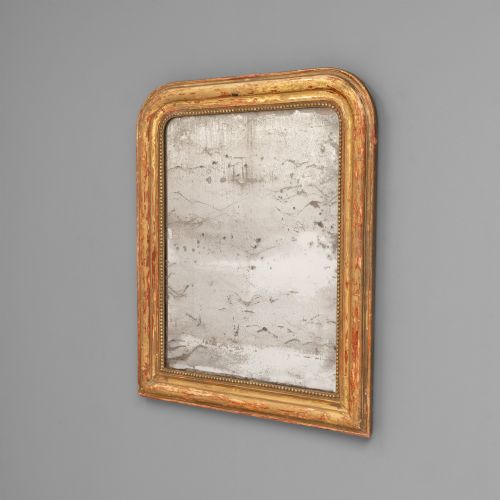
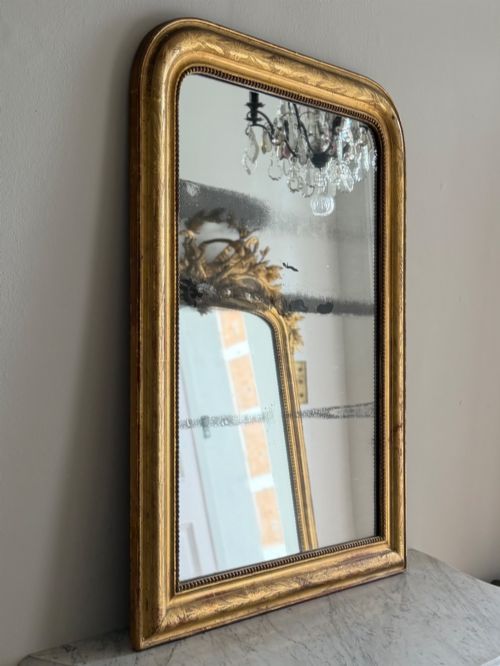
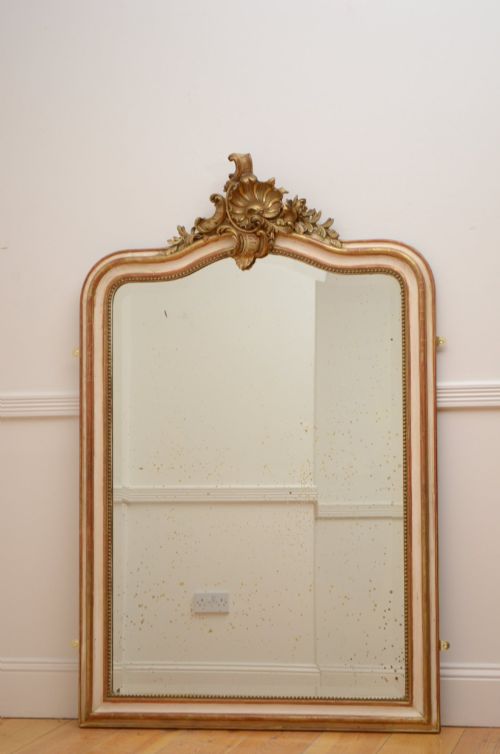
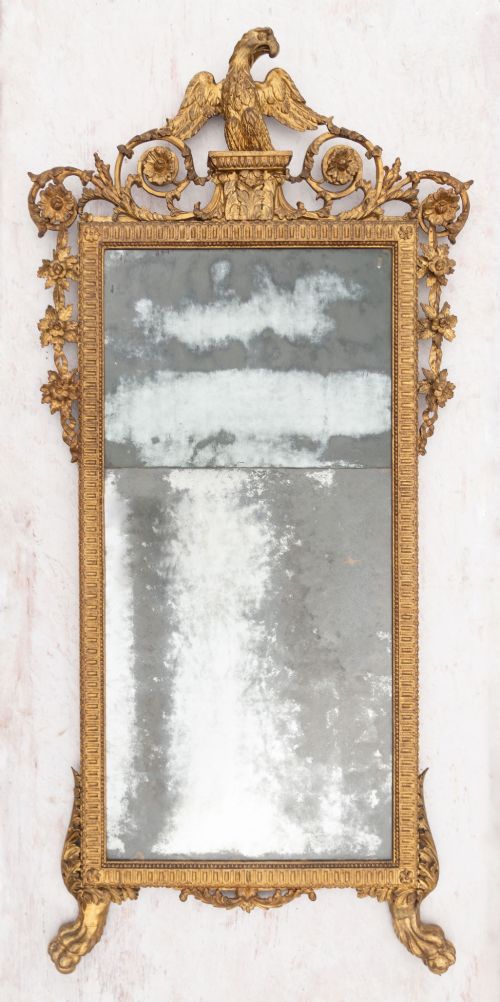
The version most commonly met on this page is the nineteenth century giltwood and gesso overmantel, often featuring an arched top and decorative carved wooden framing. Alongside these sit French trumeau and pier mirrors, displaying mercury plates aged to various degrees of cloudiness.
Frames range from simple reeded wood to elaborate French neoclassical and Napoleon III gold leaf carvings. The glass itself bears the defining dark spots and silvering degradation that collectors prize for authenticity.
Materials and construction
Makers built these frames using carved wood, gesso and composition ornaments applied to timber foundations, then finished them with gold leaf or paint. Mercury glass plates were produced by applying a tin and mercury amalgam to the back of the sheet, a process that created a deep and uneven reflection.
Overmantel mirrors often employ heavy timber to support their considerable width, whilst trumeau panels incorporate painted wood and decorative motifs above the glass. The combination of carved giltwood and aged mercury plates gives each piece its distinct weight and texture.
Foxed Glass Overmantel Mirror Retail Price Guide 2026
Typical asking prices for foxed glass overmantel mirror among the pieces listed under this phrase on Sellingantiques today, from the lower quarter to the upper quarter. They describe what is for sale here now, not the wider market.
Listings feature eighteenth and nineteenth century examples spanning Victorian, Regency, and French styles constructed in giltwood, gesso, and painted wood.
Judging quality and character
Quality rests in the crispness of the original carved woodwork and the harmonious proportion of the frame to the glass plate. Superior pieces show spirited hand-carving in the gesso and giltwood rather than mass-produced composition ornament.
The character of the glass also dictates the visual appeal, where natural foxing and speckling create a softer, more atmospheric reflection than uniform modern silvering. Intact original plates secured within their primary frames hold greater interest for those seeking period integrity.
The Foxed Glass Overmantel Mirror Glossary
- Mercury glass
- A double-walled glass blown with a silvering liquid inside, though older mirrors used a tin and mercury amalgam on flat plates. This material develops characteristic dark spots over time.
- Foxing
- The speckled discolouration and dark spots that appear on antique mirror plates as the backing degrades. It provides visual proof of age.
- Overmantel mirror
- A wide mirror specifically proportioned to hang on the wall directly above a mantelpiece or fireplace. They often feature arched or landscape formats.
- Trumeau mirror
- A decorative wall mirror incorporating a painted or carved wooden panel above the glass plate. They originated in eighteenth century French interior design.
- Gesso
- A plaster-like mixture applied to wooden frames as a smooth base for gilding or painting. Skilled carvers incised details directly into this layer.
Foxed Glass Overmantel Mirror: Frequently Asked Questions
What is foxed glass?
Foxed glass refers to mirror plates that have developed dark spots, cloudiness, and speckled discolouration as the reflective backing breaks down over decades.
This natural ageing process creates a softer, more atmospheric reflection that distinguishes antique mirrors from modern reproductions.
Where should an overmantel mirror hang?
An overmantel mirror is traditionally placed directly above a fireplace mantelpiece to reflect light and anchor the room's main focal point.
These pieces also function effectively on large expanse walls in reception rooms, where their width balances surrounding furniture.
Are these mirrors heavy?
These mirrors are typically heavy due to their solid wooden frames, thick gesso layers, and substantial glass plates.
Proper wall fixings and professional installation are essential to support the weight securely.