

Four Wooden Chairs
Four wooden chairs bring symmetry to a table, combining practical seating with enduring cabinet-making traditions from the Georgian, Victorian and Edwardian eras.
Four Wooden Chairs
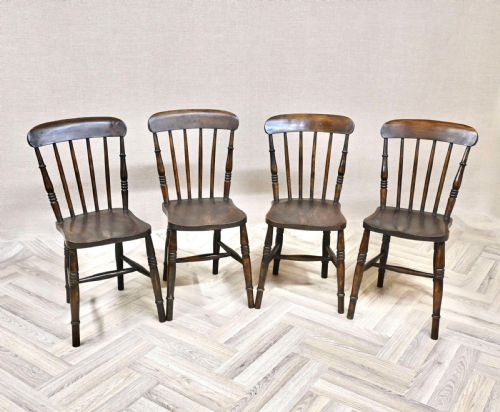
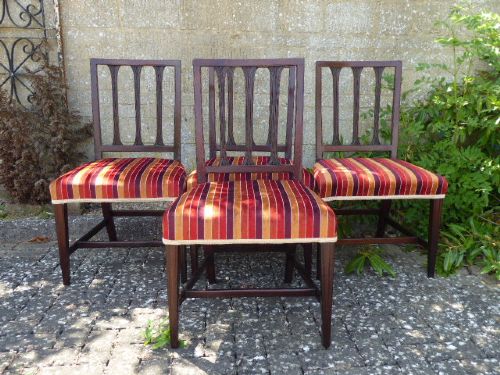
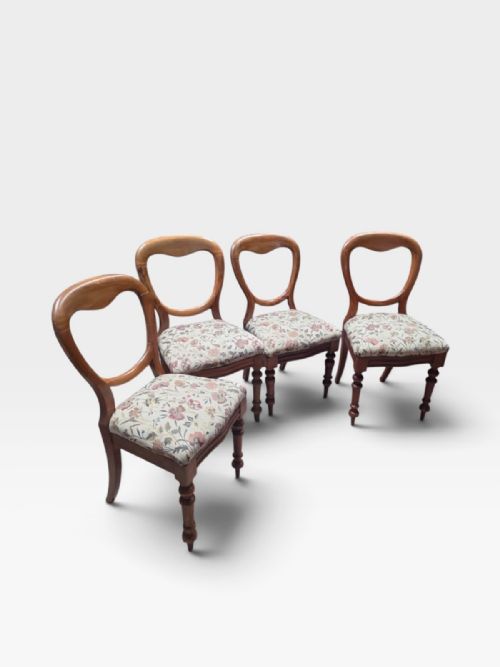
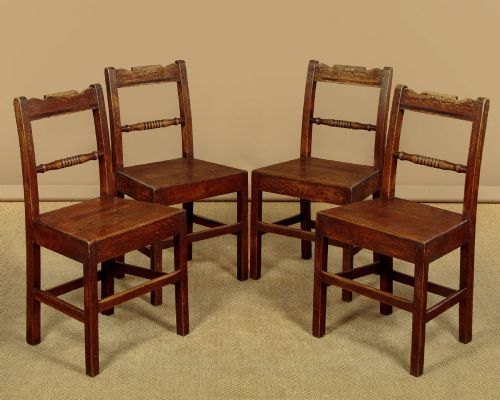
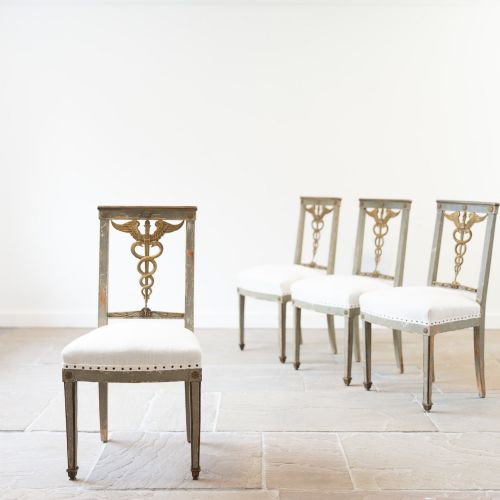
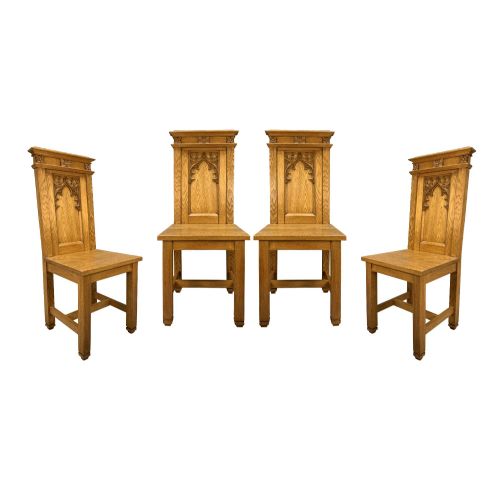
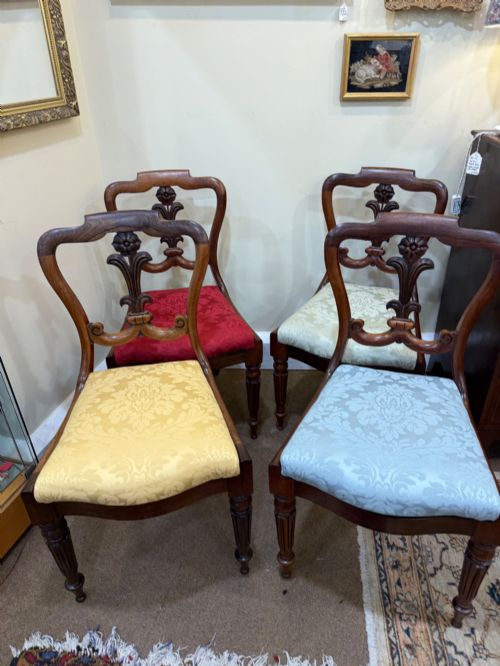
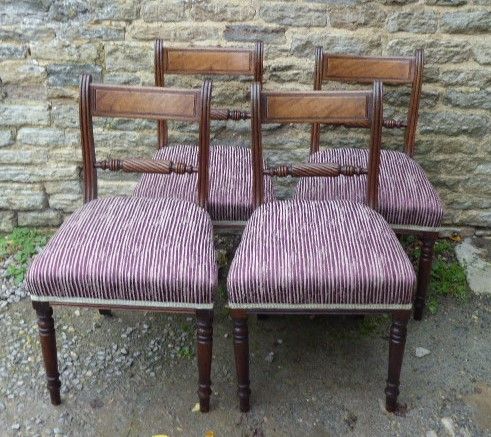
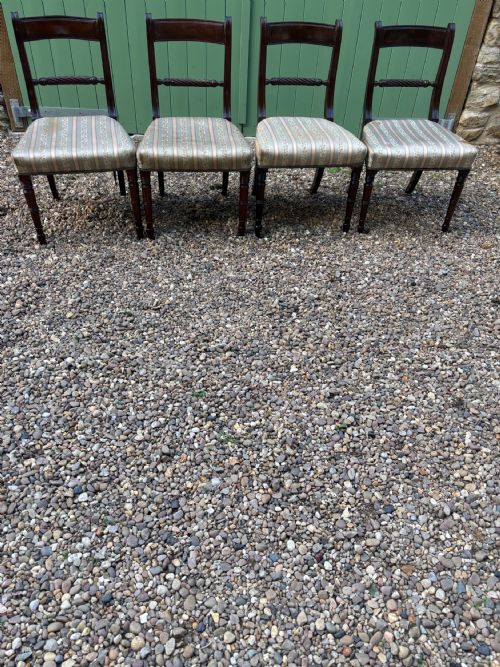
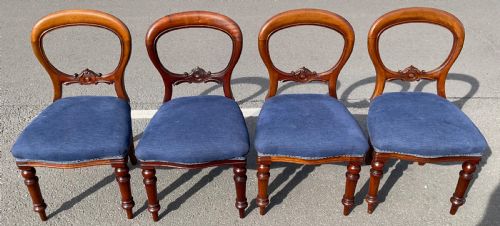
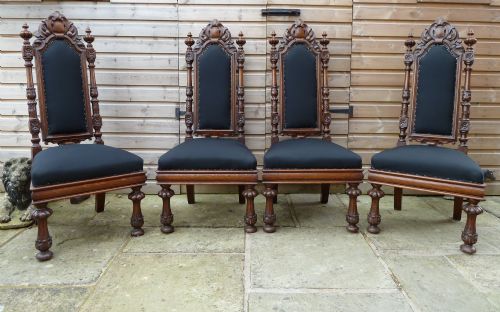
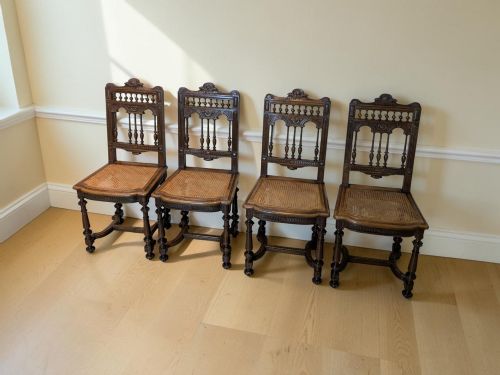
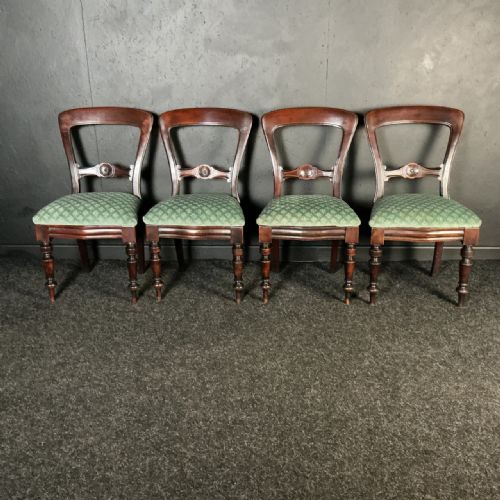
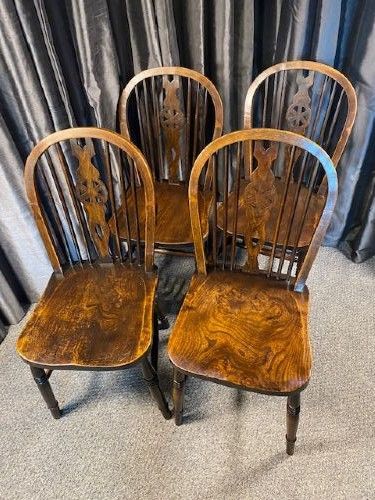
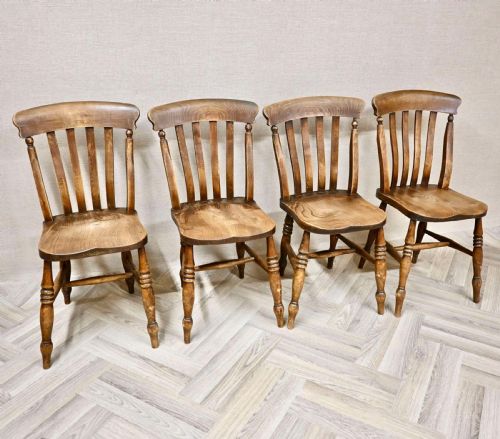
When searching for four wooden chairs, buyers encounter matched sets designed for dining rooms, kitchens and halls, spanning periods from the eighteenth century to the early twentieth century. The most common forms on this page include dining chairs, Windsor kitchen chairs and balloon back chairs.
Sets range from formal mahogany Regency and Georgian designs to robust elm, ash and beech country Windsors. Buyers also find oak hall chairs, rosewood dining seats and inlaid Edwardian examples suitable for daily use around a table.
Materials and construction
Cabinet-makers utilised dense hardwoods like mahogany, walnut and rosewood for formal dining sets, often employing carved details, brass inlay or fiddle backs. Country chairs relied on combinations of elm, ash, beech and fruitwood, shaped into hoop backs, stick backs and lathbacks.
Joinery techniques included mortise and tenon joints, double stretchers and steam-bent components for Windsor and bentwood bistro forms. Rush seats and fabric upholstery provided cushioned seating across Victorian and Edwardian examples.
Four Wooden Chairs Retail Price Guide 2026
Typical asking prices for four wooden chairs among the pieces listed under this phrase on Sellingantiques today, from the lower quarter to the upper quarter. They describe what is for sale here now, not the wider market.
Gradations in quality
Quality rests in the selection of timber grain, the crispness of hand-carved motifs such as Chippendale splats or balloon backs, and the structural integrity of the frame. Superior sets maintain original matching components rather than assembled harlequin groupings.
Refined Regency and Georgian dining chairs display precise joinery and balanced proportions, whereas country Windsor chairs derive distinction from well-turned spindles, robust stretchers and pleasing patination on elm and ash.
Codina
The Four Wooden Chairs Glossary
- Balloon back
- A rounded, curved chair back popular during the Victorian era that resembles the outline of a balloon. This shape provides comfortable lumbar support.
- Windsor
- A traditional chair construction where legs and back spindles are fit directly into a solid wooden seat. These vernacular pieces frequently feature elm or ash.
- Chippendale
- A style originating from eighteenth-century furniture designs characterised by interlaced pierced splats and cabriole legs. These chairs often utilise solid mahogany.
- Lathback
- A Windsor chair variation featuring horizontal wooden slats across the backrest rather than vertical spindles. They appear frequently in nineteenth-century farmhouse kitchens.
- Harlequin set
- A group of chairs sharing similar periods or styles assembled together rather than originating from a single workshop. Collectors appreciate the subtle variations between individual seats.
Four Wooden Chairs: Frequently Asked Questions
How do I date a set of wooden chairs?
Dating relies on identifying characteristic design traits, such as Regency brass inlay, Victorian balloon backs or Georgian Chippendale splats. Timber choices also indicate periods, with mahogany dominating formal eighteenth-century rooms and mixed hardwoods appearing in nineteenth-century country pieces.
Construction methods offer further clues, as hand-cut joints and original stretchers point to earlier manufacture. Comparing the turning, screw types and wear patterns helps place chairs within specific decades.
Can I use antique chairs for daily dining?
Most antique wooden chairs were built for functional domestic use and withstand regular seating when structurally sound. Hardwoods like oak, mahogany and ash provide durable frames for everyday dining tables.
Periodic checks of the joinery and stretchers ensure long-term stability. Adding appropriate protective pads to feet prevents unnecessary wear on wooden floors.
What is a harlequin set?
A harlequin set consists of chairs that share a common style, period or material but were not originally manufactured together as a single group. These collections formed over time as owners gathered matching pieces.
Such sets offer a cohesive appearance around a table while displaying subtle individual variations in turning and timber grain. They represent a traditional method of seating a household.
How do I care for antique wood surfaces?
Maintaining antique wooden chairs involves dusting regularly with a soft cloth and applying traditional beeswax sparingly to nourish the grain. Avoiding direct sunlight and extreme temperature fluctuations prevents timber from drying out and cracking.
Harsh chemical cleaners strip the historic patination accumulated over centuries. Gentle upkeep preserves the natural lustre of walnut, mahogany and elm.