




Four Light Pendant Fitting
A four light pendant fitting provides balanced illumination while anchoring a room with period character.
Four Light Pendant Fitting
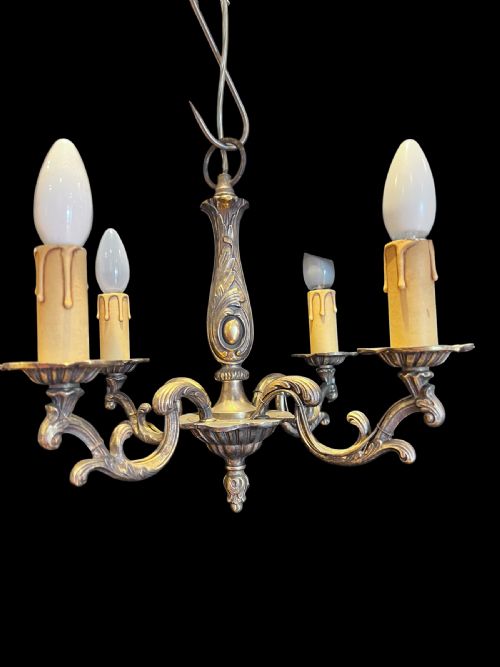
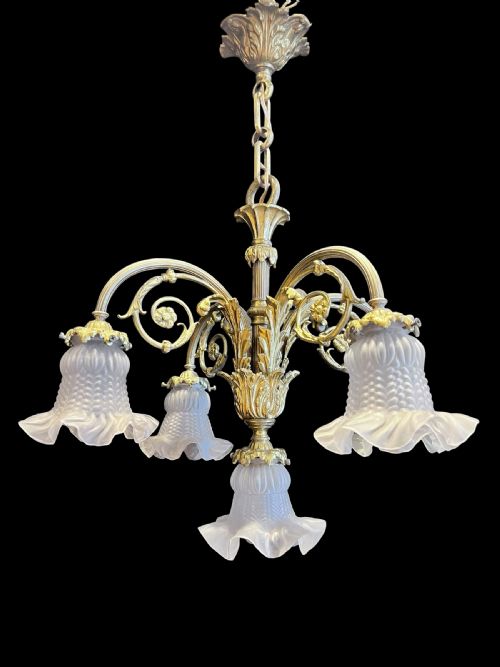
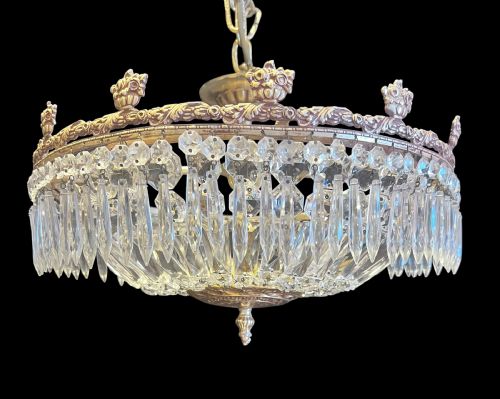
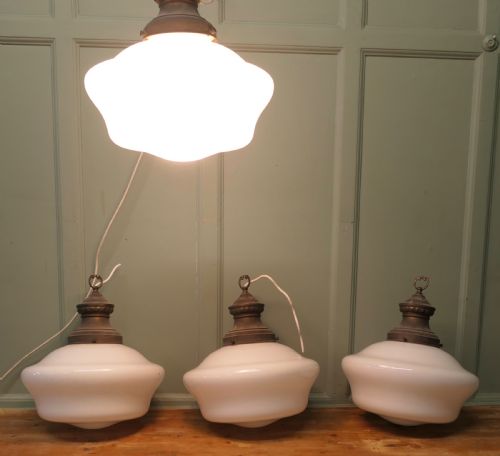
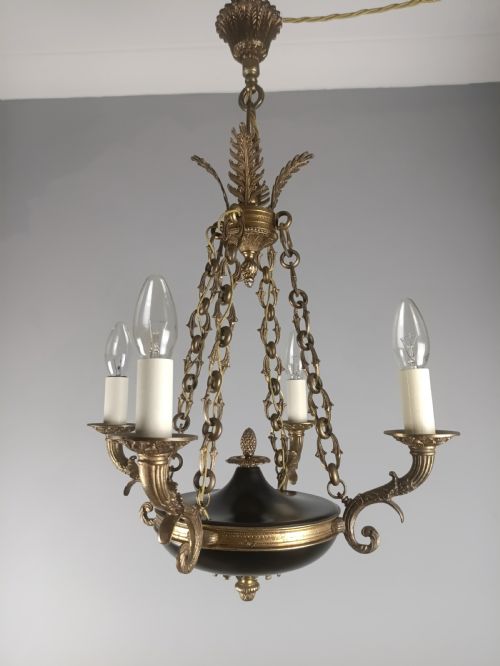
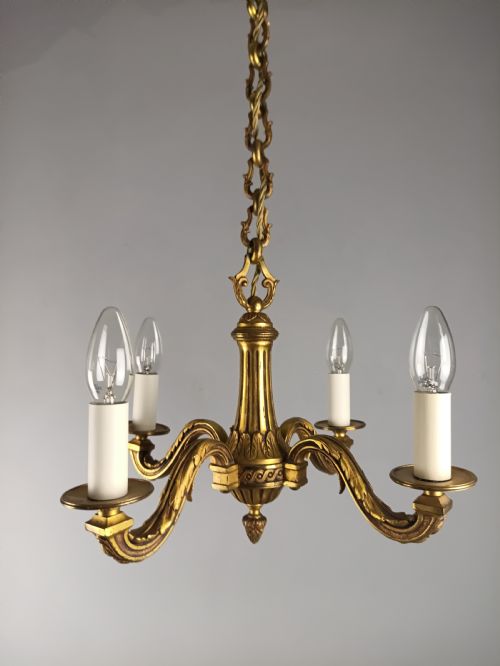
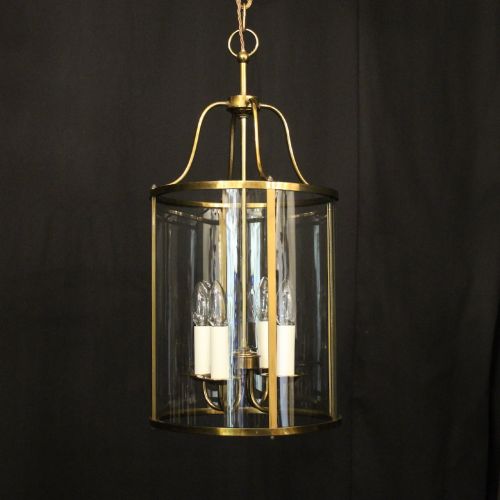
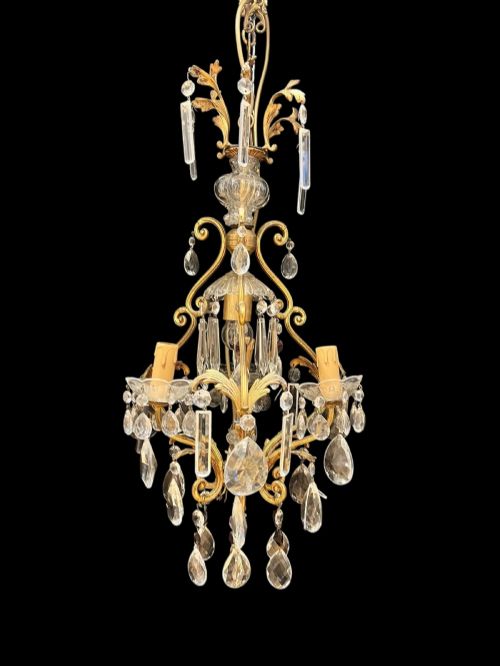
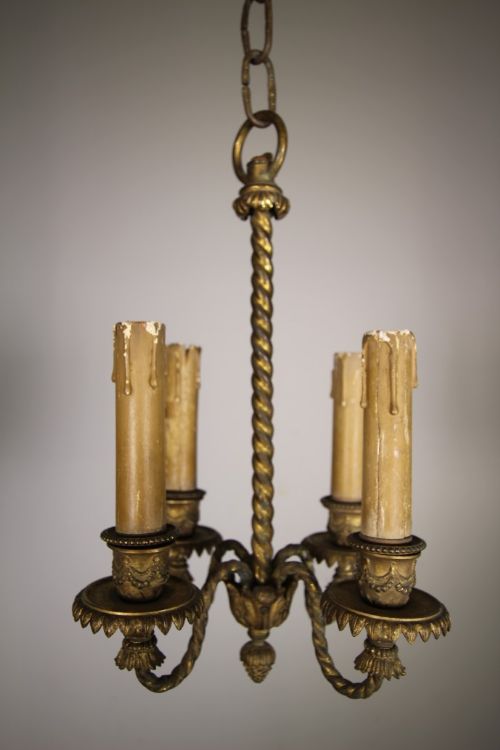
A four light pendant fitting covers an array of ceiling-hung fixtures, most commonly found as French chandeliers, hall lanterns, and plafonieres dating from the nineteenth century through to the nineteen-thirties. Buyers seeking a four light pendant fitting frequently encounter elaborate gilt brass, bronze, and brass structures dressed with crystal or frosted glass.
The selection ranges from Edwardian brass designs featuring figurative details to industrial ceiling lights and ornate French chateau styles like Empire, Rococo Revival, and Neoclassical. These fixtures bring multiple bulbs into a unified suspension, offering practical downward illumination alongside decorative presence in hallways, living spaces, and dining rooms.
Construction and materials
Metalwork forms the skeletal framework of these fixtures, utilising cast or spun brass, gilt bronze, or gilded brass shaped into decorative cage frames, arms, and mounts. These metallic bodies provide the necessary structural integrity to support multiple bulb holders and heavy decorative elements.
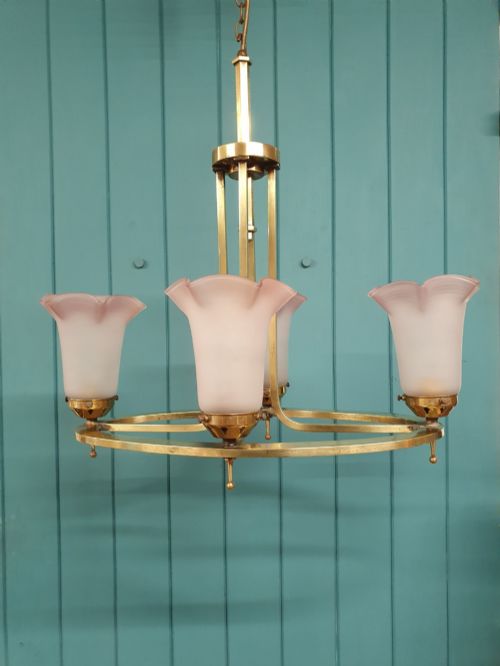
Transparent and translucent components are introduced through moulded glass shades, convex glass panels, and cut crystal drops that refract the light. The combination of polished or patinated metals with glass elements defines the visual weight and luminous quality of the fitting.
Listings feature items predominantly from the nineteen-twenties and nineteen-thirties, alongside Edwardian and nineteenth-century examples.
Assessing quality and craftsmanship
The refinement of the casting and chasing work separates standard production from finer examples, particularly in the crispness of foliage, cherubs, and classical motifs on bronze and gilt brass surfaces. Heavier gauge metal and precise mechanical joints indicate superior construction.
The clarity and cut of the crystal drops or the thickness of the moulded glass panels contribute significantly to the overall execution. Finer pieces demonstrate careful integration between the metal armature and the glass or crystal components.
G.E.C
The Four Light Pendant Fitting Glossary
- Plafoniere
- A ceiling light fitting designed to sit relatively flush against the ceiling rather than hanging on a long drop chain or rod.
- Ormolu
- A technique of applying finely ground high-carat gold to a bronze or brass object using a mercury amalgamation process, or simply describing gilt bronze.
- Empire
- A neoclassical design style spanning the late eighteenth and early nineteenth centuries, characterised by military motifs, classical drapery, and bold symmetry.
- Cage chandelier
- A style of light fixture where the metal framework resembles an open cage, often heavily adorned with strings and drops of crystal.
- Hall lantern
- A specialised hanging light designed specifically for entrance halls and corridors, frequently enclosed in glass panels with a metallic frame.
Four Light Pendant Fitting: Frequently Asked Questions
Where should I hang a four light pendant fitting?
These fixtures suit spaces requiring both downward illumination and decorative presence, making them well-suited for entryways, above dining tables, or central living room ceilings.
The height of the ceiling and the physical drop of the fitting dictate the exact placement, ensuring adequate clearance underneath while maintaining proper visual proportion within the room.
How do I identify the period of a light fitting?
Dating relies on stylistic clues, such as the heavy neoclassical influence of the nineteen-thirties French pieces or the specific figurative cast metalwork typical of the Edwardian era.
Material choices, wiring remnants, and construction techniques also help place a fixture within its proper historical window.
Are these fittings compatible with modern wiring?
Most antique and vintage ceiling lights can be adapted to meet current electrical standards by a qualified professional during installation.
The internal lamp holders and wiring channels generally accommodate contemporary bulbs and safety earth requirements.
What is the difference between a chandelier and a lantern?
Chandeliers typically feature branching arms radiating outward from a central column to support multiple light sources, often dripping with crystal or glass ornamentation.
Lanterns are enclosed within glazed panels, presenting a more contained silhouette that was traditionally designed to shield flames from drafts in hallways.