
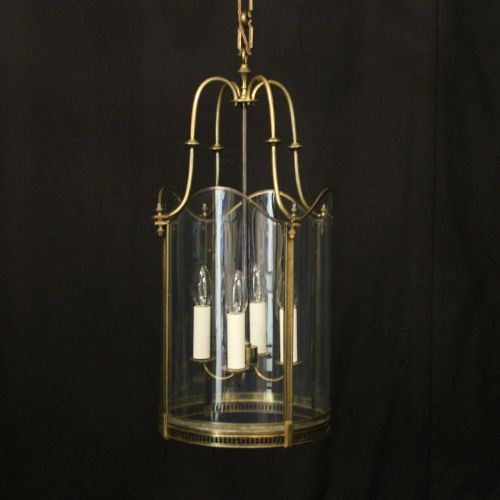
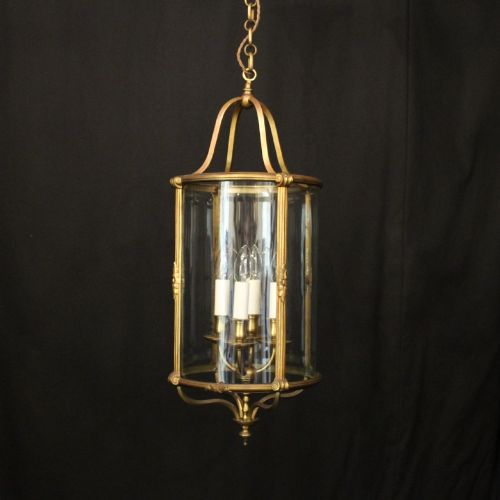
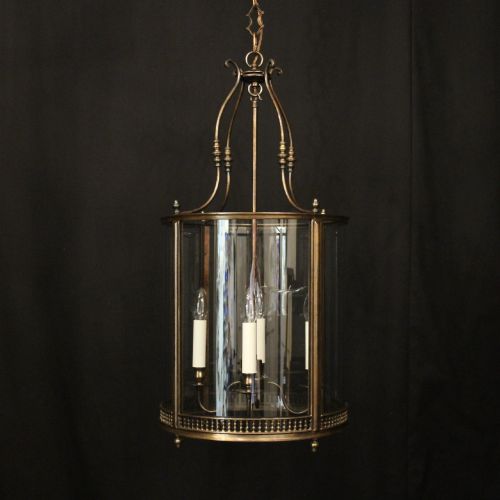
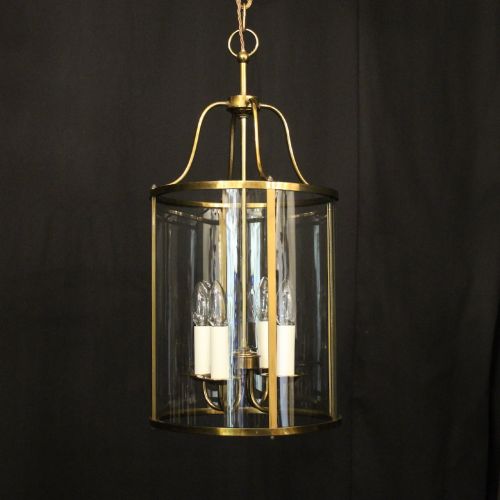


Four Light Hall Pendant
A four light hall pendant gives an entranceway genuine presence, casting bright illumination through glass panels set within a sturdy metal frame.
Four Light Hall Pendant
A four light hall pendant takes the form of a substantial hanging lantern designed specifically for corridors, stairwells and grand entryways. These pieces combine glazed panels with internal framework holding four separate lights to brighten large transitional spaces.
Most examples found here originate from the nineteenth century and the twentieth century, specifically drawing upon French Neoclassical, French Chateau, Rococo Revival and English Regency aesthetics. The assortment spans French and English workshops, utilising robust hanging forms known variously as hall lanterns, ceiling lights and pendant lights.
Buyers will most frequently encounter convex and flat glass designs housed in gilt brass, gilded bronze, standard bronze and steel structures. These variations provide either sweeping curved reflections or sharp, structured transparency depending on the regional style.
Construction and materials
Makers constructed these lanterns using heavy metallic frames of brass, bronze, gilded bronze, gilt brass and steel to support the weight of multiple glass panes. Molten or rolled metal formed the structural ribs, whilst specialised casting techniques created intricate decorative mounts.
Panels of glass, frequently curved or convex, were individually fitted into the metal armature and secured by internal glazing bars. Gilding was applied to brass and bronze surfaces to enhance the catch of light within dark hallways.
Listings feature items dated across the nineteenth century, 1900, 1920 and 1930, utilising glass, brass, gilded bronze, bronze, gilt brass, steel and gilded brass.
Factors determining quality
The distinction between standard and superior pieces rests on the weight of the metal chassis and the precision of the casting. Finer examples display crisper chased detail on the bronze or brass mounts and heavier gauge steel or brass frameworks.
Glass quality also divides the range, with thick, clear or convex panes showing superior clarity compared to thinner alternatives. The integration of four internal light fittings within a balanced, symmetrical cage dictates the overall success of the piece.
The Four Light Hall Pendant Glossary
- Convex glass
- Curved glass panels that project outward to diffuse light across a wider angle. This treatment creates soft reflections in hallway settings.
- Gilded bronze
- Bronze metal treated with a thin layer of gold leaf or gold paint. This technique provides a rich, warm tone resistant to tarnishing.
- Hall lantern
- A ceiling-hung lighting fixture proportioned for narrow corridors and entryways. These fixtures keep vertical spaces open while providing ample illumination.
- English Regency
- A design period spanning the early nineteenth century characterised by classical restraint and neoclassical motifs. Pieces from this tradition favour clean architectural lines.
- French Louis XVI style
- An aesthetic rooted in eighteenth-century classical revival featuring symmetrical geometry and restrained ornamentation. It reappeared frequently in later nineteenth and twentieth-century lighting.
Four Light Hall Pendant: Frequently Asked Questions
Where should I hang a four light hall pendant?
These fixtures suit high-ceilinged entryways, grand stairwells and wide corridors where a substantial hanging light provides necessary clearance and illumination.
Ensure the ceiling height accommodates the drop of the lantern so that the lower edge clears foot traffic comfortably.
How do I distinguish French from English lanterns?
French examples often incorporate ornate gilded bronze mounts reflecting Rococo or Chateau aesthetics, whereas English pieces frequently follow Regency traditions with simpler geometry.
Examining the metal casting and the curve of the glass panels usually reveals the regional workshop practices.
What maintenance do metal and glass lanterns need?
Routine dusting of the glass panels and careful wiping of the metal frame keeps the fixture clear and bright. Avoid harsh chemical cleaners on gilded or plated surfaces to preserve the original finish.
Checking the internal wiring and bulb sockets periodically ensures safe operation in everyday use.
Are these pendants suitable for low ceilings?
Most four light hall pendants require significant vertical space due to their hanging chains and substantial frame height. Low ceilings may make the fixture feel intrusive or restrict movement underneath.
Measuring the drop distance against the floor-to-ceiling clearance is essential before installation.