


Four Drawer Desk
A four drawer desk offers straightforward surface space and orderly storage, pairing timber craftsmanship with practical daily utility.
Four Drawer Desk
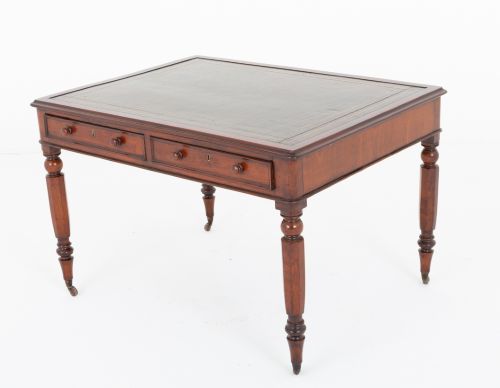
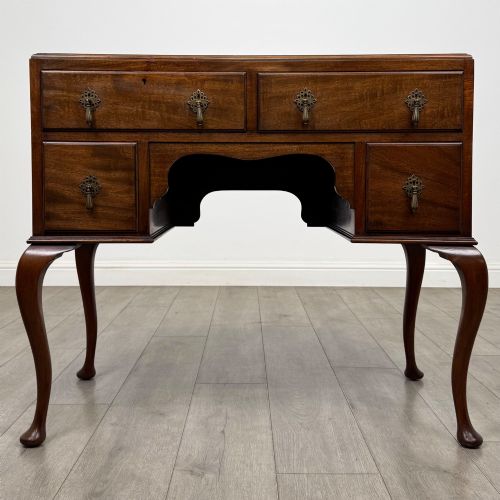
A four drawer desk encompasses a variety of writing tables, bureaux, and side tables designed for working or storage. The examples on this page span the Georgian, Victorian, and Edwardian periods, utilising traditional forms and cabinet-making techniques.
Mahogany is the dominant timber across these examples, often complemented by walnut, elm, boxwood inlay, and brass hardware. Buyers frequently encounter writing tables and kneehole side tables equipped with four drawers, alongside occasional bureau variations.
How they were made
Cabinet-makers constructed these pieces primarily from solid mahogany and walnut, frequently incorporating boxwood for fine stringing and inlay work. Secondary timbers such as elm appear in structural components, while brass is utilised for handles, escutcheons, and castors.
Surface finishes include inset leather writing surfaces and polished wood treatments that highlight the grain. Joinery relied on traditional methods, ensuring structural stability across partners desks, side tables, and dressing tables.
Mahogany, walnut, elm, and boxwood appear frequently as the primary materials across these listings.
What varies in quality
The grade of timber selection and the precision of decorative inlays largely distinguish standard examples from finer pieces. Figured walnut and carefully matched mahogany veneers indicate deliberate craftsmanship during periods such as the Georgian and Victorian eras.
Hardware quality and secondary timber choices also reflect the standard of construction. Original brass fittings and meticulous joinery separate utilitarian items from more ambitious cabinet work.
The Four Drawer Desk Glossary
- Partners desk
- A large double-sided desk designed for two people to work opposite one another, featuring drawers on both sides.
- Bureau
- A sloping flap desk that opens to reveal internal pigeonholes and small drawers above a set of main drawers.
- Kneehole
- A recessed space beneath the centre of a desk or table designed to accommodate the user's legs while seated.
- Inlay
- A decorative technique where contrasting materials such as boxwood are inserted into recesses within the primary timber surface.
Four Drawer Desk: Frequently Asked Questions
What is a four drawer desk?
A four drawer desk is a utilitarian or decorative piece of furniture designed for writing and storage. It typically takes the form of a writing table, kneehole side table, or bureau.
These pieces utilise timbers like mahogany and walnut, often featuring brass hardware and leather writing surfaces. They provide compact or extended workspace depending on the specific form.
How do I identify a Georgian desk?
Georgian desks are recognised through their period proportions, conservative classical styling, and construction methods. They frequently employ solid mahogany and restrained decorative elements.
Unlike later Victorian or Edwardian interpretations, Georgian pieces often display specific structural markers and joinery techniques typical of the eighteenth and early nineteenth centuries.
Were these desks used for writing?
Many of these pieces served as dedicated writing tables, partners desks, or bureaux for correspondence and administrative tasks. The inclusion of drawers provided space for paper, ink, and personal documents.
Some variants, such as dressing tables, combined writing surfaces with mirror glass for personal grooming.
What timber was used most often?
Mahogany is the primary timber found across these listings, valued for its durability and rich grain. Cabinet-makers also utilised walnut, elm, and boxwood.
Secondary woods supported the internal framework of drawers and carcasses, while brass provided functional hardware.