
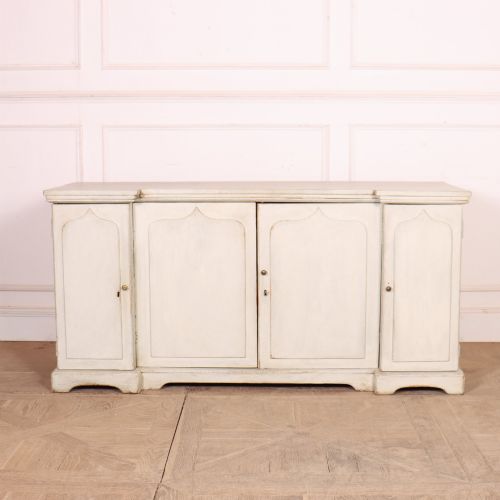
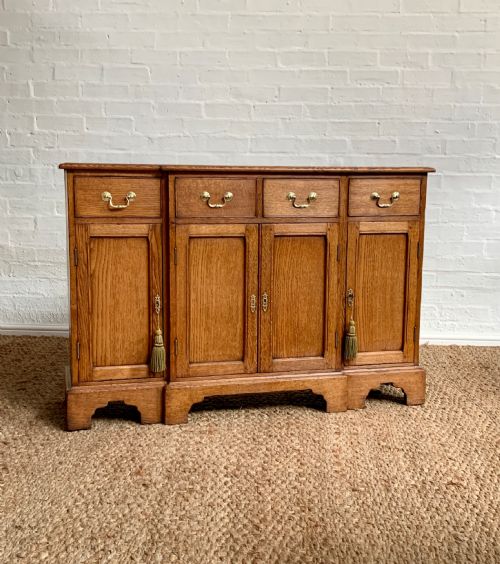


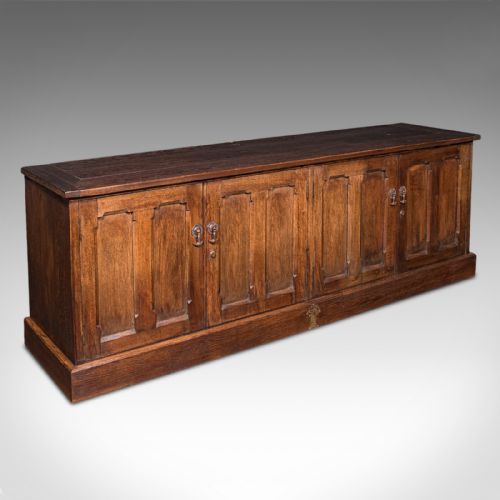


Four Door Dresser Base
A four door dresser base gives you heavy timber storage and a low surface, built to hold service ware in a busy room.
Four Door Dresser Base
A four door dresser base provides a long, low storage footprint with four cabinet doors across the front, designed originally for domestic service. You meet these primarily from the nineteenth century, alongside nineteenth-century pieces finished in paint and a seventeenth-century style execution.
The form spans English country houses and farmhouses, often crossing categorization with sideboards, buffets, and sideboards and buffets. These low timber carcases sit along dining room or kitchen walls, offering substantial capacity behind multiple doors.
How they were made
Carpenters built these carcases primarily in solid oak and pine, frequently supported by brass and iron hardware. Painted wood finishes and distinct layers of paint also appear on nineteenth-century examples.
Construction relies on traditional joinery suited to heavy timber, creating sturdy cupboards designed to bear weight on the top surface while concealing interior shelving.
Listings feature pieces spanning the seventeenth century through to the late nineteenth century, built in oak, pine, walnut, and painted wood.
What varies in quality
Quality rests in the choice of timber and the handling of the surface, whether showing the grain of golden oak or the accumulated layers of old paint. The weight of the wood and the integration of brass or iron fittings dictate the presence of the piece.
Proportion and stylistic details set apart standard utility pieces from ambitious country house furniture, such as those adopting Gothic revival or Renaissance revival motifs. The integrity of the timber carcase determines how well the structure survives centuries of daily use.
The Four Door Dresser Base Glossary
- Dresser base
- The lower half of a traditional kitchen dresser, featuring cupboards and drawers beneath a flat top without the upper plate racks. This configuration functions independently as a sideboard.
- Breakfront
- A cabinet front where the central section projects forward from the flanking wings. This architectural arrangement breaks the horizontal line of a long four door base.
- Gothic revival
- A nineteenth-century design movement utilising medieval architectural motifs such as pointed arches and quatrefoils. These decorative elements appear carved into timber carcases.
- Pine
- A soft timber commonly used for utilitarian farmhouse furniture, frequently scrubbed, waxed, or painted. It offers a lighter visual weight than hardwoods like oak.
- Buffet
- A side table or low cabinet used for serving food or storing tableware. The term overlaps with large dresser bases in nineteenth-century cataloguing.
Four Door Dresser Base: Frequently Asked Questions
What is a four door dresser base?
A four door dresser base is a long, low timber cabinet featuring four cupboard doors along the front. These pieces were built to store dining ware and provide a wide surface for serving food.
They function as substantial sideboards in modern kitchens and dining rooms. The interior typically houses fixed or adjustable shelving behind the doors.
How do I style a large dresser base?
Place a large dresser base against a blank dining room or kitchen wall to anchor the space. The wide top surface accommodates lamps, ceramics, or serving trays.
Keep the interior organised for everyday storage of heavy crockery and table linens. Allow the timber or painted finish to stand as the primary decorative feature in the room.
Are these pieces made of solid oak?
Many examples are constructed from solid oak, particularly those following seventeenth-century styles or originating from English country houses. Other pieces utilise pine or walnut depending on the regional workshop and period.
Painted wood finishes also appear frequently across nineteenth-century variants. Each material contributes a distinct weight and surface texture to the furniture.
How do I tell Victorian pieces apart?
Victorian examples span a range of revivals, including Gothic and Renaissance motifs carved into the timber framework. These pieces often feature heavier proportions and distinct brass or iron hardware.
Earlier vernacular styles lean toward simpler English country and farmhouse constructions. Examining the wood grain and structural joints helps identify the period of manufacture.