






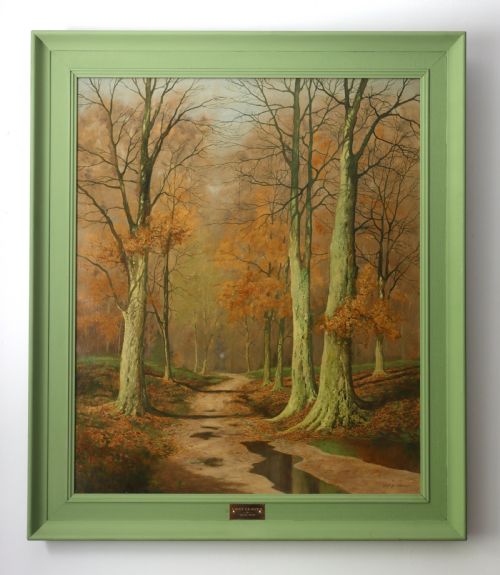
Forest Oil Artwork
Forest oil artwork brings the quiet depth of woodland scenery into a room through oil paint on canvas, board, or wood.
Forest Oil Artwork
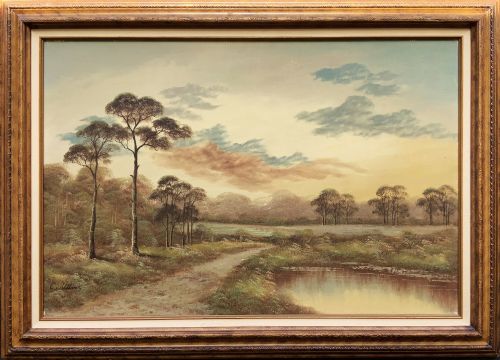
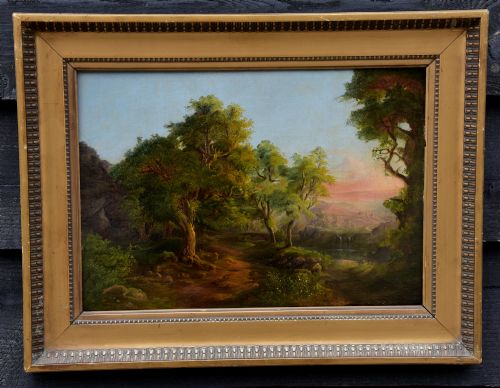
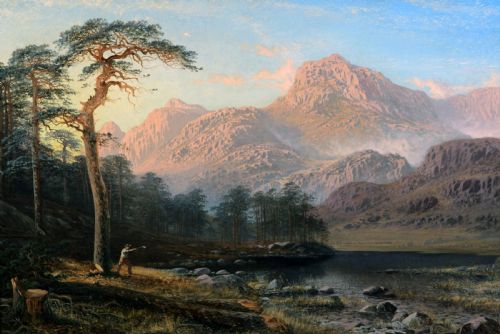
Forest oil artwork captures woodland scenes, trees, and leafy landscapes through oil paint applied to canvas, board, or wood panel. These paintings span the Victorian era, the nineteenth century, and the twentieth century, taking forms such as oil paintings and fine art.
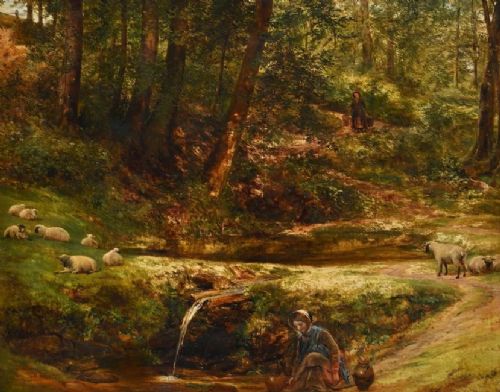
The pieces on this page range from early nineteenth-century works and Victorian landscapes to British Impressionism, Edwardian pieces, and mid-century impressionism. Scenes often depict cattle in woodland, sunset woodland views with figures, and quiet country woods.
Buyers meet diverse regional approaches here, including English school pieces, French impressionist works, and Dutch forest scenes. The works scale from intimate wood panels to large landscape oil paintings suitable for prominent placement.
How they were made
These works rely primarily on oil paint applied to supports of canvas, wood board, or wood panel, sometimes enhanced with gold leaf accents. Artists built up pigment to capture the shifting light of sunsets, leafy summer shades, and winter landscapes.
Framing and mounting varied by period, with nineteenth-century and Victorian pieces often featuring traditional wooden frames that complemented the depth of the oil on canvas. The physical texture of the paint surface preserves the direct touch of the painter's brush.
Forest Oil Artwork Retail Price Guide 2026
Typical asking prices for forest oil artwork among the pieces listed under this phrase on Sellingantiques today, from the lower quarter to the upper quarter. They describe what is for sale here now, not the wider market.
Cattle, sheep-drovers, and stormy moons frequently share the woods with unsuspecting landscape painters.
What varies in quality
Quality rests in the handling of light and shadow, particularly in how an artist renders the canopy of trees or the glow of a sunset through branches. Stronger works demonstrate confident brushwork that gives texture and atmosphere to the woodland floor or the river glen.
The fidelity of the composition and the preservation of the paint layer across canvas or wood panels also distinguish finer examples. Signed works by noted painters carry distinct documentary weight compared to unsigned pieces from the wider English or continental schools.
William H Myers·Thomas W Lascelles·Richard Redgrave·Thomas Bromley Blacklock·David Watts·James Proudfoot·Jan Evert Morel·Ernest Higgins Rigg·Frederick Golden Short·J McIntyre·Augustus William Enness·A Wood·Lillian M Harrison·Albert de Belleroche·Walter Emsley·William Mellor·Charles Pettitt·Henri Harpignies
The Forest Oil Artwork Glossary
- Canvas
- A heavy woven fabric stretched across a wooden frame to serve as a support for oil paint. It provides a flexible yet durable surface favoured by artists across centuries.
- Board
- A rigid flat support made from wood or compressed material used by painters instead of stretched canvas. Board paintings often date from the nineteenth and twentieth centuries.
- British Impressionism
- A painting style that emerged in the late nineteenth and early twentieth centuries, focusing on light, loose brushwork, and everyday outdoor scenes. Painters captured transitory effects of weather and sunlight in natural settings.
- Wood Panel
- A solid piece of timber used as a rigid painting support before canvas became dominant. Panels offer a stable surface that preserves fine detail in early works.
Forest Oil Artwork: Frequently Asked Questions
What periods do forest oil artworks come from?
These pieces date from the nineteenth century through the mid-twentieth century, encompassing Victorian, Edwardian, and mid-century eras.
Styles range from nineteenth-century realism and romanticism to early twentieth-century British impressionism and continental school painting.
What surfaces were used for these paintings?
Artists painted on stretched canvas, rigid wood board, and wood panels using oil paint.
Some works also incorporate gold leaf details within the framing or composition.
How do I identify different landscape styles?
Victorian and nineteenth-century pieces often feature detailed realism, darker palettes, and narrative elements like figures or cattle.
Later twentieth-century works lean towards impressionistic brushwork and lighter luminous palettes focusing on atmosphere.
Where were these woodland scenes painted?
Paintings record specific locations such as Yorkshire, Hampshire, Bushey, and the Lake District, alongside French and Dutch scenes.
Many works originate from named regional artists belonging to the broader English school or continental traditions.