







Victorian Woodland Oil Painting
A victorian woodland oil painting brings the dense canopy and leafy floor of the British countryside directly into a room.
Victorian Woodland Oil Painting
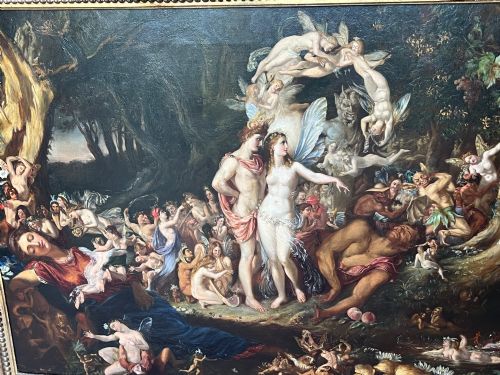
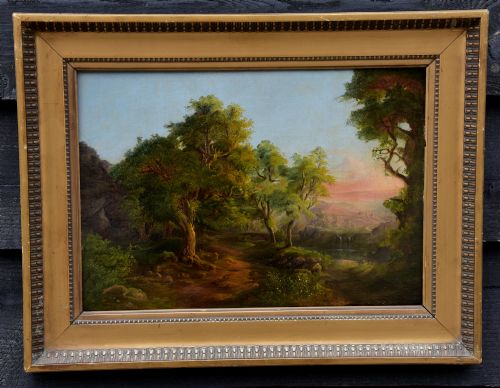
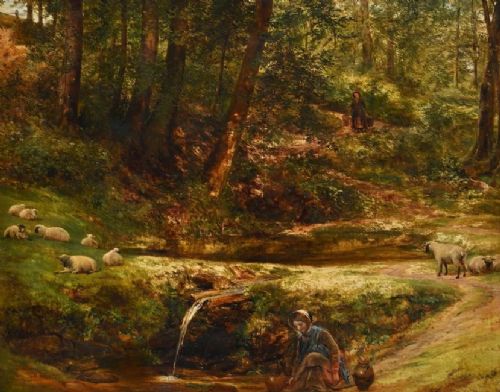
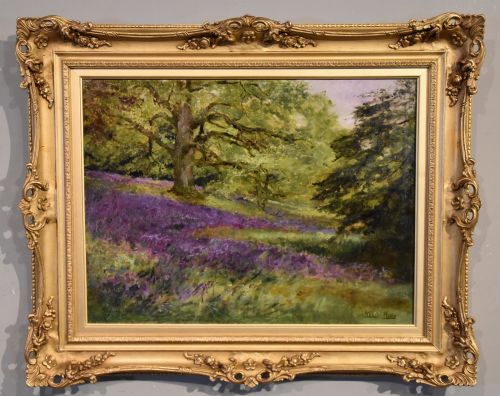
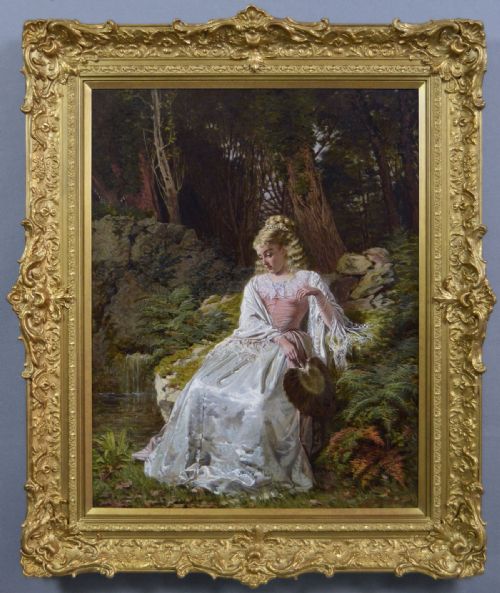
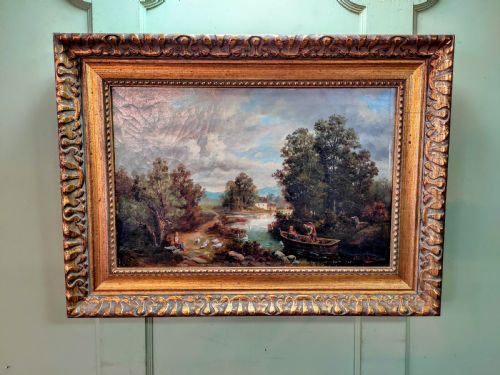
A victorian woodland oil painting captures the depth of British forests, country rivers, and sunlit glades through the lens of nineteenth-century naturalism and romanticism. These works frequently depict figures gathering firewood, children picking flowers, or quiet paths beneath mature trees.
Most examples found here date from the nineteenth century, executed in oil paint upon stretched canvas or wooden board. They range from intimate panel studies to large canvases framed in giltwood and gesso.
How they were made
Artists applied oil paint to primed canvas or wood panels, building up layers of rich pigment to render the play of light through branches and the dark textures of bark. Pigments were often sealed beneath a protective varnish that has aged to a warm, deep tone over the decades.
The finished works were housed in heavy wooden frames, frequently enhanced with ornate gesso mouldings and finished in gold leaf to complement the pastoral subject matter.
Victorian Woodland Oil Painting Retail Price Guide 2026
Typical asking prices for victorian woodland oil painting among the pieces listed under this phrase on Sellingantiques today, from the lower quarter to the upper quarter. They describe what is for sale here now, not the wider market.
Listings span the nineteenth century into the Edwardian era, employing oil paint on canvas and wood with giltwood frames.
What varies in quality
The strength of a composition and the artist's command of natural light separate the finer works from simpler decorative pieces. Skilled brushwork captures the specific species of trees and the shifting atmosphere of sunset or midday.
The integrity of the original canvas, the stability of the paint layer, and the matching period frame all contribute to the standing of an individual painting.
Sir Joseph Noel Paton·Richard Sebastian Bond·Thomas W Lascelles·Richard Redgrave·Henry Yeen King·Arthur Herbert Rigg·Thomas Bromley Blacklock·Thomas Edward Roberts·James Mallard Bromley·Clarence Henry Roe·William Mellor·John Wright Oakes·Abraham Hulk Jnr·Thomas Hollingsworth·Frederick Golden Short·Edward H Holder·George F Wetherbee·J McIntyre·John Falconar Slater·Lester Sutcliffe·Benjamin Callow·Walter Emsley·Everett W Mellor·Charles Duval·James Malcolm Stewart
The Victorian Woodland Oil Painting Glossary
- Oil on canvas
- Pigments bound in drying oil applied to a woven fabric stretched across a wooden frame. This surface allowed artists to create large landscapes with varied textures.
- Giltwood
- Wood carved and covered with a thin layer of gold leaf. Frames made this way provide a traditional border for nineteenth-century canvases.
- Gesso
- A plaster-like mixture applied to wood or canvas as a base for painting or moulding. In frames, it creates the relief decoration beneath the gilding.
- Victorian Naturalism
- An art movement focusing on the detailed observation of the natural world. Painters in this style sought to record flora and fauna with botanical accuracy.
- Board
- A rigid flat panel used as a painting support instead of canvas. These boards are typically made of wood.
Victorian Woodland Oil Painting: Frequently Asked Questions
What subjects appear in these paintings?
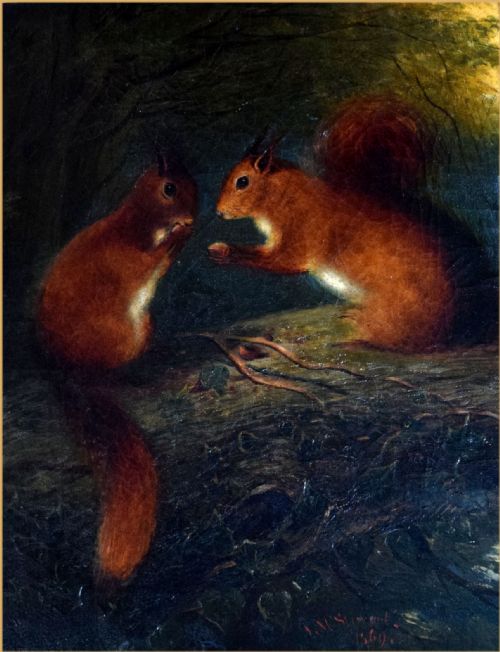
The canvases show British woodland paths, river glens, and leafy clearings. Figures such as travellers, children gathering firewood, and red squirrels frequently animate the landscapes.
Scenes range from bright summer days to quiet sunsets and autumnal riversides.
How should I hang an oil painting?
Mount the heavy giltwood frames securely on walls away from direct sunlight and damp conditions. Stable indoor temperatures protect both the canvas and the wooden support.
Ensure the weight rests on proper picture hooks suited to the size of the frame.
How do I identify the period?
Examine the canvas preparation, the style of the wooden stretcher, and the composition of the oil pigments. Nineteenth-century works often carry signatures, dates, or old framing labels on the reverse.
Stylistic markers like Victorian naturalism point to specific decades within the era.
Are these paintings original works?
Every piece listed is an original hand-painted work of art rather than a modern reproduction. Artists painted directly onto canvas or board during the nineteenth and early twentieth centuries.
Signatures and historical inscriptions frequently verify the artist and date.