
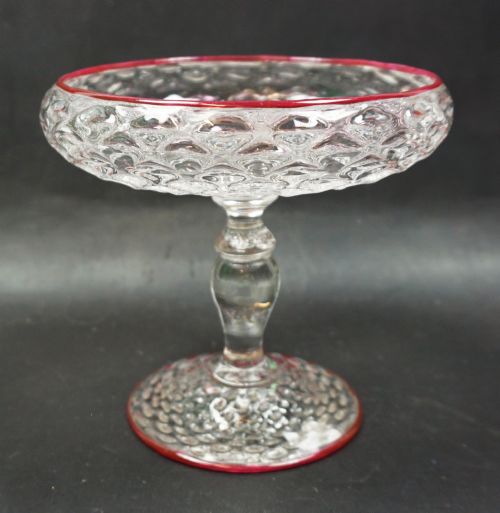
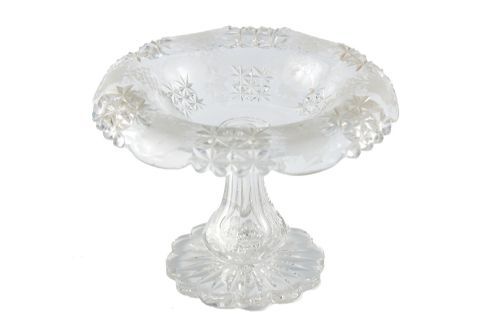


Footed Glass Compote Bowl
These footed glass compote bowl pieces are elevated serving vessels designed for fruit and centrepieces, combining tactile heavy lead crystal with striking decorative flair.
Footed Glass Compote Bowl
A footed glass compote bowl sits on a raised pedestal base, serving as a traditional centrepiece for fruit or table display. The examples on this page span several eras including Georgian, Victorian, and Edwardian periods, featuring forms such as tazzas and pedestal bowls.
You will encounter various interpretations ranging from early cut crystal pieces to coloured glass variations like ruby or yellow over crystal. These vessels function as both decorative dishes and practical fruit bowls within historic dining arrangements.
Materials and construction methods
Makers utilised heavy lead crystal and clear glass, shaping them through hand blowing and intricate cutting techniques. Surface ornamentation often involved deep hobnail patterns, honeycomb moulding, and delicate etching.
Some specimens incorporate coloured overlays, such as ruby glass or yellow over crystal, alongside traditional gilding. Waterford and Bohemian traditions demonstrate specialised regional techniques in glass production and finishing.
Listings feature periods from Georgian to the 1930s, utilising cut glass, lead crystal, ruby glass, and gilding.
Judging the quality of the piece
The standard of a footed glass compote bowl depends heavily on the crispness of the wheel cutting and the clarity of the metal. Sharp facets and deep hobnail patterns reflect superior workmanship compared to softer, shallower moulding.
Weight and balance also dictate excellence, with high-grade lead crystal offering a resonant ring and substantial heft. Additional artistic touches, like hand-applied gilding or integrated red cane decoration, elevate the piece.
Makeig-Jones Wedgwood·Waterford
The Footed Glass Compote Bowl Glossary
- Comport
- An alternative term for a footed compote bowl or pedestal dish designed for table service. These pieces usually sit centrally on dining tables.
- Hobnail
- A raised, faceted pattern cut into the surface of glassware, resembling the head of a hobnail boot. It provides a highly tactile and light-catching texture.
- Lead Crystal
- Glass containing metallic oxide that increases weight, brilliance, and workability for deep cutting. This material gives vintage compotes their distinctive ring and clarity.
Footed Glass Compote Bowl: Frequently Asked Questions
How were footed glass compote bowls used?
These vessels traditionally held fruit, sweetmeats, or decorative arrangements in the centre of the dining table.
Their elevated pedestal design added height and visual drama to formal table settings during the Georgian and Victorian eras.
How do I style a compote bowl at home?
Place a footed glass compote bowl on a dining table, sideboard, or mantelpiece as a standalone decorative focal point.
You can fill it with seasonal fruit, pinecones, or leave it empty to showcase the cut crystal and coloured glass details.
How can I tell a Victorian compote from a Georgian one?
Georgian compotes often display heavier proportions and simpler, broader cutting styles characteristic of late eighteenth and early nineteenth-century production.
Victorian examples frequently introduce more complex hobnail patterns, etched motifs, and occasional coloured glass overlays.