




Vintage Glass Trinket Dish
A vintage glass trinket dish is a dressing table essential that brings period elegance to holding small personal items.
Vintage Glass Trinket Dish
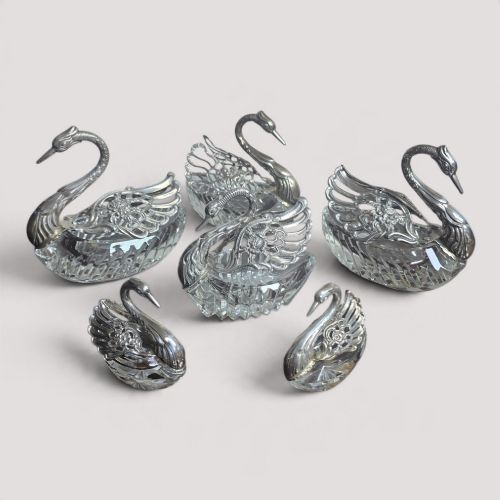
A vintage glass trinket dish serves as a decorative receptacle for dressing tables, designed to hold small everyday items such as jewellery, pins, and cosmetics. When exploring this selection, buyers encounter pieces spanning from the Victorian and Edwardian eras through the Art Deco period and mid-century modern designs.
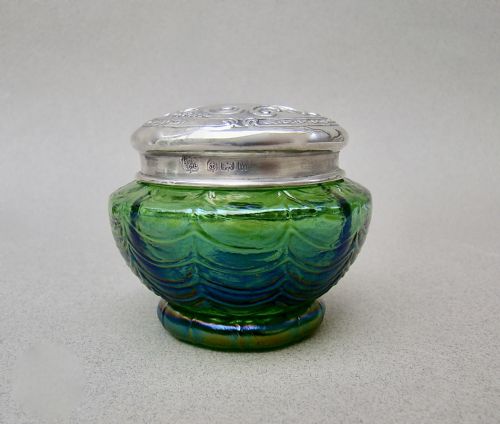
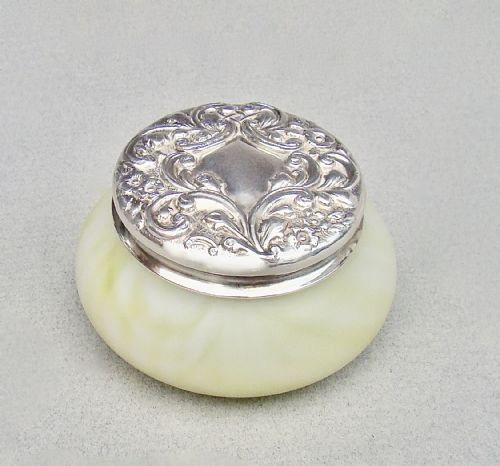
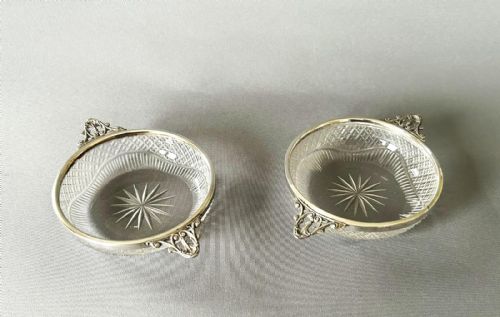
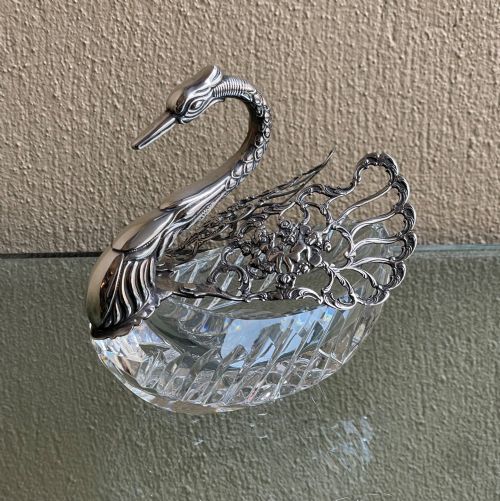
The objects take various forms on this page, including lidded boxes, vanity jars, dressing table accessories, bon bon dishes, and pin trays. Many examples incorporate precious metal mounts, hinged lids, or fitted rims in sterling silver, silver plate, or ormolu.
Origins represented in the inventory stretch across British, French, German, and Italian workshops. Makers and studios range from large European glasshouses to specific silversmiths who supplied custom metal mounts for the glass vessels.
Materials and production methods
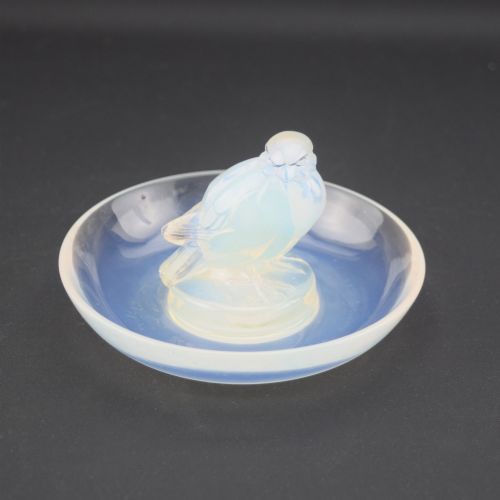
Glass bodies are shaped through moulding, cutting, or pressing, utilising materials such as cut crystal, satin glass, cranberry glass, opalescent glass, and green opaline glass. Techniques like acid etching, enamelling in blue and pink tones, and hand-painting with gilt edges add distinct surface decoration.
Metal elements are incorporated through casting and smithing sterling silver, silver plate, or ormolu to form hinged lids, collars, and decorative mounts. Silversmiths frequently applied hallmarks to stamp the city, year, and maker onto the metal components of the boxes.
The listings span multiple decades of glass production, featuring materials from cut glass and crystal to opalescent glass, sterling silver, and enamel.
Distinctions in craftsmanship and design
Quality rests in the crispness of the glass cutting, the weight of the crystal, and the subtlety of opalescent or enamelled colour treatments. Superior pieces display precise geometric or figurative moulding alongside well-fitted metal mounts that align flush with the glass body.
Maker attribution elevates a piece, particularly when bearing the signatures of renowned glass artists or documented silversmithing firms. The integration between metalwork and glass, such as securely hinged silver lids or hand-painted enamel details, separates standard containers from exceptional decorative works.
A. J. Pepper & Co·A. Bromet & Co·Posen of Frankfurt·René Lalique·Carlo Scarpa
The Vintage Glass Trinket Dish Glossary
- Opalescent glass
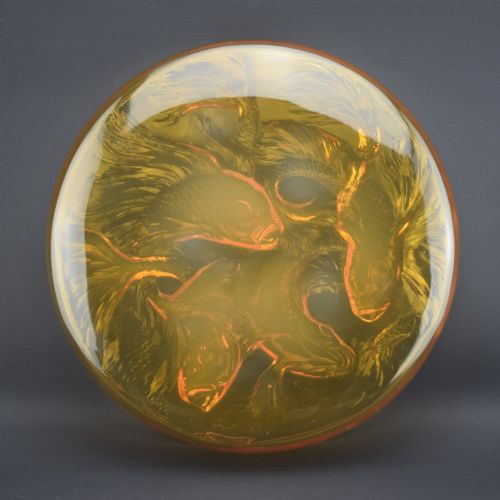
- Glass containing ingredients that cause it to milky-blue or fire-like appearance when light strikes the surface from different angles. This effect was utilised extensively by major French glass artists during the early twentieth century.
- Ormolu
- Gilded bronze or brass mounts applied to decorative objects and furniture. It provides a rich golden contrast to crystal and coloured glass bodies.
- Hallmark
- A stamp or series of stamps applied to precious metals indicating the standard of purity, the assay office, the year of testing, and the maker. British pieces commonly show town marks and date letters on the silver mount.
- Cranberry glass
- A rich red transparent glass coloured with gold chloride during the melting process. It gained popularity during the Victorian period for dressing table wares.
- Mary Gregory glass
- Glass decorated with white enamel silhouettes depicting Victorian children in pastoral settings. The style appears predominantly on green and cranberry glass dressing table sets.
Vintage Glass Trinket Dish: Frequently Asked Questions
How do I date a silver and glass trinket box?
Dating relies primarily on the hallmarks stamped onto the silver mounts, which indicate the exact assay year and silversmith. Stylistic clues such as Edwardian filigree work or Art Deco geometric cutting also help place the piece in its correct period.
Secondary indicators include the fastening mechanisms and the shade of the glass. Consulting registry marks on the metal provides further confirmation of the production timeline.
How should I clean antique glass with silver mounts?
Cleaning requires separating the care of the glass from the metal components to avoid damaging either material. Use warm soapy water and a soft cloth for the glass body, ensuring moisture does not become trapped inside hinged joints.
Silver polish should be applied sparingly to the metal mounts using a soft brush, taking care not to transfer polish onto the glass surface or enamel decorations.
Are these pieces suitable for daily use?
These dishes and boxes function well for holding modern jewellery, cufflinks, and small trinkets on a dressing table or desk. Their construction is durable enough for everyday handling when treated with reasonable care.
One should avoid placing delicate enamelled or opalescent pieces in damp environments or washing them in mechanical dishwashers.