







Food Still Life Painting
These food still life painting works capture centuries of domestic provisions, rendered in oil on canvas and wood across varied European schools.
Food Still Life Painting
When you search for food still life painting, you encounter canvases and panels depicting larder scenes, market produce, and table spreads. These works range from seventeenth-century Flemish baroque compositions to nineteen-thirty art deco French school pieces.
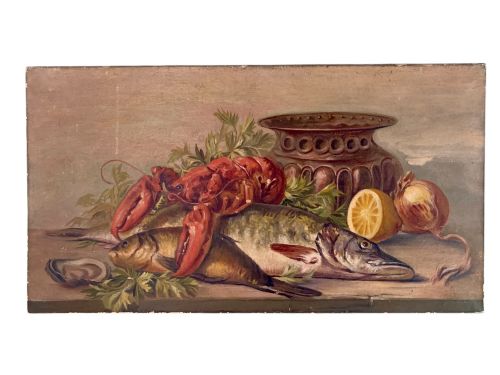
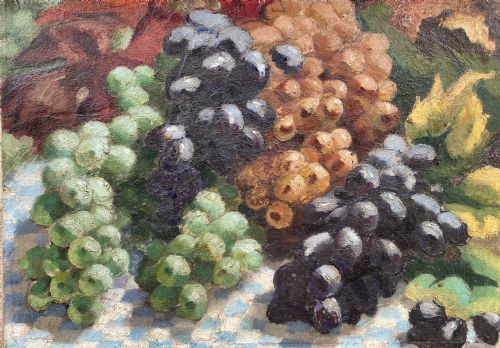
You meet Victorian and Georgian oil paintings alongside nineteen-ten and nineteen-forty items. The subjects encompass lobsters, tureen vegetables, grapes on chequered tablecloths, and elaborate larder views featuring eggs, walnuts, lamb, apples, and bread.
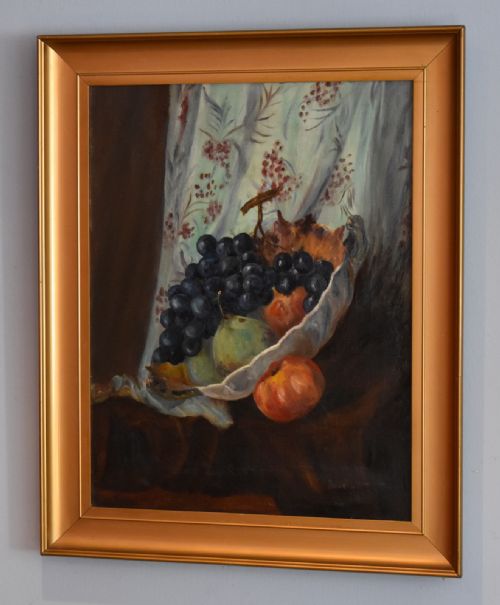
The objects take the form of oil paintings, fine art, and miniature formats set within gilded wood and gold leaf frames. Frans Snyders and William Henry Ward represent notable hands among these domestic arrangements.
How they were made
Artists built these compositions using oil paint applied to canvas and wood panels. The technique relies on layered pigments to render the textures of fruit, flesh, and tableware.
Frames play a structural and aesthetic role, frequently utilising gold leaf and gilded wood to complement the dark, rich tones of the painted larders.
Food Still Life Painting Retail Price Guide 2026
Typical asking prices for food still life painting among the pieces listed under this phrase on Sellingantiques today, from the lower quarter to the upper quarter. They describe what is for sale here now, not the wider market.
Listings feature periods spanning from the seventeenth century through the Victorian era to the nineteen-forties, executed primarily in oil on canvas and wood.
What varies in quality
Quality reveals itself in the handling of light and shadow across varied foodstuffs, distinguishing a mere record of provisions from a masterly arrangement. The depth of the oil paint layers and the preservation of the canvas or wood panel dictate the visual integrity.
The craftsmanship of the accompanying frame, particularly the application of gold leaf on gilded wood, indicates the overall investment in the presentation of the painting.
William Henry Ward·Frans Snyders
The Food Still Life Painting Glossary
- Oil on Canvas
- A traditional painting medium where oil paint is applied to a stretched woven fabric surface. This combination allows for rich blending and depth of colour.
- Baroque
- An artistic style originating in the seventeenth century characterised by dramatic lighting and intense realism. Flemish and Spanish masters of this period often depicted abundant larder scenes.
- Gilded Wood
- Timber treated with a thin layer of gold leaf or metallic powder. It provides an ornate and protective border for historical paintings.
- Art Deco
- A design style prominent in the nineteen-thirties that influenced the geometric arrangement of still life subjects. French school paintings from this era often feature clean lines and stylised tablecloths.
- Miniature
- A small-scale painting executed with fine detail. Eighteenth-century examples condense complex culinary subjects into compact formats.
Food Still Life Painting: Frequently Asked Questions
What subjects appear in these paintings?
The canvases display edible provisions including lobsters, vegetables in tureens, grapes, eggs, walnuts, lamb, apples, onions, and bread. Some compositions also incorporate dining accessories like playing cards, dice, and wine.
These elements reflect the domestic and market concerns of their respective eras, spanning from seventeenth-century baroque scenes to nineteen-thirties art deco interpretations.
How do I identify the period?
Dating relies on stylistic clues, framing materials, and the handling of the oil paint. Seventeenth-century works often show dramatic larder arrangements, whereas nineteenth and twentieth-century pieces adopt different compositional structures.
Examining the canvas or wood support alongside any documentation helps place the work within Georgian, Victorian, or later twentieth-century contexts.
Where were these pieces created?
The collection includes pieces from the French school, Spanish school, and Flemish baroque traditions. Artists across Europe applied oil paint to canvas and wood to capture local culinary customs.
Geographic origins often influence the palette and the specific types of food depicted on the tables and in the larders.
How should I display them?
These oil paintings suit dining rooms, kitchens, and studies where their culinary themes complement the surrounding space. Ensuring stable environmental conditions protects both the oil paint and the gilded wood frames.
Positioning the artwork away from direct heat sources preserves the integrity of the canvas and wood supports.