

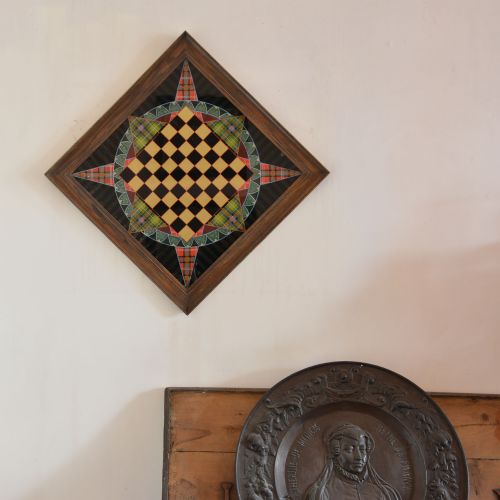


Folk Art Wooden Board
These folk art wooden board examples range from carved mangle boards to painted fairground panels, each carrying the distinct hand of maker and tradition.
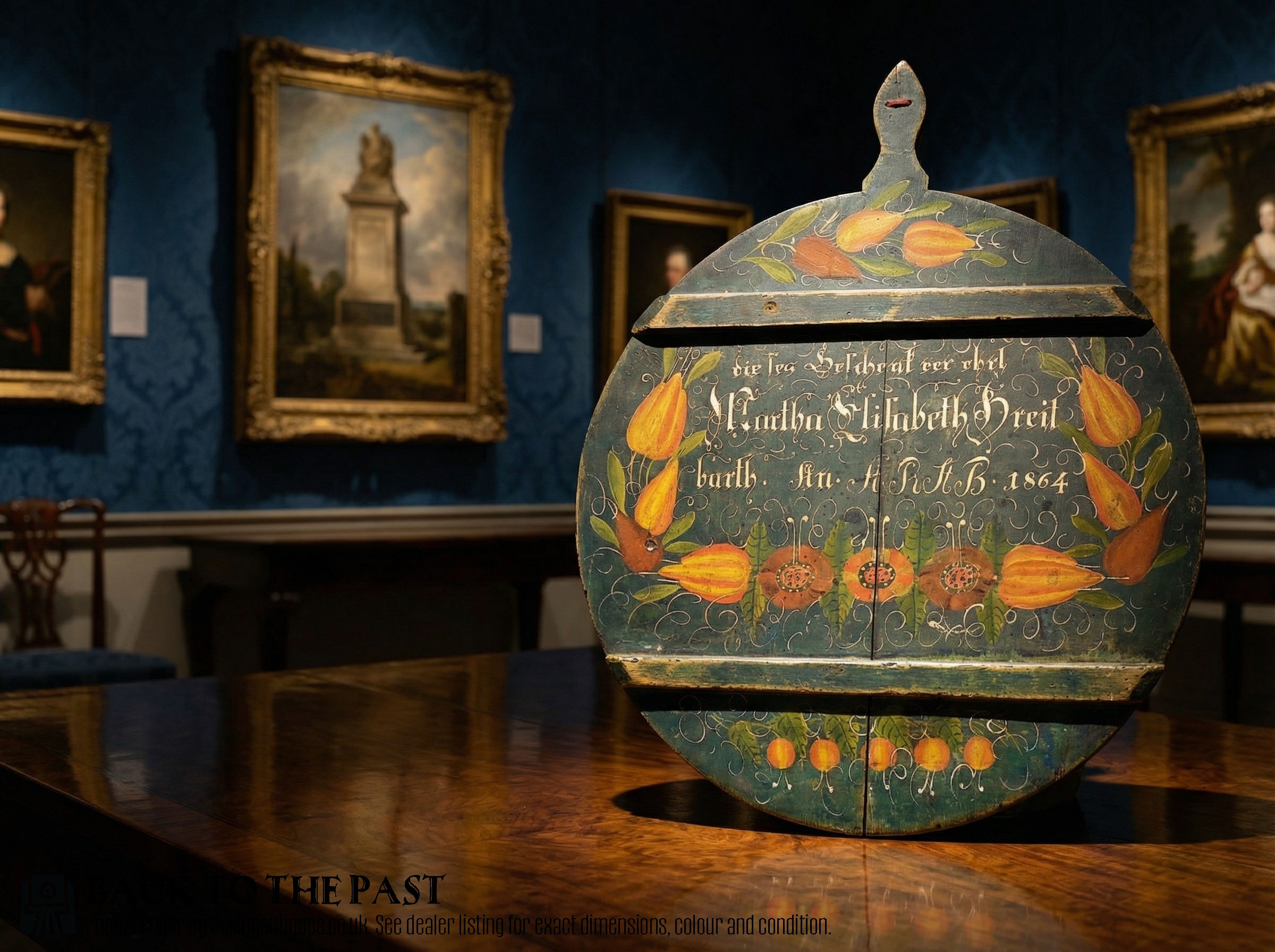
Folk Art Wooden Board
A folk art wooden board brings together vernacular practicality and domestic or public display across several centuries. When exploring this selection, collectors encounter domestic items like pine knife sharpeners, cheese boards, and chip-carved mangle boards alongside theatrical dummy boards and fairground panels.
The evidence shows diverse origins spanning English, Dutch, Norwegian, and Scottish traditions. Pieces date from the seventeenth century through to the early twentieth century, reflecting both utilitarian household use and decorative community entertainment.
Materials and construction methods
Makers utilised native timbers readily to hand, predominantly pine, oak, elm, and shisham wood. These woods were shaped using traditional hand woodworking techniques, from chip-carving to large-scale carpentry.
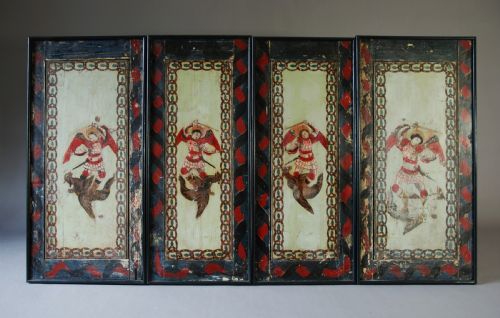
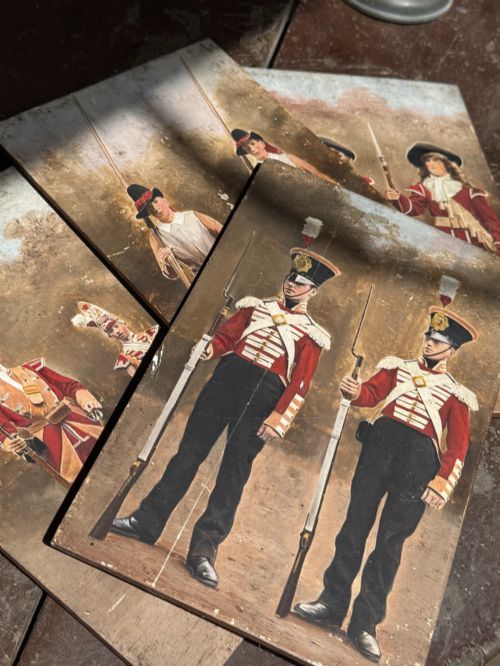
Surfaces were frequently finished with oil paint or decorative pigments. Many panels feature naive paintings depicting figures, soldiers, or floral motifs, while others rely on carved text, initials, and dates.
One eighteenth-century dummy board pairs a gentleman with a monkey, proving domestic humour thrived centuries before television.
Distinguishing quality and character
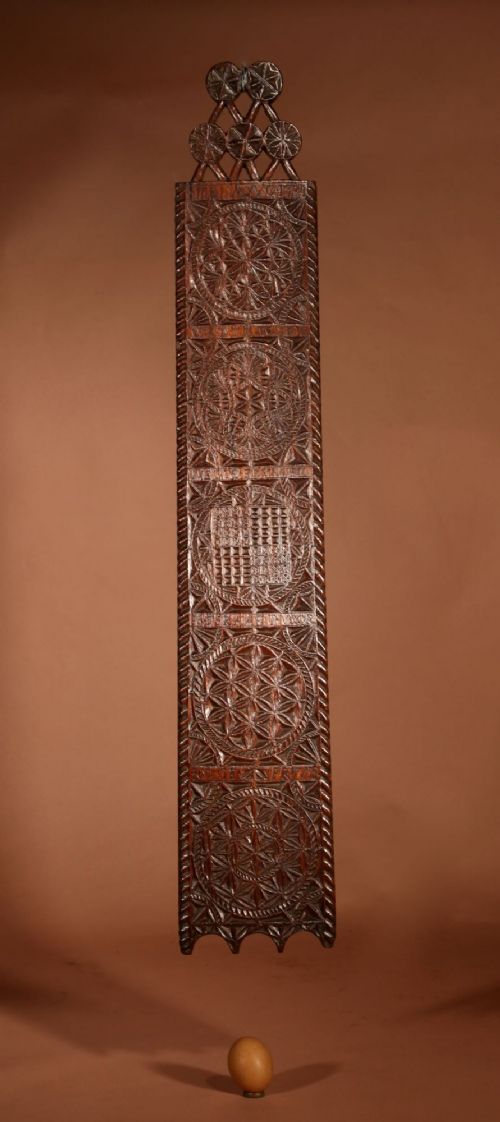
The standard of a folk art wooden board rests in the strength of the carving and the integrity of the original painted surface. Pieces showing crisp chip-carving or spirited naive brushwork stand apart from simpler utilitarian items.
Age and untouched preservation define the upper tier of examples. Early dates, such as seventeenth-century inscriptions, combined with original pigment rather than modern restoration, elevate a piece's historical weight.
The Folk Art Wooden Board Glossary
- Mangle board
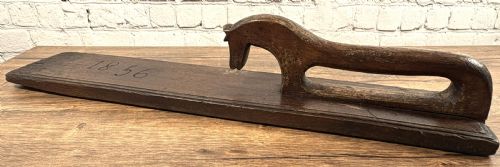
- A domestic wooden board used historically in Scandinavia and northern Europe with a rolling pin to smooth linen. They often feature elaborate carved handles shaped like horses or birds and inscribed dates.
- Dummy board
- A lifesize or scaled painted panel depicting a person, animal, or soldier designed to trick the eye from a distance. Also known as silent companions, these were placed near fireplaces or doorways.
- Chip carving
- A technique where small chips are removed from a wooden surface with a knife to create geometric patterns. This method decorates many early Dutch and Scandinavian boards.
- Naive art
- Artwork created by an untrained artist focusing on expressive depiction rather than academic proportion. This style characterises the paintings and panels found across these listings.
- Fairground panel
- A decorative wooden board painted for entertainment rides or carnival attractions. These items showcase bold colours and theatrical subjects from the early twentieth century.
Folk Art Wooden Board: Frequently Asked Questions
What is a mangle board used for?
A mangle board functioned as a domestic laundry tool in regions like Norway and the Netherlands. Damp linen was wrapped around a roller and pressed smooth using the carved wooden board.
Over time, these boards became valued courtship gifts, often carved with initials, texts, and dates alongside horse head handles.
What are dummy boards?
Dummy boards are painted wooden figures cut out to lifesize proportions, depicting soldiers, gentlemen, ladies, or animals. Placed in hallways or empty rooms, they created a trompe l'oeil effect for visitors.
Originating in earlier centuries, these silent companions served as both decoration and lighthearted household amusement.
How do I date an old wooden board?
Dating relies on construction marks, wood species, and stylistic clues within the carving or paint. Many pieces bear actual carved dates and initials left by the original maker.
Examining the wear patterns, type of timber, and pigment composition helps distinguish seventeenth and eighteenth-century examples from later nineteenth and twentieth-century items.
Are these boards painted by hand?
The painted surfaces on these boards were executed by hand using traditional oil paints and local pigments. Artists applied naive techniques to fairground panels, theatrical scenery, and household games boards.
This hand-painted quality ensures that each panel displays unique brushwork and individual artistic expression rather than mass production.