


Folk Art Horse Sculpture
These folk art horse sculpture pieces bring vernacular charm and hand-carved character into any room.
Folk Art Horse Sculpture
A folk art horse sculpture encompasses hand-carved wooden models, painted figures, and fairground pieces from various regional traditions. Buyers searching this phrase look for authentic vernacular expressions of the equine form created outside academic art training.
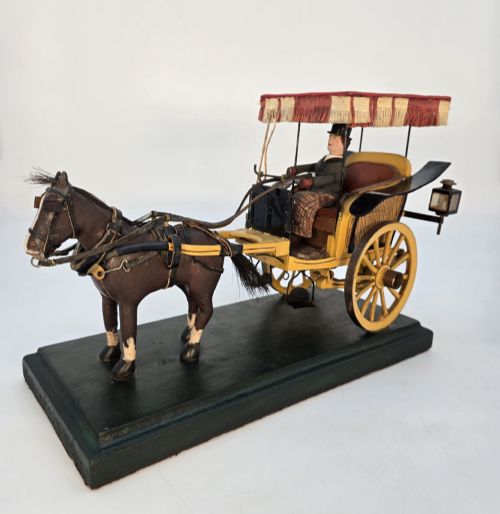
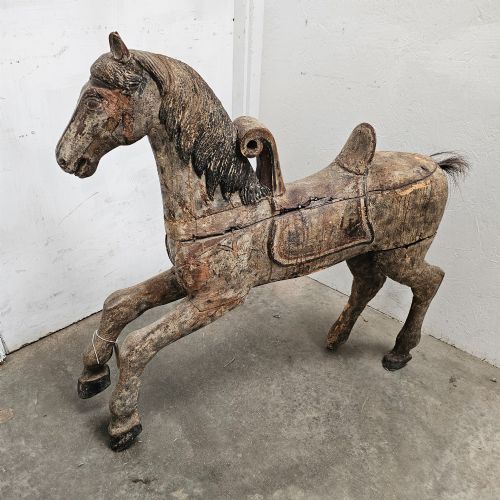
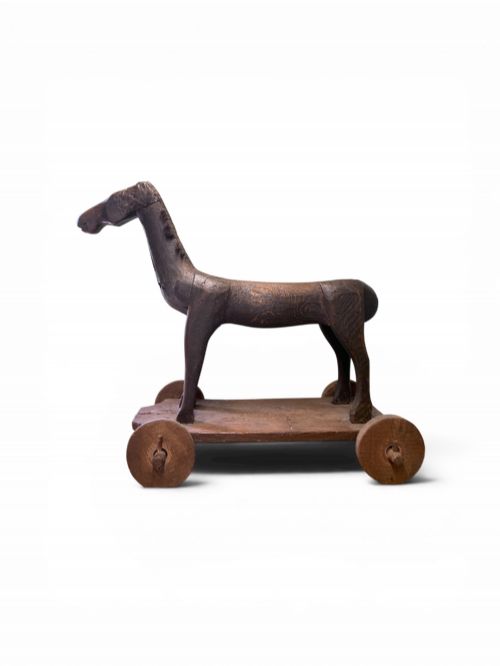
The pieces appearing on this page span several centuries, reaching back to the eighteenth century and moving through the nineteenth and early twentieth centuries. Forms range from carousel and fairground figures to rocking horses, processional models, and scratch-built carriage groups.
Origins vary widely across the selection, taking in French, Spanish, Russian, Indian, East Asian, and continental traditions. These diverse regional styles share a directness of execution and an unpretentious approach to materials.
Materials and methods
Makers relied primarily on timber and carved wood, frequently shaping local woods with simple hand tools to achieve the desired silhouette. Paint finishes, horsehair, leather, and sheet metal appear across the listings to add surface texture, harness details, and colour.
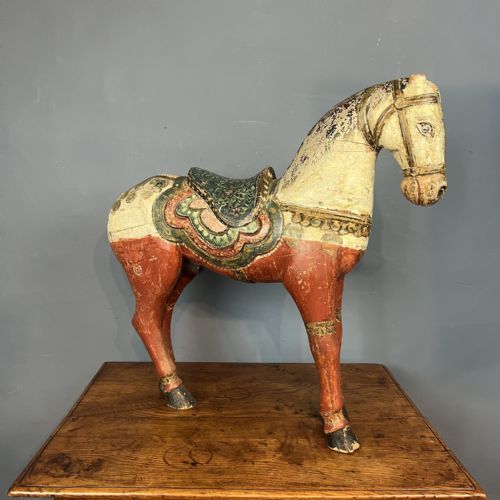
Many items retain their original painted surfaces, showing layers of wear that accumulate from active use in homes, fairgrounds, and workshops. Construction methods range from naive block carving to articulated joinery and sheet metal fabrication.
Some horses come equipped with real horsehair manes that have survived centuries of brushing.
Evaluating quality and character
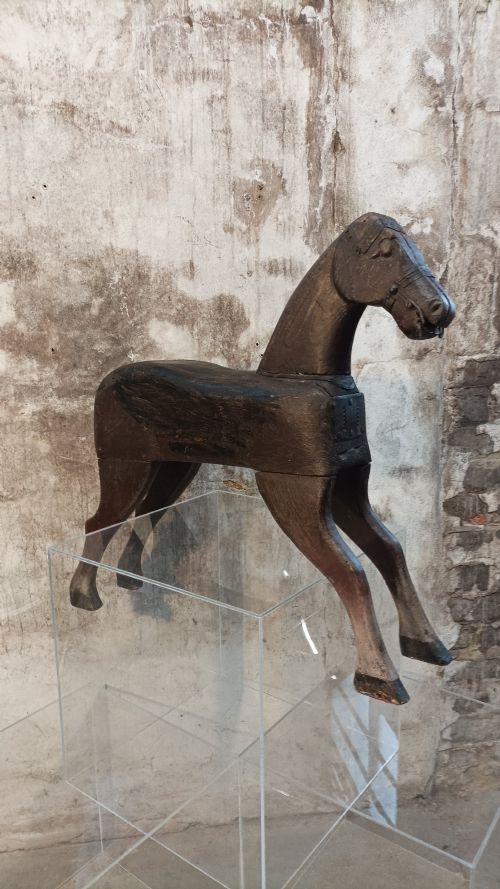
Quality in these sculptures rests upon the strength of the carving and the expressive posture of the animal rather than adherence to strict anatomical proportions. Strong pieces convey movement and personality through bold tool marks and balanced proportions.
The survival of original surface decoration plays a major role in distinguishing exceptional examples from plainer work. Patina, honest wear, and untouched historic paint finishes elevate the visual impact of a sculpture.
Bayol
The Folk Art Horse Sculpture Glossary
- Carousel horse
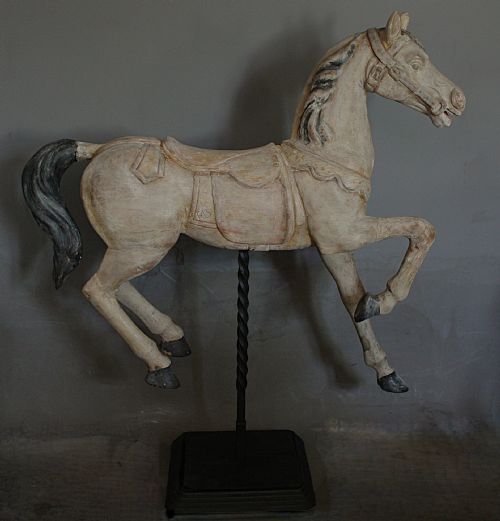
- A carved wooden figure produced for fairground carousels, often featuring dynamic galloping postures and decorative harness work. These pieces were designed to be mounted on rides and frequently show robust construction.
- Naive
- A descriptive term for art created outside academic traditions, characterised by a direct perspective and unrefined technique. Such pieces rely on intuitive proportion rather than strict academic rules.
- Scratch built
- An object constructed entirely from raw materials by an individual maker rather than assembled from pre-manufactured kits or factory parts. These items often include bespoke mechanical or structural elements.
- Processional horse
- A carved figure made to be carried or displayed in religious, civic, or cultural processions. They often feature elaborate trappings suited for ceremonial display.
- Bogorodskoe carving
- A traditional Russian style of wood carving originating from the village of Bogorodskoe, known for unpainted or lightly finished wooden figures and moving toys. These carvings are typically executed in soft linden wood.
Folk Art Horse Sculpture: Frequently Asked Questions
What is a folk art horse sculpture?
A folk art horse sculpture is a hand-made or carved representation of an equine figure created by an artisan working within a local craft tradition. These objects include fairground animals, antique toys, and decorative models.
Unlike academic academic statues, these pieces prioritise direct expression and practical function over strict anatomical precision. They reflect the aesthetic values of the communities and periods that produced them.
How were antique rocking horses used?
Antique rocking horses served primarily as children's toys in domestic settings, providing active play before the advent of mass-produced plastic entertainment. They stood in nurseries or parlours as substantial household items.
Over time, many of these horses transitioned from children's playthings to decorative objects collected for their sculptural presence. Their sturdy wooden frames and painted finishes bear the marks of generations of use.
How do I care for a painted wooden sculpture?
Painted wooden sculptures require a stable indoor environment away from direct sunlight and dramatic humidity swings. Excessive heat can cause old timber to split and historic paint layers to flake.
Dust the surface gently with a soft, dry brush rather than using liquid cleaning products or polishes. Preserving the fragile historic patina depends on keeping the piece dry and untouched by harsh chemicals.
How can I tell an eighteenth-century horse apart from a later piece?
Eighteenth-century figures often reveal their age through deep-set tool marks, heavy timber construction, and early pigment formulations beneath later layers of wear. The joinery techniques and wood species used also point toward earlier hand-working methods.
Twentieth-century pieces, by contrast, frequently incorporate machine-cut elements, different fastening hardware, or distinct fairground paint systems. Comparing the tool marks and construction anatomy helps clarify the period of manufacture.