
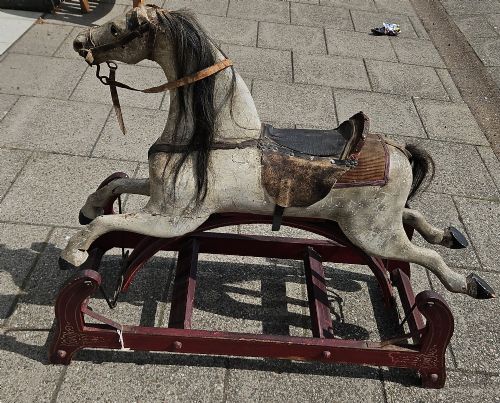


Carved Wood Horse
A carved wood horse brings centuries of artisan skill and tangible motion into a room.
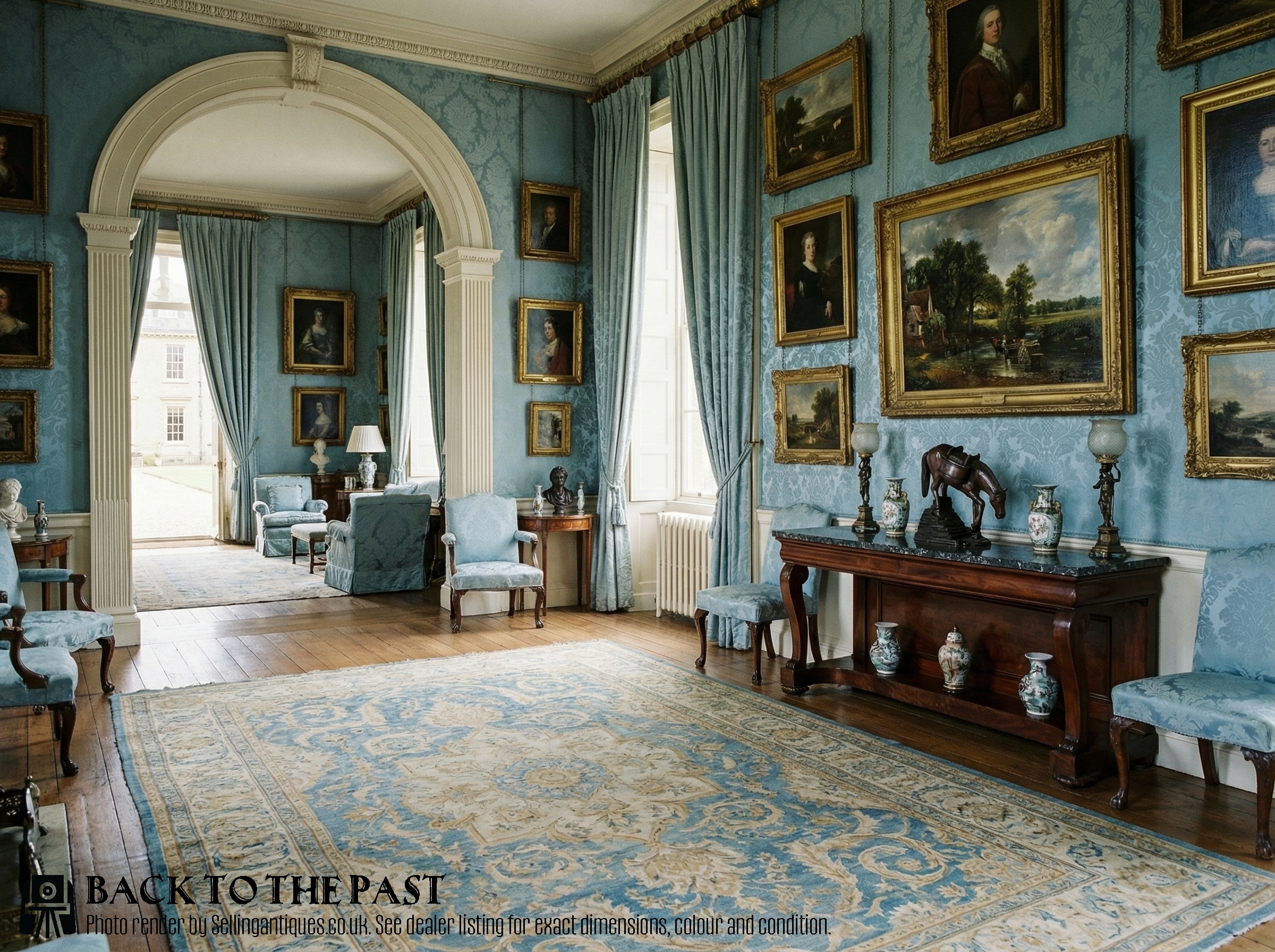
Carved Wood Horse
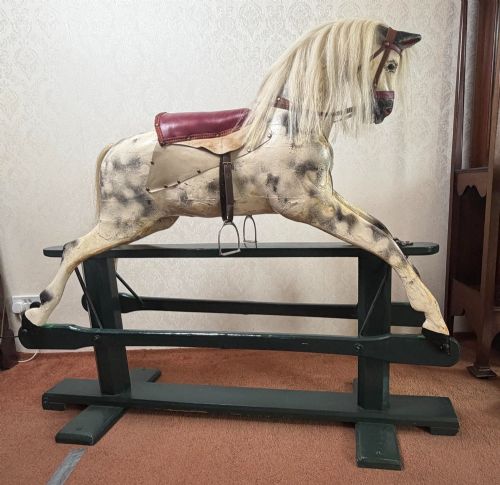
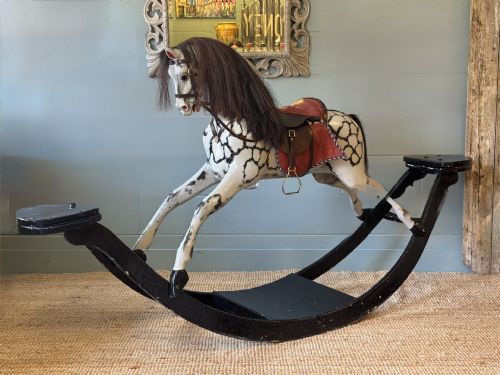
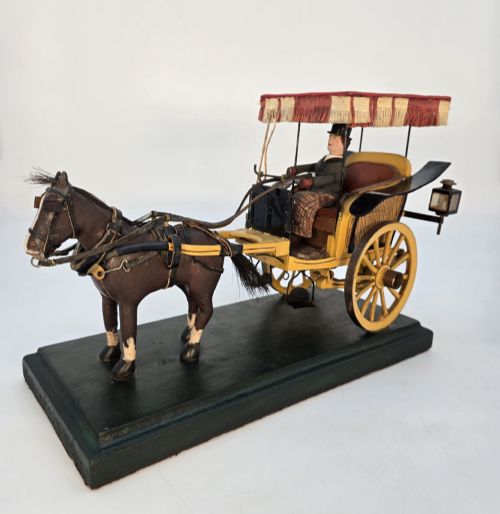
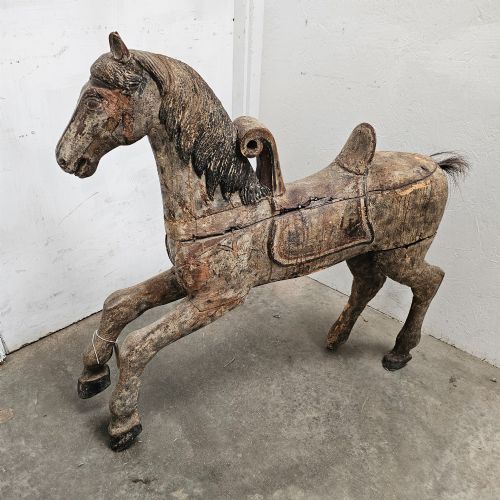
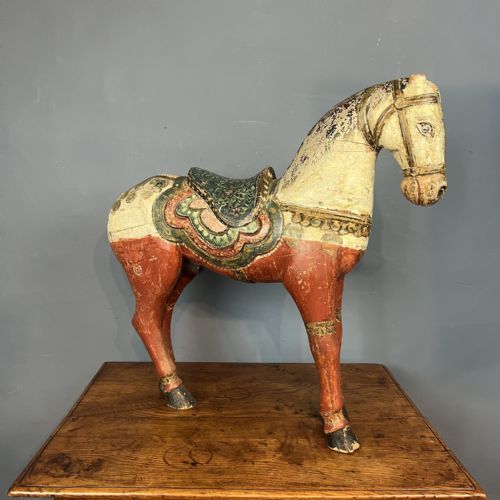
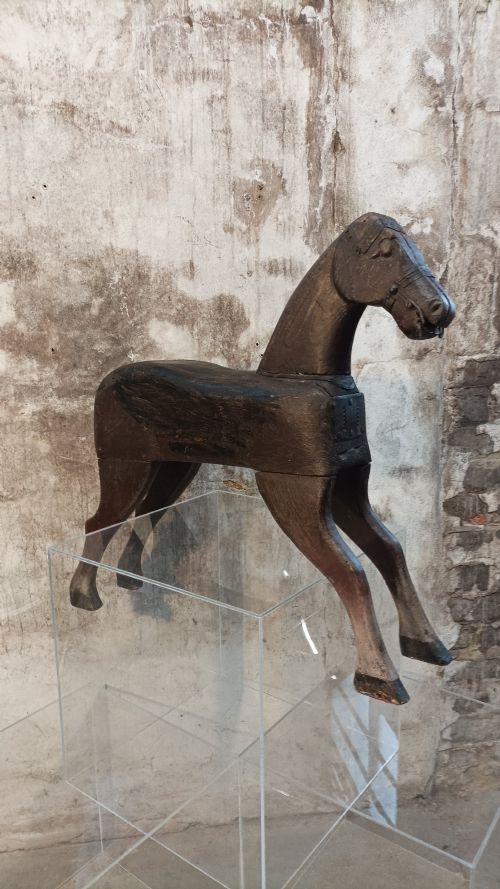
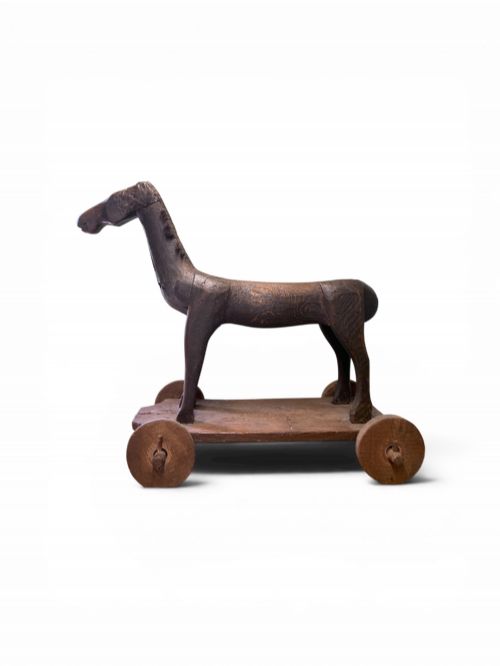
When searching for a carved wood horse, collectors encounter a diverse range of objects spanning centuries of craftsmanship, from utilitarian domestic items to monumental figures. The most frequent discoveries on this page are substantial rocking horses, decorative fairground carvings, and folk art sculptures originating across European, Asian, and Scandinavian workshops.
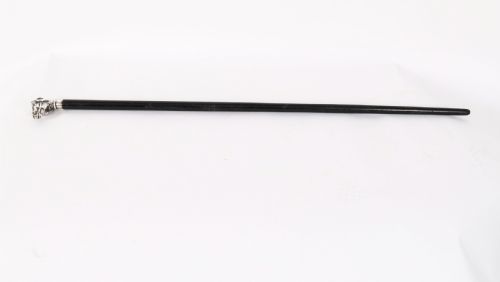
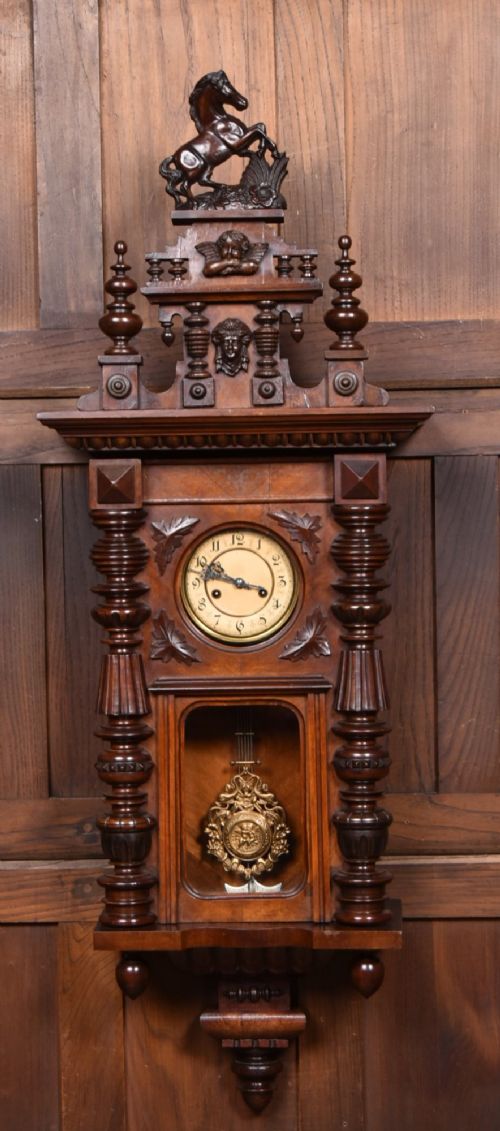
Beyond full-figure animals, the category embraces architectural elements, carved handles on walking sticks, and animal studies from the eighteenth, nineteenth, and early twentieth centuries. These pieces reflect varied cultural expressions, shifting from naive provincial styles to sophisticated workshop productions.
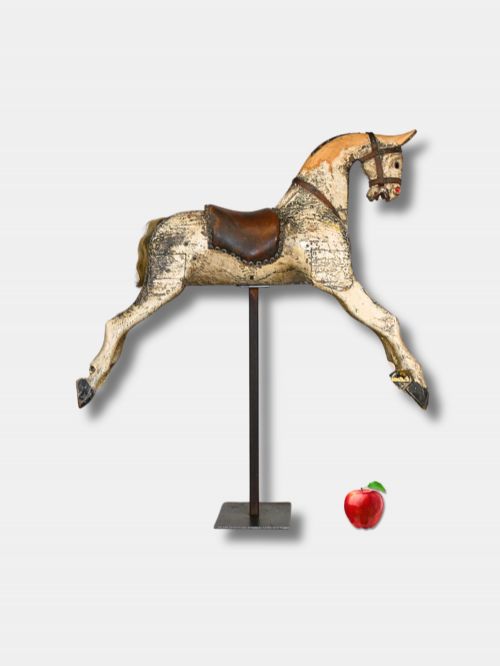
Rocking horses mounted on original stands represent a prominent domestic form, frequently retaining traces of early paint or leather tack. Meanwhile, carousel figures and architectural horses demonstrate dynamic posture and decorative surface treatment designed for public display.
Materials and Technique
Makers shaped these animals primarily from solid timbers such as pine, walnut, fruitwood, and mahogany, often joining blocks together to achieve monumental scale before carving surface details. Structural integrity relied on sturdy wood bases, iron brackets, and occasionally pine trestles to support heavier rocking mechanisms.
Makers finished many surfaces with layers of paint, gesso, lacquer, or gilding, applying horsehair for manes and tails alongside leather tack for harnesses. Folk art examples often display direct knife work and unadorned painted wooden surfaces, whereas carousel and fairground pieces received polychrome decoration to withstand vigorous use.
Listings demonstrate a broad span of forms, ranging from nineteenth-century European rocking horses and folk art sculptures to eighteenth-century carved architectural fragments and Asian decorative figures.
Evaluating the Work
Quality rests upon the anatomy, anatomical proportion, and the vigour of the carving within each piece. Master carvers captured musculature, tension, and movement with precision, whereas naive makers produced simpler, stiffly rendered forms.
The survival of original surface finishes, such as early paint, gilding, and tack, elevates a piece above those stripped or heavily restored over generations. Original rockers, stands, and harness components further distinguish superior examples from assembled or altered items.
G & J Lines of London·Limonaire Freres Paris·Collinson and Sons·Andersons Bristol
The Carved Wood Horse Glossary
- Carousel Horse
- A hand-carved wooden figure designed for fairground rides, typically featuring dynamic poses and decorative polychrome paint. These animals often show intense wear from active public use.
- Rocking Horse
- A toy or decorative sculpture mounted on wooden rockers or safety stands. Nineteenth-century examples frequently include leather saddles and horsehair manes.
- Folk Art
- Objects created by self-taught or provincial artisans working outside academic traditions. These pieces prioritise expressive design over strict anatomical accuracy.
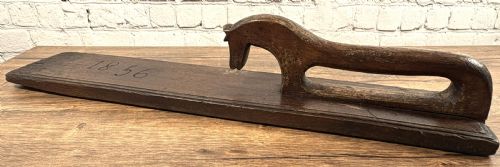
- Mangle Board
- A Scandinavian domestic laundering tool traditionally carved with a handle shaped like a horse head. These functional household items served as traditional betrothal gifts.
- Corbel
- A structural stone or timber bracket projecting from a wall to support a weight. Elaborately carved wooden versions often took animal or equestrian forms.
Carved Wood Horse: Frequently Asked Questions
How do I date a wooden rocking horse?
Dating relies on construction methods, ironwork, and the style of the stance. Earlier nineteenth-century examples often featurebow rockers and distinct nail construction.
Paint layers and tack also provide clues, as does the presence of maker stamps or labels on the stand.
Are fairground horses different from domestic ones?
Fairground figures were built for public rides, resulting in robust construction and dynamic, windswept postures. They frequently received vibrant polychrome paint and gilding.
Domestic rocking horses focused on gentle motion and child safety, featuring more contained postures and dappled grey finishes.
What is folk art in wooden horses?
Folk art pieces are created by untraditional makers working within local provincial styles. They display charmingly naive proportions and direct tool marks rather than academic precision.
These sculptures often utilise accessible local timbers like pine and carry simple painted surfaces.
How should I care for a painted wooden horse?
Protect the surface by keeping the piece away from direct sunlight and maintaining stable room humidity. Sudden environmental shifts cause wood to expand and paint to flake.
Dust gently with a dry, soft cloth and avoid modern chemical cleaners that might strip historic finishes.