




Folding Wooden Stool
These folding wooden stool listings bring together versatile pieces spanning centuries, offering practical space-saving utility and traditional craftsmanship for everyday use.
Folding Wooden Stool
A folding wooden stool search reveals a selection of adaptable items that transform or collapse when not in use. The examples you encounter on this page span the nineteenth century through to the nineteen-thirties, encompassing periods such as Georgian, Victorian, and Edwardian eras.
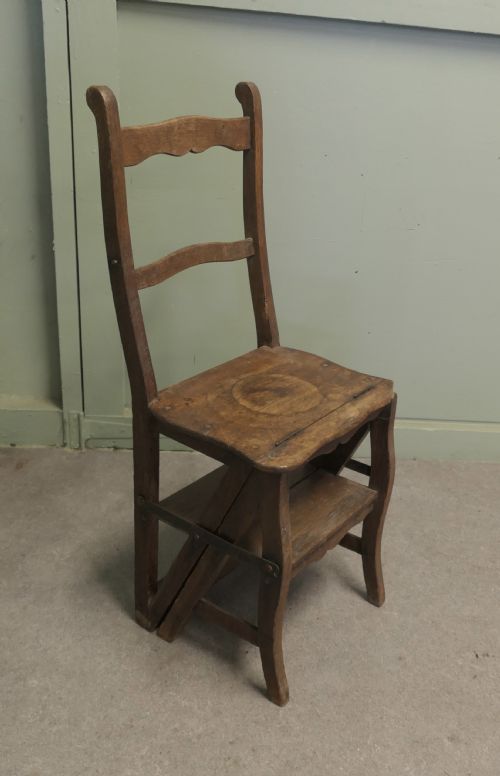
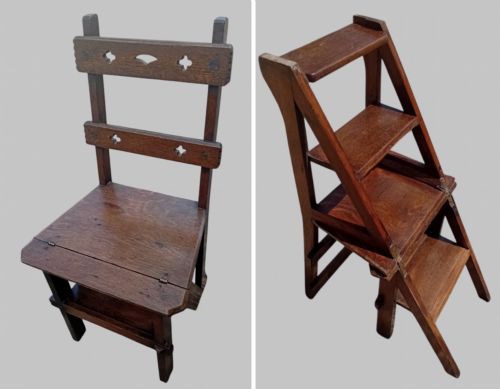
Many of the listings combine seating with height, appearing as metamorphic chairs, library steps, and step ladders. These practical forms reflect period interior needs where space-saving furniture was essential for domestic and working environments.
Materials vary from solid oak and mahogany to pine and fruitwood, often showing styles like Gothic Revival, Arts & Crafts, and Industrial Utility. You are most likely to meet oak and mahogany library steps that unfold into chairs or elevated platforms.
Materials and construction
Makers utilised hardwoods such as mahogany and oak alongside pine and fruitwood to build sturdy frames capable of bearing weight while folding smoothly. Brass and iron hinges, brackets, and locking mechanisms provide the structural support necessary for pieces that shift between configurations.
Joinery techniques involve traditional wood joints secured with metal fasteners to withstand the repeated motion of folding and unfolding. Surface finishes include polished wood, painted details, and carved embellishments reflecting Aesthetic Movement and Gothic Revival influences.
Design styles present across the inventory include Gothic Revival, Arts & Crafts, Aesthetic Movement, and Industrial Utility.
Assessing quality and execution
The sophistication of the folding mechanism largely dictates the calibre of a piece, with superior examples operating smoothly without excessive play in the joints. Ingenuity in metamorphic design, allowing a chair to transform seamlessly into a set of library steps, separates utilitarian items from finer pieces.
Selection of timber and the execution of carved details, such as those seen in Gothic Revival or Arts & Crafts interpretations, distinguish standard workshop output from exceptional examples. Original metalwork fittings and sound structural integrity across moving parts remain central to the overall standard of the object.
The Folding Wooden Stool Glossary
- Metamorphic
- Furniture designed to transform from one object into another, such as an armchair converting into a set of library steps.
- Library steps
- A set of portable stairs used to reach high bookshelves, often combined with seating in period interiors.
- Gothic Revival
- An architectural and decorative style drawing inspiration from medieval forms, prominent in nineteenth-century woodwork.
- Arts & Crafts
- A design movement prioritising traditional craftsmanship, visible grain, and simple construction methods.
- Fruitwood
- Timber sourced from fruit-bearing trees, valued for its fine grain and warm tone in period cabinetmaking.
Folding Wooden Stool: Frequently Asked Questions
What is a metamorphic library chair?
A metamorphic library chair is a dual-purpose item of furniture designed to convert from a seat into a set of steps. This ingenious design allowed Victorian and Georgian homeowners to reach high bookshelves without keeping separate bulky ladders.
These pieces rely on pivoting hinges and sliding sections that lock securely into place in both configurations. They represent a clever blend of practical utility and fine cabinetmaking.
How do I date an oak library step?
Dating an oak library step involves examining the construction methods, type of hardware, and stylistic details present in the woodwork. Pieces from the Georgian period tend to feature rich mahogany and classical lines, while nineteenth-century versions often display Gothic Revival or Arts & Crafts influences.
Hand-cut joints, original brass or iron hinges, and the wear patterns on the treads provide further clues to the age of the item. Comparing the specific wood turning and carving styles helps narrow down the decade of manufacture.
Were these folding steps used in homes?
While many examples served in grand private libraries and institutional settings, smaller folding steps and stools were common in domestic households. They provided necessary height for household tasks before fitted cabinetry and modern step stools became widespread.
Their ability to fold flat made them easy to store in tight spaces when not in use. This practicality ensured their survival across the nineteenth and early twentieth centuries.
How should I care for antique wood steps?
Caring for antique wooden steps involves keeping them out of direct sunlight and away from rapid temperature fluctuations that can dry out the timber. Regular dusting with a soft cloth and occasional application of appropriate wax helps maintain the finish.
It is important to check the metal hinges and folding mechanisms periodically to ensure they remain stable. Gentle handling prevents unnecessary stress on the joints during transformation.