


Rustic Wooden Childs Chair
These rustic wooden childs chair examples bring small-scale country craftsmanship into the home, prized for their honest construction and historic character.
Rustic Wooden Childs Chair
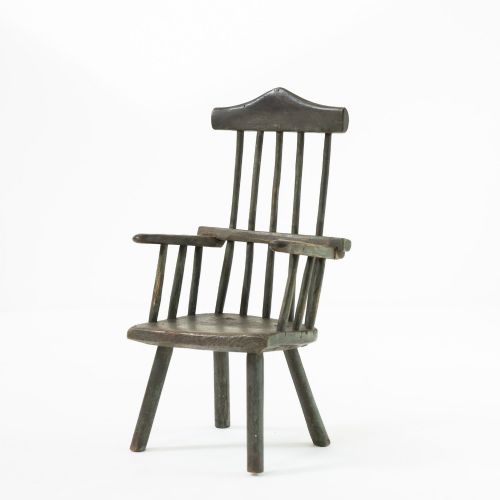
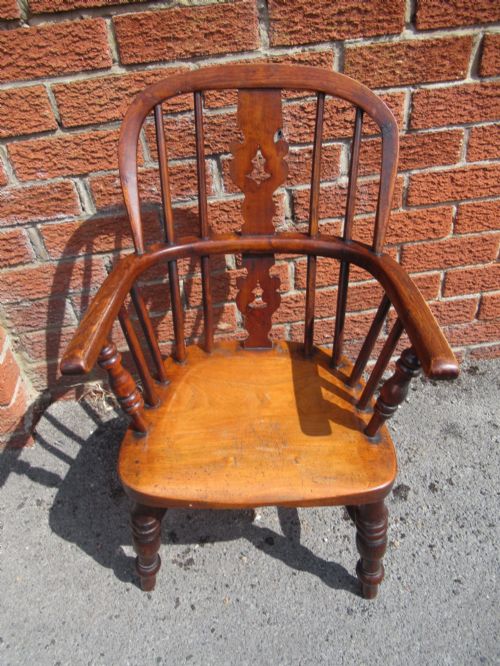
A rustic wooden childs chair encompasses a range of smaller domestic seating forms designed for children across several centuries. Buyers encounter stick backs, windsors, ladderbacks, and high chairs originating from English and Scandinavian country traditions.
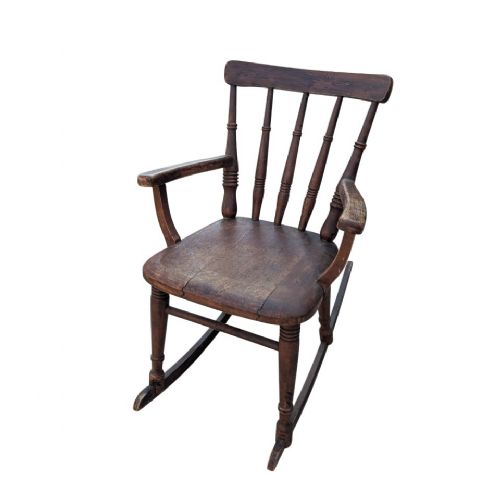
The selection includes armchairs, rocking chairs, settles, and folding variants spanning the eighteenth, nineteenth, and early twentieth centuries. These pieces reflect domestic rural life through simple vernacular forms and practical household adaptations.
How They Were Made
Local timbers such as elm, oak, ash, yew, beech, and pine provided the structural integrity for these country seats. Makers utilised natural forms and sturdy woods to build pieces that would withstand generations of daily use.
Construction techniques relied on traditional joinery, including spindle backs, stick backs, and Windsor frames, sometimes complemented by rush seating or painted finishes.
Listings feature periods from the 18th century to the 1930s, utilising elm, oak, ash, pine, yew, beech, rush, and paint.
What Varies in Quality
Quality in these small chairs rests on the harmony of proportions and the integrity of the timber used in the build. Pieces that retain their original unpainted surfaces or honest historic patination stand apart from those with later alterations.
The sophistication of the turning on spindles and the cleverness of vernacular adaptations, such as folding mechanisms or rocking rails, define the finer examples within the range.
The Rustic Wooden Childs Chair Glossary
- Windsor
- A chair built with a solid wooden seat into which the legs and back sticks are directly inserted. This construction method provides notable sturdiness to country seating.
- Stick Back
- A form of chair where slender turned or cleft wooden rods form the backrest. These members are tenoned straight into the seat.
- Ladderback
- A chair style featuring horizontal wooden slats or rails between the vertical back posts. Traditional versions often incorporate woven rush seats.
- High Chair
- An elevated seating form designed to raise a child to table height. Historic examples frequently include safety bars or footrests.
- Vernacular
- Everyday objects made by local craftspeople using traditional regional methods rather than high-style academic designs. These pieces prioritise utility and local material availability.
Rustic Wooden Childs Chair: Frequently Asked Questions
How old are these chairs?
The pieces span from the eighteenth century through the nineteenth century and into the early decades of the twentieth century. Dating relies on timber characteristics, construction methods, and stylistic vernacular.
Earlier examples often display hand-cleft components and primitive joinery, whereas later pieces may show industrial influence or simpler production techniques.
Were these made for everyday use?
Yes, these items were built as functional furniture for domestic children's seating in rural households and farmhouses. Their robust construction in native timbers was intended to endure daily childhood use.
Over generations, many acquired natural patination and signs of active service that record their long domestic history.
How do I clean wooden child chairs?
Maintenance requires gentle dusting with a soft, dry cloth to protect the historic surface and timber patination. Avoid harsh modern cleaning agents or excess moisture that could damage old finishes.
Applying microcrystalline wax periodically helps nourish aged wood without altering its natural appearance.
What woods were commonly used?
Makers utilised native hardwoods and softwoods available in their local regions, predominantly elm, oak, ash, beech, yew, and pine. Different parts of a single chair often combine these timbers according to their specific structural strengths.
For instance, elm provided strong, split-resistant seats, while ash or beech served well for flexible bent spindles and legs.
Are rocking chairs common?
Rocking variants appear alongside standard static armchairs and high chairs within the country vernacular tradition. These pieces feature curved wooden rockers attached to the base for movement.
Swedish and English workshops both produced rocking versions tailored for domestic nurseries.