



Brown Wooden Folding Chair
These brown wooden folding chair pieces offer ingenious dual-purpose design and portable seating shaped from periods spanning the Georgian era to the mid-twentieth century.
Brown Wooden Folding Chair
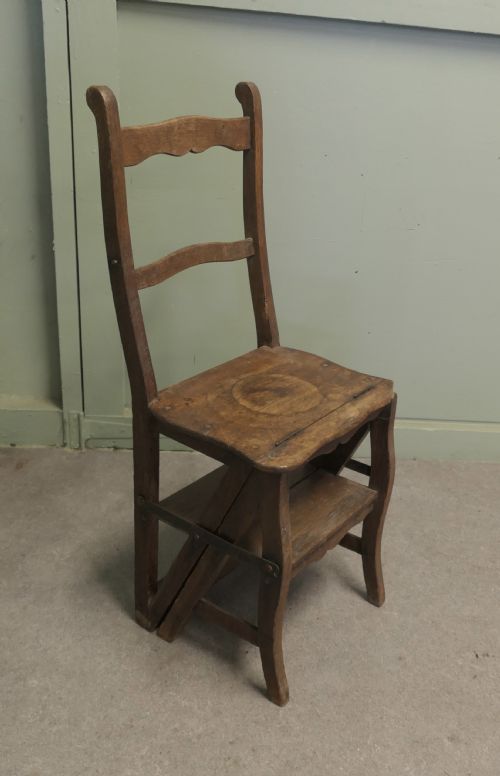
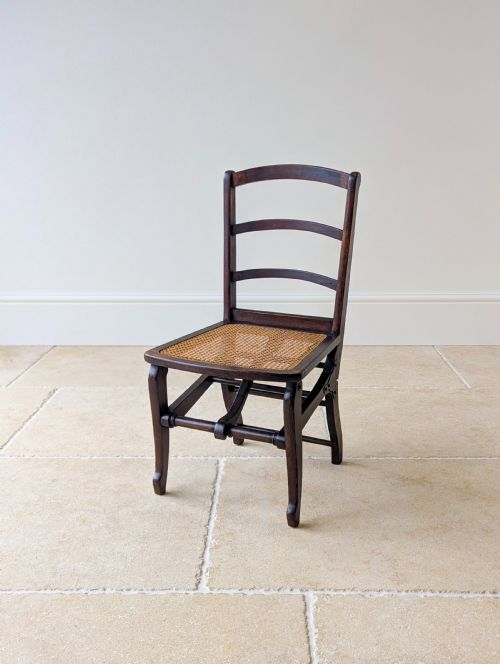
A brown wooden folding chair brings together versatile seating and clever space-saving engineering found across various historic eras. These items include Victorian campaign models, metamorphic library steps, and rustic folding forms produced in walnut, oak, and mahogany.
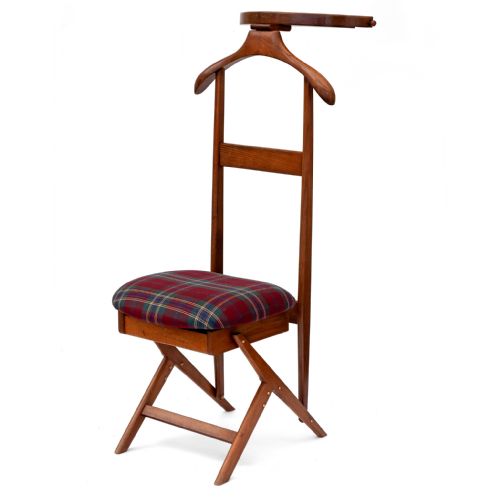
Buyers will encounter multiple configurations ranging from child-sized seats to substantial gentleman's valet stands and library armchairs. Origins stretch from British workshops to French country designs, Italian pieces, and Indian Savonarola chairs.
The selection encompasses diverse stylistic influences such as Gothic Revival, Regency elegance, and rustic folk art. Each piece demonstrates how clever hinges and pivoting frames allowed rigid furniture to collapse for transport or storage.
How they were made
Cabinetmakers utilised hardwoods like oak, walnut, and mahogany, often pairing timber frames with metal hinges, iron brackets, and brass fittings to enable smooth folding actions. Some examples incorporate cane seating or carved bone button decorations to accent the wooden structure.
Joinery methods varied from the intricate pierced carved crest rails and fluting of campaign chairs to the structural pivoting pivots required for metamorphic library steps. Artisans combined traditional wood-turning and cabinetry with specialised mechanical joints that concealed the collapsing mechanism.
Current listings span the Georgian, Regency, Victorian, and 1930 periods, incorporating walnut, oak, mahogany, and iron.
What varies in quality
The distinction between ordinary utility items and superior examples lies in the sophistication of the folding mechanism and the selection of timber. Finer pieces employ dense hardwoods with precise cabinetry, whereas simpler versions rely on basic rustic construction.
Artistic execution also separates the range, with top-tier items featuring detailed carved ornamentation, bone buttons, and sophisticated metamorphic transformations that convert chairs into library steps seamlessly.
Morgan and Sanders·Fratelli Rugitti
The Brown Wooden Folding Chair Glossary
- Metamorphic
- Furniture designed to transform from one object into another, such as an armchair that unfolds into library steps. This clever engineering was especially popular during the Georgian and Victorian periods.
- Campaign chair
- Portable seating constructed for travel, typically featuring collapsible wooden frames and metal or brass hinges. These pieces allowed officers and travellers to pack furniture compactly.
- Savonarola chair
- An X-frame folding chair composed of multiple curved wooden slats that intersect to form a barrel-like seat and back. The design dates back to the Italian Renaissance.
- Crest rail
- The top horizontal member of a chair back, often carved or shaped to define the stylistic period. In finer pieces, this rail receives decorative piercing or fluting.
- Valet stand
- A freestanding piece of furniture utilised for hanging garments and organising daily wear. Some variations incorporate folding elements or gentleman's compartments.
Brown Wooden Folding Chair: Frequently Asked Questions
What is a metamorphic library chair?
A metamorphic library chair is a dual-purpose piece of furniture that transforms from a comfortable seat into a set of library steps. This ingenious design allowed scholars to reach high bookshelves without needing separate step stools.
Craftsmen engineered these conversions using hidden hinges and pivoting wooden frames that shifted smoothly between configurations.
How do you fold a campaign chair?
Campaign chairs utilise hinged wooden scissor frames or pivoting X-frame supports that collapse inward upon themselves. The leather, canvas, or wooden slats flex or detach to allow flat storage.
Owners must locate the primary locking pins or brackets before gently folding the frame to avoid straining historic joints.
What woods were used for these chairs?
Cabinetmakers primarily worked with durable hardwoods including mahogany, walnut, and oak. These timbers provided the structural strength necessary for folding mechanisms to withstand regular use.
Secondary materials such as brass, iron, and cane frequently supplemented the wooden framework for added reinforcement and flexibility.
How do you identify a Victorian folding chair?
Victorian folding chairs often display revival styles such as Gothic details, dark wood finishes, and robust metal or brass hardware. Their construction reflects the industrial innovations of the nineteenth century.
Look for patent stamps, heavier timber framing, and decorative flourishes like pierced carved crest rails characteristic of the period.