



Folding Tiered Cake Stand
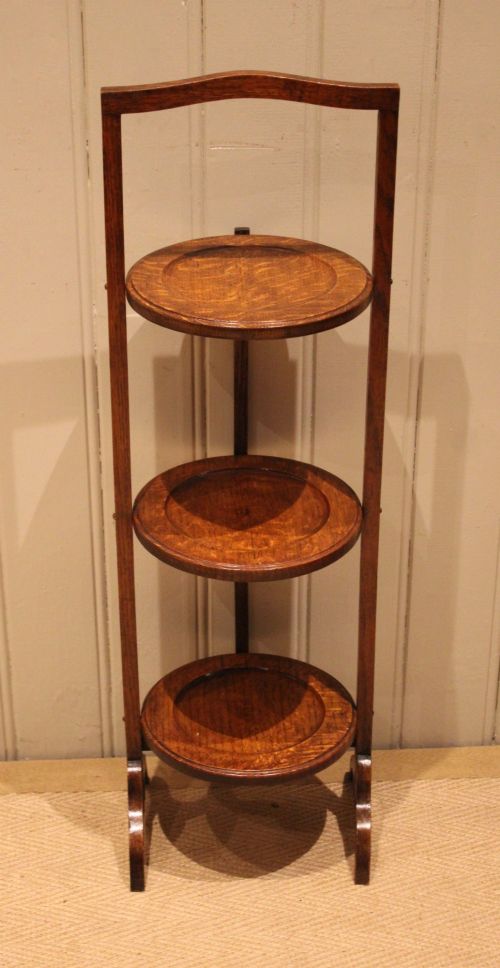
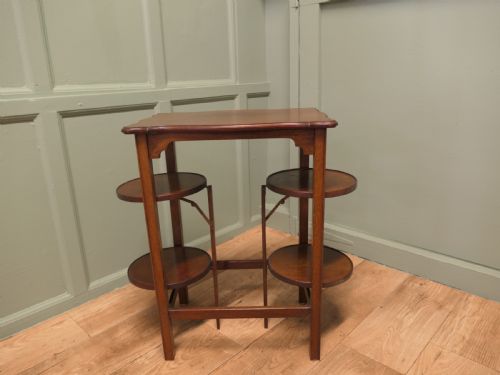
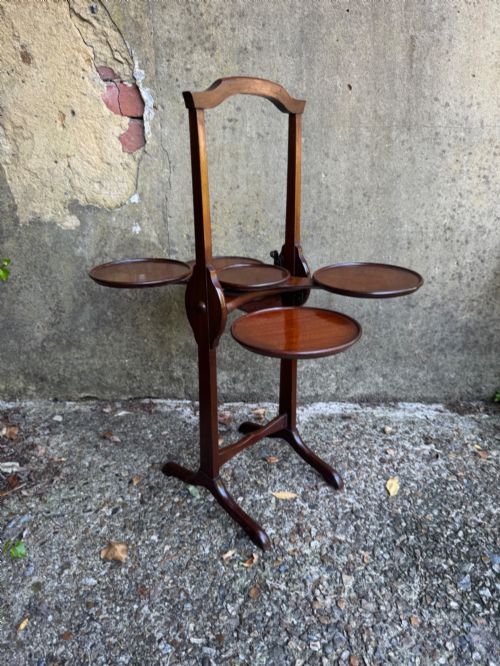
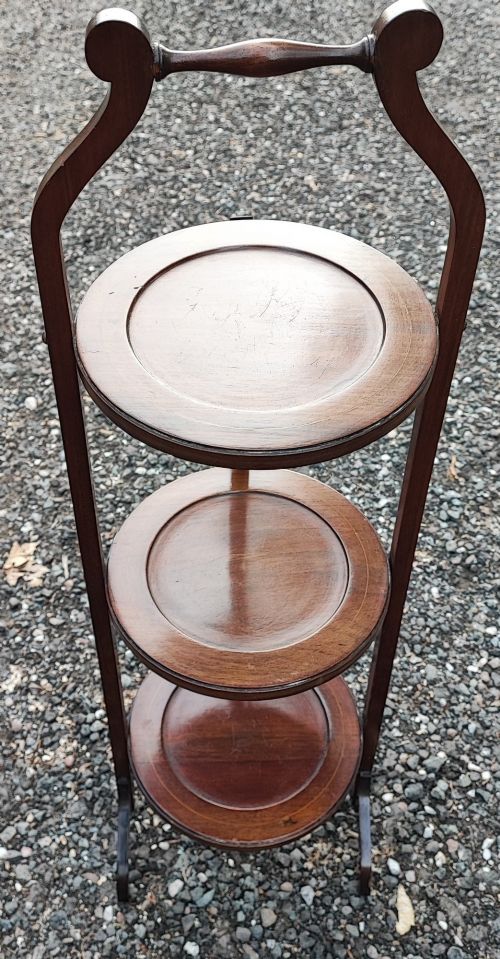
These folding tiered cake stand examples offer a practical display surface that collapses neatly when not in use.
Folding Tiered Cake Stand
A folding tiered cake stand provides multiple stacked surfaces designed to collapse or fold away when not in use, making them a space-saving addition to a room. You will encounter these most frequently from the Edwardian period, constructed with two, three, or four tiers.
The objects serve primarily as occasional tables or display pieces for tea and cakes, drawing on forms developed through the nineteenth and early twentieth centuries. Alongside standard cake stands, the evidence includes related items such as campaign style serving tables, dumbwaiters, and occasional tables.
Makers and manufacturers produced these stands using various woods, most notably mahogany and oak, with occasional examples in rosewood, walnut, and satinwood. The structural arrangement relies on folding mechanisms that allow the tiers to be brought together for storage.
How they were made
Cabinet makers utilised dense hardwoods such as mahogany and oak to construct the main frame and individual tiers, ensuring stability while keeping the weight manageable. Brass fittings and iron components frequently facilitate the pivoting and folding action of the tiers.
Inlaid decoration in boxwood and satinwood appears on several Edwardian and Sheraton Revival pieces, adding geometric or floral banding to the wood surfaces. Some surfaces also incorporate felt linings or subtle inlays to enhance the appearance of the tiered trays.
Folding Tiered Cake Stand Retail Price Guide 2026
Typical asking prices for folding tiered cake stand among the pieces listed under this phrase on Sellingantiques today, from the lower quarter to the upper quarter. They describe what is for sale here now, not the wider market.
Listings for folding tiered cake stands span the Georgian period through to the 1920s, utilising mahogany, oak, rosewood, and walnut.
What varies in quality
The precision of the folding mechanism separates simpler utility pieces from finer examples, as a well-aligned hinge and pivot system ensures the tiers hang level when open. The choice of timber also dictates the grade, with figured mahogany and rosewood representing a higher standard than plain oak.
Decorative embellishments such as fine boxwood inlay and satinwood stringing indicate superior craftsmanship in Edwardian workshops. The stability of the standing frame when fully extended reflects the original joinery quality.
The Folding Tiered Cake Stand Glossary
- Edwardian
- Pertaining to the reign of King Edward VII from 1901 to 1910, characterised by lighter furniture forms and revival styles. This period produced a large proportion of the tiered stands seen today.
- Sheraton Revival
- A late nineteenth and early twentieth century style inspired by the neoclassical designs of Thomas Sheraton. Pieces in this style often feature delicate mahogany construction and contrasting wood inlays.
- Dumbwaiter
- A multi-tiered piece of furniture traditionally used for holding food and tableware without the need for a servant. Earlier Georgian versions provided the structural precedent for later folding cake stands.
- Campaign style
- Furniture designed to be easily folded, dismantled, and transported. Pieces built in this manner prioritise functional mobility and compact storage.
- Inlay
- A technique where pieces of contrasting material, such as boxwood or satinwood, are inserted into depressions in the base wood to form a decorative pattern.
Folding Tiered Cake Stand: Frequently Asked Questions
How do I fold the cake stand safely?
Most folding stands rely on hinged vertical struts that pivot inward to draw the tiers together.
Support the upper tiers with one hand while releasing any locking catch to prevent the wood from striking itself.
Were these stands only used for cake?
While designed primarily for afternoon tea service, these tiered surfaces held biscuits, fruit, and small decorative items.
Today they function effectively as plant stands or side tables in sitting rooms.
How can I tell an Edwardian stand from later pieces?
Edwardian examples typically feature lighter mahogany frames, often with subtle boxwood stringing or Sheraton Revival influences.
Later twentieth-century versions tend toward simpler oak construction without decorative inlay.
Are these stands stable on modern floors?
The stability depends on the condition of the central pivot and the alignment of the folding legs.
Checking that all feet rest evenly on the floor prevents wobbling when items are placed on the tiers.