




Folding Rosewood Side Table
A folding rosewood side table brings versatile timber and clever folding mechanisms together for compact rooms.
Folding Rosewood Side Table
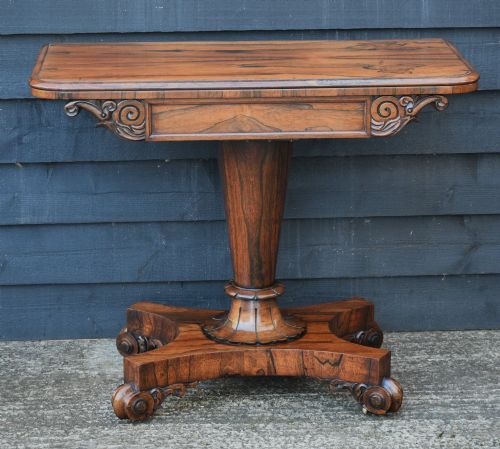
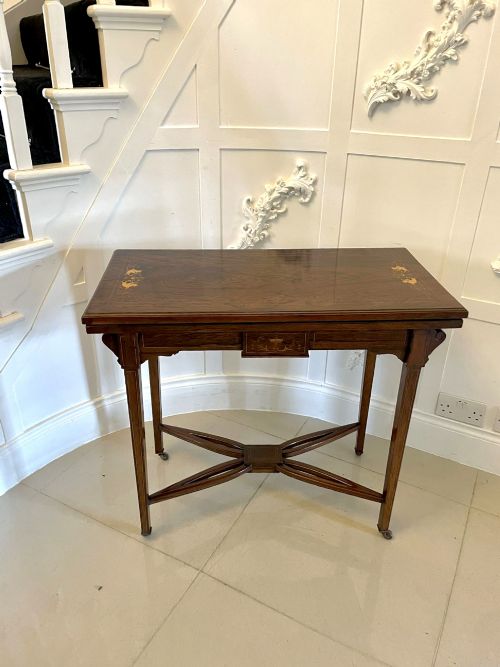
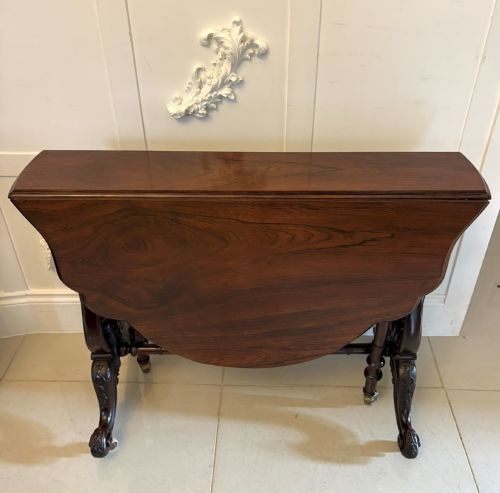
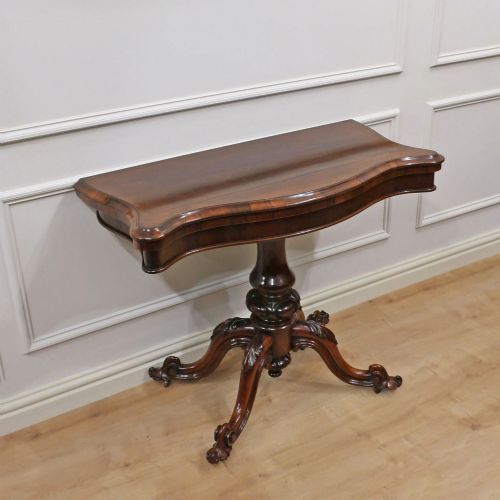
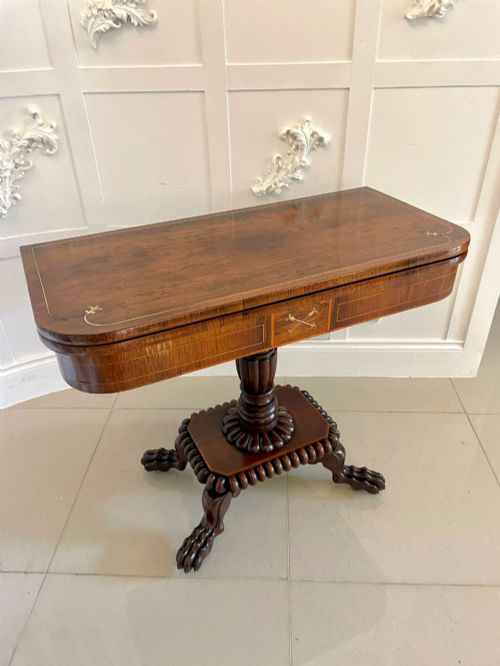
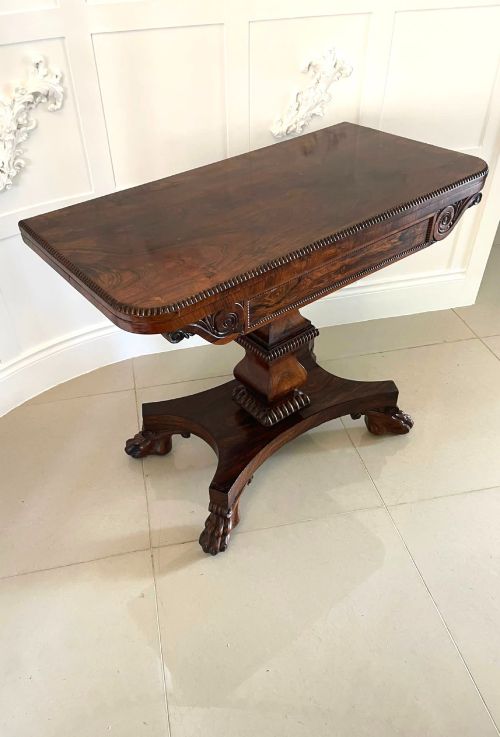
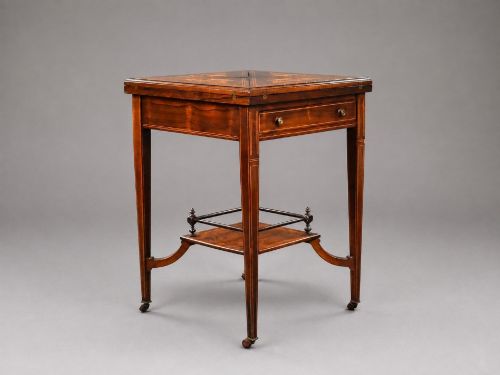
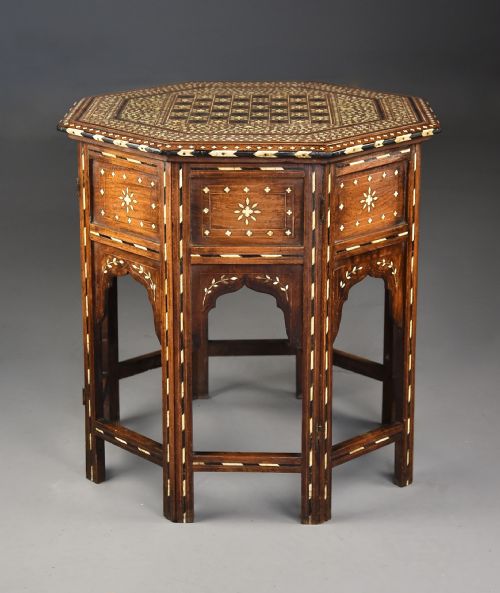
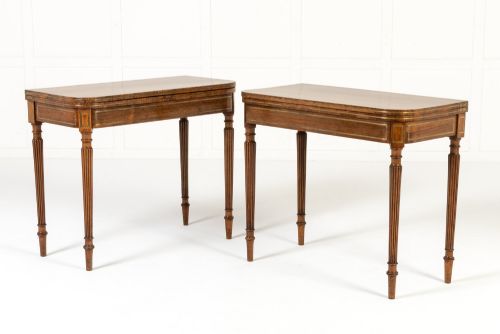
A folding rosewood side table appears in several distinct configurations, most notably as card tables, tea tables, and octagonal occasional pieces. These items span periods from the Georgian era through to the Edwardian period, with Victorian and Regency examples remaining particularly prominent. The form adapts readily from compact surfaces into larger serving or gaming areas through hinged tops, fold-over leaves, and drop-leaf mechanisms.
Makers and workshops produced these pieces to function both against a wall and as freestanding items when opened. Anglo-Indian production introduces intricate inlaid variants alongside traditional British cabinetmaking. Buyers encounter designs ranging from simple drop-flap tables to elaborate envelope card tables and octagonal occasional pieces.
Materials and construction
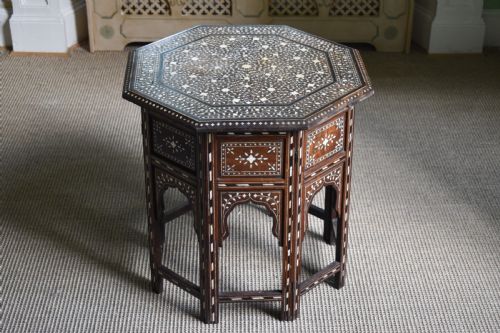
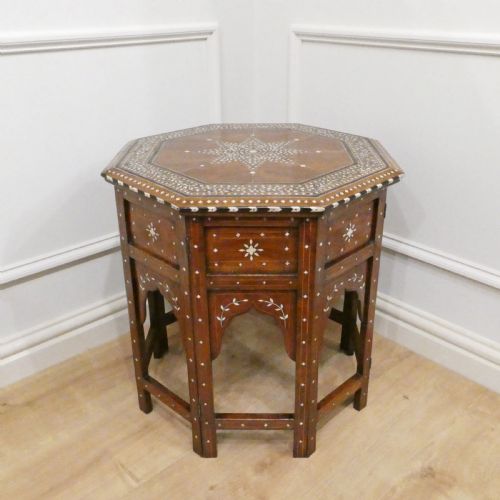
Cabinetmakers utilised dense rosewood timber, often supported by secondary hardwoods, to construct solid frames and stable legs. Surfaces frequently receive decorative enhancement through brass inlay, boxwood stringing, satinwood banding, and intricate bone inlay found in Anglo-Indian examples. These materials combine with specialised hinges and pivots that allow tops to rotate, fold flat, or drop securely.
The construction relies on precision joinery to maintain stability when the leaves open or close. Marquetry and floral inlay demand careful hand-cutting and fitting of contrasting timbers into the primary rosewood ground. Carved elements on legs and friezes demonstrate the hand-chiselling techniques typical of both British workshops and overseas production centres.
Folding Rosewood Side Table Retail Price Guide 2026
Typical asking prices for folding rosewood side table among the pieces listed under this phrase on Sellingantiques today, from the lower quarter to the upper quarter. They describe what is for sale here now, not the wider market.
Some tables hide clever compartments beneath their folding tops, originally designed for storing counters and card decks.
Assessing quality
Quality rests upon the selection of timber grain and the precision of the inlay work across the folding surfaces. Superior examples display tightly matched rosewood veneers and crisp, securely set brass or bone inlay without gaps in the surrounding wood. The integrity of the pivoting mechanism and hinges dictates how smoothly the top operates and whether it remains level when fully extended.
Proportion and carving depth further separate standard production from exceptional pieces. Finer items exhibit sharply defined hand-carving on the base and supports, whereas lesser pieces rely on simpler, softer mouldings. The alignment of the fold-over top when closed reveals the care taken during initial assembly.
The Folding Rosewood Side Table Glossary
- Rosewood
- A dense, heavily figured timber valued for its rich dark brown colour and distinct grain patterns. It forms the primary surface material for the majority of these tables.
- Card table
- A specialist table featuring a hinged top that folds open to reveal a baize-lined playing surface, often supported by a swing leg or rotating mechanism.
- Octagonal table
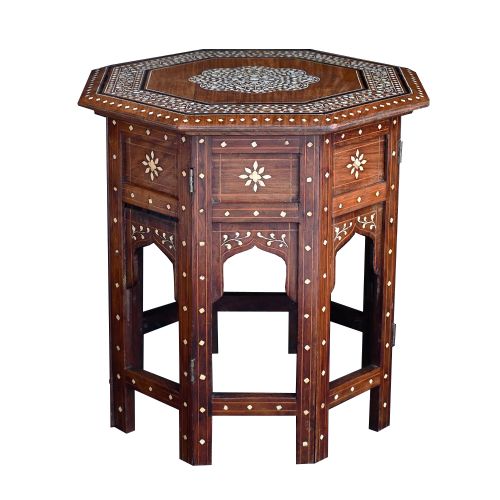
- A multi-sided table shape frequently utilised in Anglo-Indian Hoshiarpur pieces, providing a distinct geometric profile compared to standard rectangular or round designs.
- Inlay
- A decorative technique where contrasting materials such as brass, boxwood, or bone are set flush into recesses cut into the rosewood surface.
- Drop leaf
- A hinged flap attached to the main table top that raises to extend the surface area and drops down when not in use.
Folding Rosewood Side Table: Frequently Asked Questions
How do I operate the folding top safely?
Most folding tables utilise a swivel top or a hinged leaf supported by a swing leg or pivoting frame. Lift the top gently and rotate or unfold it carefully to engage the support mechanism without straining the hinges.
Ensure the table is cleared of objects before attempting to close the leaves. Forcing a stuck hinge can damage the surrounding rosewood and timber framework.
What is the difference between a tea table and a card table?
A tea table is designed primarily with a fold-over top to provide a stable surface for serving tea or display. These often feature plain wooden interiors once opened.
A card table typically includes a lined playing surface inside, specifically intended for games such as whist or cards, and frequently incorporates subtle compartments for counters.
How do I care for rosewood furniture?
Keep rosewood surfaces away from direct sunlight and heat sources to prevent the timber from drying out and the grain from splitting. Dust regularly with a dry cloth and avoid silicone-based polishes.
Apply a quality wax sparingly when the wood appears dry to maintain the natural lustre of the rosewood grain and protect the finish.
How do I distinguish Anglo-Indian pieces from British ones?
Anglo-Indian tables, particularly those associated with Hoshiarpur, usually feature dense all-over carving and extensive bone or brass inlay depicting floral and geometric motifs. The timber choice may include regional hardwoods alongside rosewood.
British pieces from the Regency and Victorian eras tend to rely on architectural forms, clean mahogany or rosewood veneers, and restrained stringing or brass inlay rather than heavy overall carving.