
Folding Coffee Tables
Folding coffee tables offer clever surface space that packs flat when not in use, combining practical daily service with historical portability.
Folding Coffee Tables
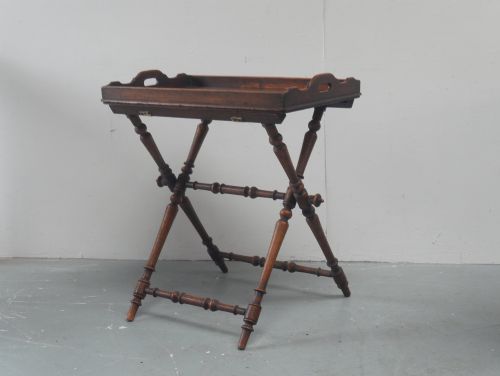
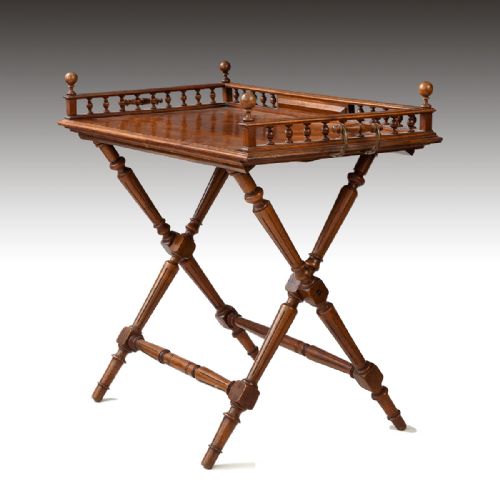
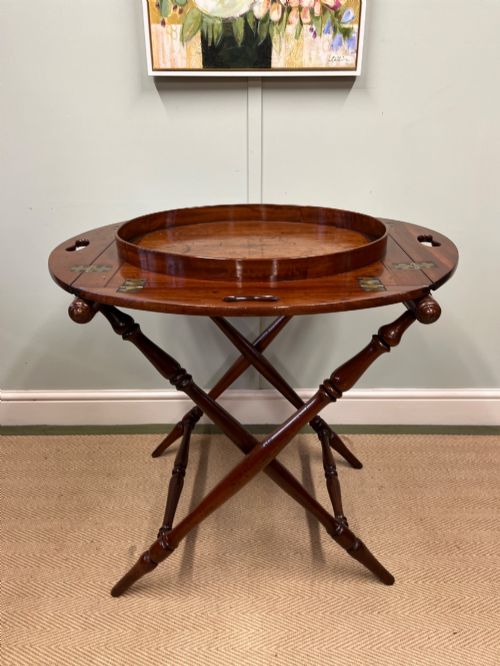
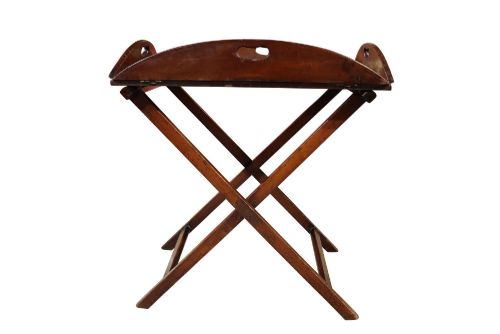
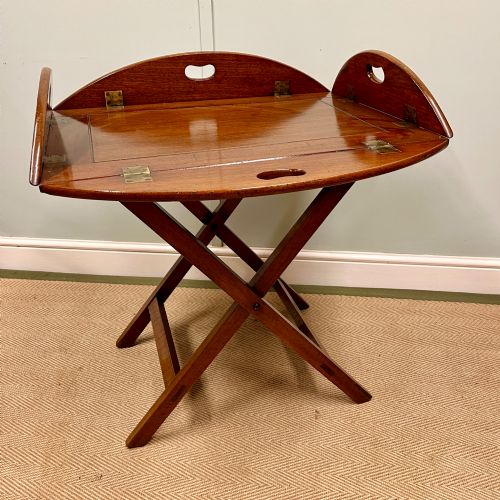
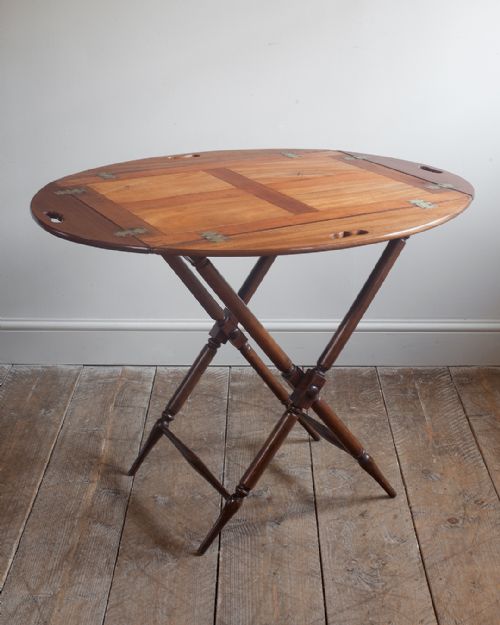
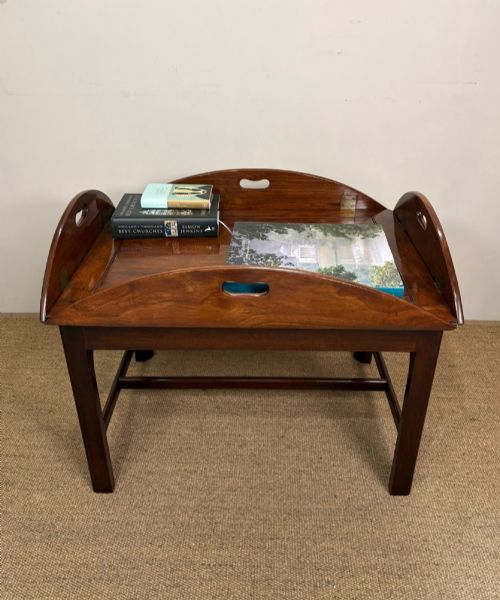
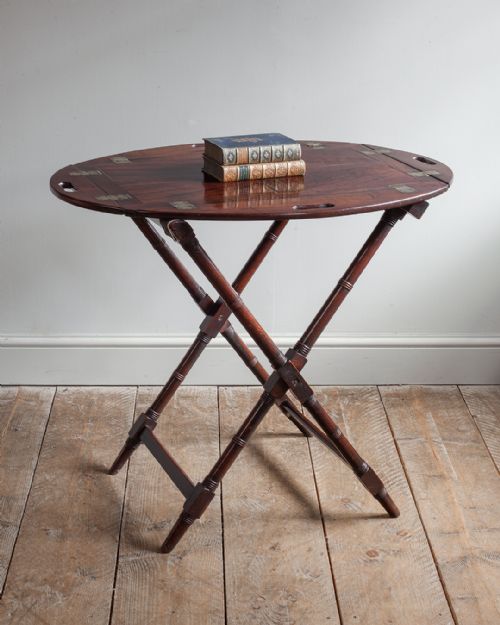
Folding coffee tables bridge the gap between traditional British serving furniture and modern low-level living, appearing frequently as butler's trays on independent folding stands. These pieces originate from various historical periods, spanning from the eighteenth century through the Victorian era and into the early twentieth century.
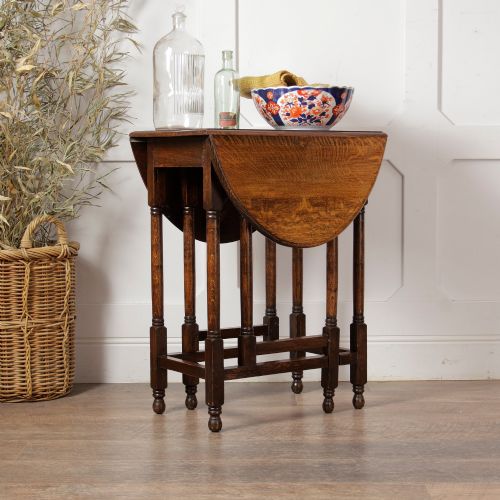
The selection ranges from traditional English mahogany and oak butler's trays to intricately decorated imported pieces. Buyers encounter numerous drop-flap serving stands alongside versatile gateleg designs and octagonal occasional tables suited for compact spaces.
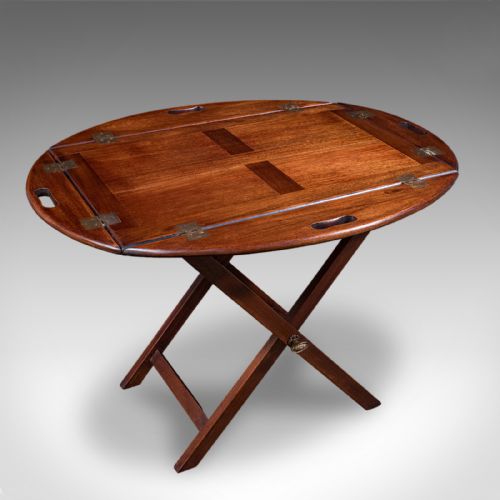
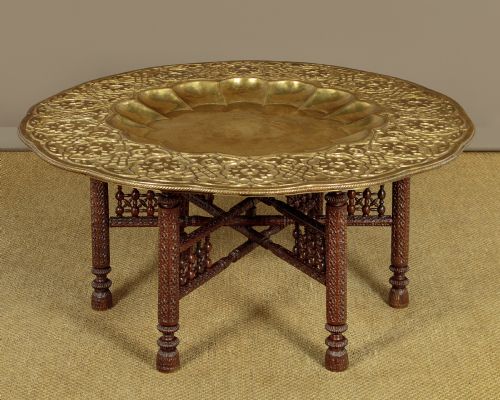
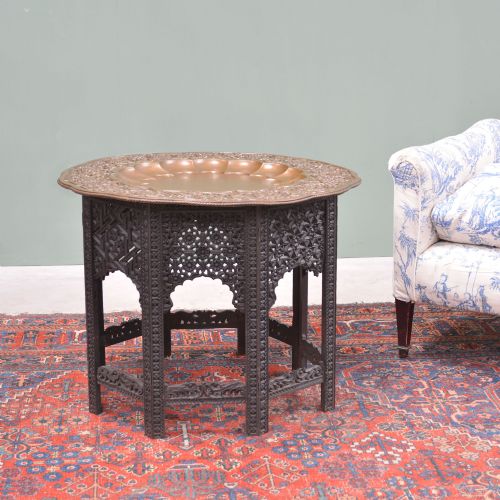
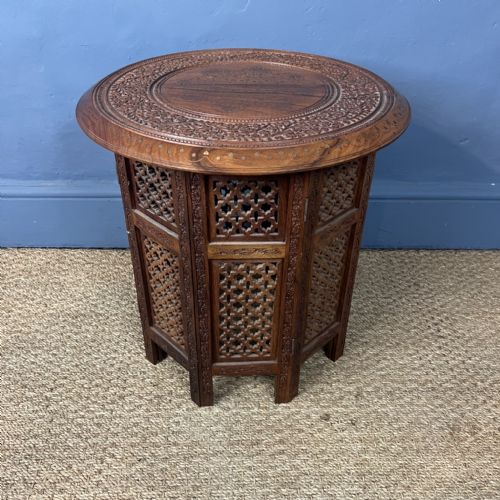
Many examples reflect global trade and colonial influence, introducing exotic hardwoods and detailed surface embellishments to British domestic interiors. These diverse origins mean a buyer can select anything from a formal Georgian oval tray to a carved Anglo-Indian folding table.
Materials and construction
Cabinet makers utilised dense native timbers such as mahogany, oak, walnut and teak to build sturdy folding frames and solid tray tops that could withstand regular movement. These woods were chosen for their structural strength and ability to take a smooth polished finish.
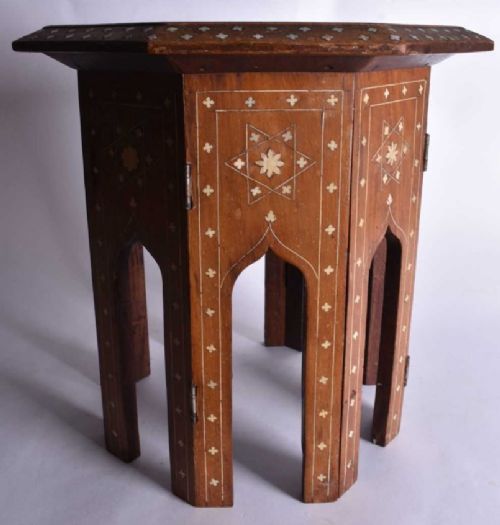
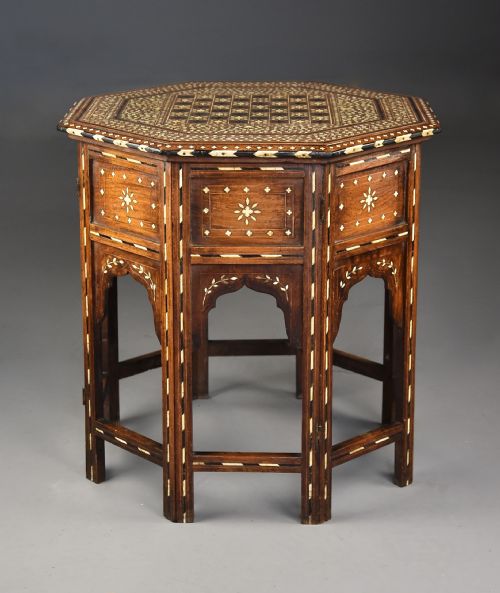
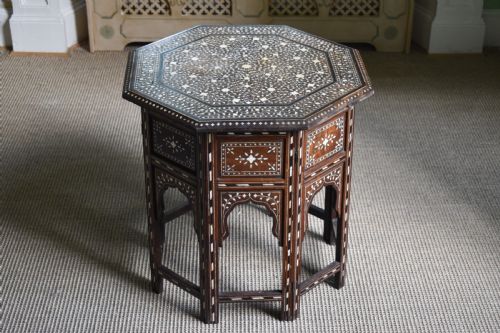
Exotic pieces incorporate contrasting decorative elements, utilising inlaid brass, copper, mother of pearl and dense padauk to create elaborate geometric or leaf patterns. Artisans also employed intricate surface carving techniques, particularly visible on Hoshiarpur and Burmese tables.
Hinges, folding X-frames and drop-flap mechanisms are engineered for reliable daily packing and deployment. The joints rely on traditional carpentry methods, ensuring the stands support heavy loads while remaining entirely collapsible.
Listings feature folding tables spanning the eighteenth, nineteenth and twentieth centuries, incorporating materials like brass, mahogany, teak, rosewood and walnut.
Factors of quality
The distinction between standard and superior pieces rests heavily on the crispness of the timber carving and the precision of any inlay work. Finer examples display immaculate hand-cut brass or mother of pearl detail that sits flush within the hardwood surface.
Originality of the folding mechanism and stand elevates a piece considerably, as many trays have been paired with later or replacement bases over time. A matching period stand that locks together securely demonstrates superior provenance and preserved integrity.
The choice of timber grain and the depth of the initial patina indicate the level of care taken during original production. Superior tables utilise well-figured mahogany, walnut or burr timber that has aged gracefully without excessive structural intervention.
The Folding Coffee Tables Glossary
- Butler's tray
- A removable rectangular wooden tray with hinged or shaped sides, originally designed for carrying dining items and placed upon a separate folding stand. They frequently function as low coffee tables in contemporary rooms.
- Gateleg table
- A table featuring drop leaves supported by hinged legs that swing outward like a gate to hold the surface. This construction allows the entire piece to fold into a narrow profile.
- Hoshiarpur
- A style of Anglo-Indian woodwork originating from the Punjab region, characterised by dense geometric inlay in brass and resin on shisham or teak bases. These pieces often feature collapsible octagonal tops.
- Drop-flap
- A hinged table section that lowers to reduce the footprint of the furniture when not in use. It provides flexible surface area in smaller reception spaces.
- Padauk
- A heavy, durable tropical hardwood with a distinctive reddish hue, utilised in British colonial and campaign furniture for its resistance to movement and decay.
Folding Coffee Tables: Frequently Asked Questions
How do I use a butler's tray as a coffee table?
A butler's tray simply lifts off its folding wooden stand, allowing you to position the base at a comfortable height for a living room. The raised edges of the tray prevent items from sliding off while providing ample surface area for daily use.
When you need extra floor space, the entire assembly folds flat and stores away easily behind a sofa or inside a cupboard. This dual functionality makes them ideal for modern homes that require flexible furniture arrangements.
Are these folding tables sturdy enough for daily use?
Traditional folding tables are constructed from dense hardwoods like oak, mahogany and teak, built to withstand regular movement and heavy service. The cross-frame stands provide stable support when fully locked into position.
While the hinges and folding mechanisms are designed for reliable packing, it remains wise to lift the table by its main frame rather than the tray edges when moving it across a room.
How do I identify the period of an antique folding table?
Dating relies heavily on timber selection, construction methods and stylistic markers such as Georgian proportions or Victorian Gothic Revival carving. Examining the type of joinery and the wear patterns on the folding stand offers clear clues to its age.
Imported pieces often display distinct regional characteristics, such as Anglo-Indian brass inlay or Burmese lacquer work, which help narrow down their exact era of manufacture.
What is the difference between an occasional table and a tray table?
An occasional table is a small, permanent piece of furniture designed for a specific spot in a room, such as holding a lamp or book. A tray table specifically incorporates a removable or hinged surface meant for serving food and drink.
Many folding tray tables combine these functions, offering the portability of a serving tray with the sturdy stance of a standard coffee table.