
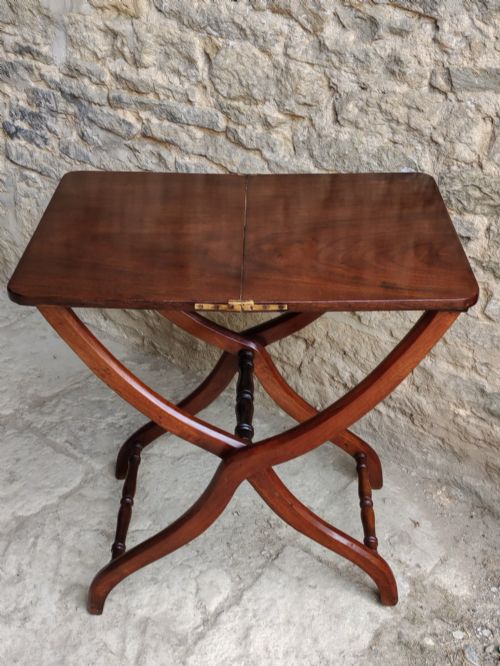


Folding Coach Table
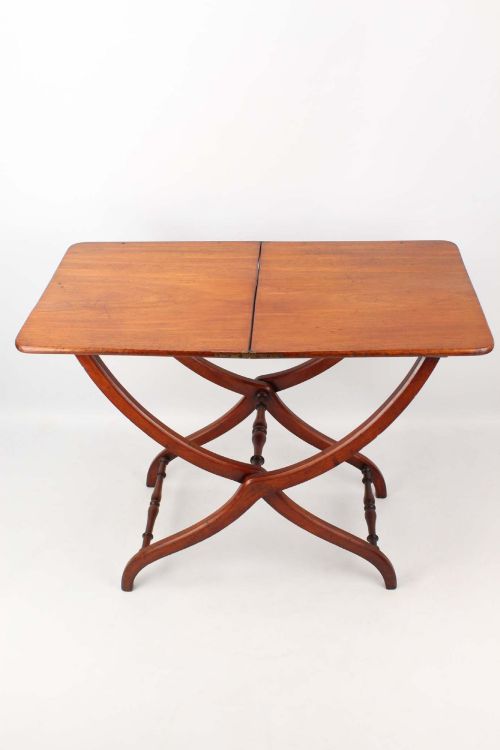
A folding coach table is a portable surface built for travel, offering sturdy timber construction that collapses flat when not in use.

Folding Coach Table
A folding coach table is a functional antique designed for easy transport and compact storage in transit or domestic spaces. These versatile items appear in various iterations across the Victorian and Edwardian eras, as well as the Georgian period.
Many specimens double as campaign items, butlers stands, or games surfaces, reflecting the adaptable nature of nineteenth-century portable furniture. The structural folding mechanism remains central to their enduring utility.
Materials and construction
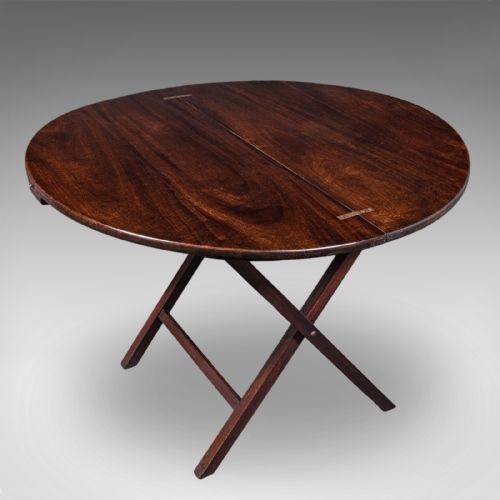
Cabinet makers utilised dense hardwoods including mahogany, oak, walnut, and rosewood to ensure the framework withstood regular folding and movement. Brass hinges, brackets, and carrying handles provided robust joints and secure locking points for the collapsible frames.
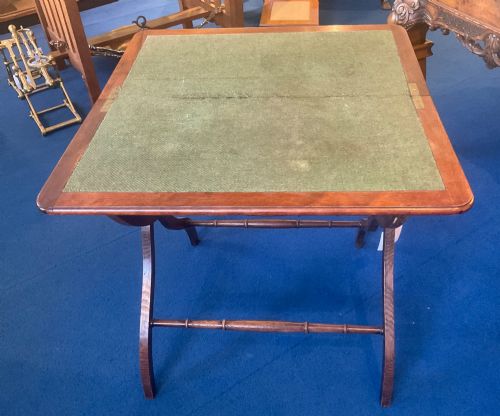
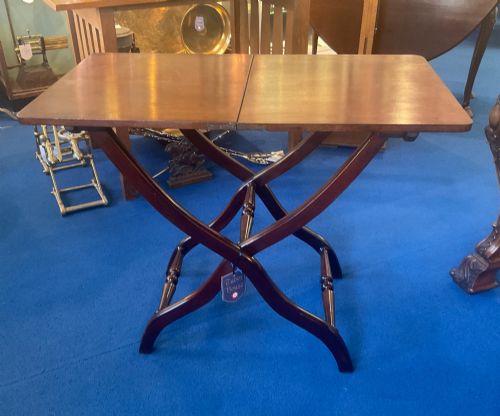
Interlocking cross-frame supports allow the tables to fold completely flat without the use of complex detached fasteners. Selected pieces incorporate baize surfaces or inlaid details to enhance the top panel while keeping the overall weight manageable.
Some travel tables doubled as garden desks, proving that even Victorian paperwork occasionally required fresh air.
Assessing craftsmanship and condition
Superior examples demonstrate precise joinery where the folding X-frame operates smoothly without lateral wobble when fully extended. The choice of timber grain and the neat integration of brass hardware distinguish finer workshop output from utilitarian travel gear.
Undamaged pivot points and original patination on the timber surfaces elevate the desirability of a piece. Lesser items often show excessive wear to the folding mechanism or replacement brasses that disrupt the historic integrity.
Asprey London
The Folding Coach Table Glossary
- Campaign furniture
- Portable pieces designed to dismantle or fold for military officers and travellers. They prioritise strength and space-saving economy.
- X-frame
- A crossing support structure forming the folding base of the table. This geometry allows the entire stand to collapse into a flat configuration.
- Baize
- A coarse woolen material resembling felt, frequently used to line gaming or writing surfaces on portable tables. It protects objects placed upon the wood.
- Butlers stand
- A height-adjustable or folding framework designed to hold a serving tray. These items share mechanisms with standard folding coach tables.
Folding Coach Table: Frequently Asked Questions
How do folding coach tables work?
These tables rely on a folding wooden frame, usually arranged in an intersecting X-shape that pivots centrally. This scissors action lets the legs swing inward so the entire structure lies flat.
Metal hinges and slot joints keep the top securely seated when open. The design allows quick packing for travel or storage behind furniture.
Were these used inside coaches?
Coach tables were built for portability during travel, accompanying owners on carriages, trains, or ships. Their collapsible nature suited temporary quarters and moving lifestyles.
They functioned as convenient surfaces for dining, writing, or holding tea while away from permanent homes.
How do I date a folding coach table?
Dating relies on timber choice, hardware style, and leg profiles. Georgian and Regency examples often feature finer mahogany turning, while Victorian and Edwardian pieces bring varied oak and walnut designs.
Examining the brass screws and hinge construction helps confirm the period of manufacture.
Can I use one as a daily side table?
These tables adapt easily to modern interiors as compact side or occasional surfaces. Their historic folding frames remain entirely practical for contemporary homes needing flexible furniture.
Placing them in living rooms or studies provides a useful surface that stores away when floor space is needed.