


Portable Folding Table
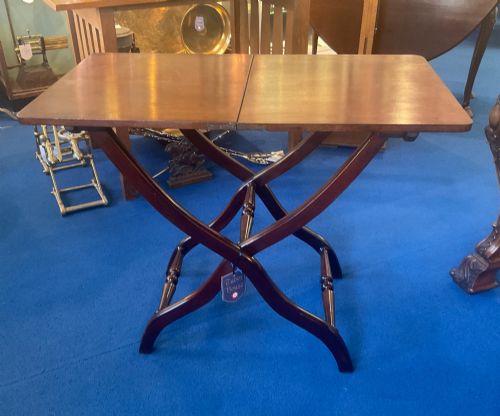
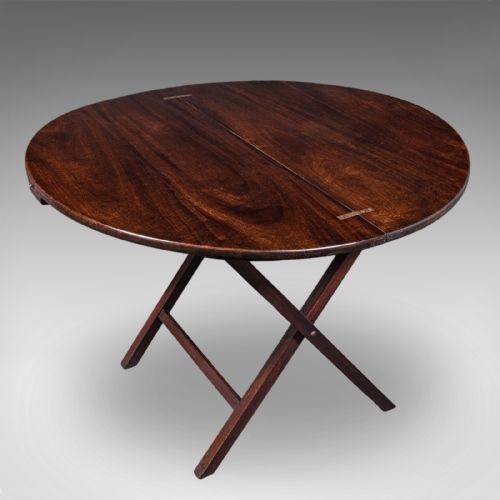
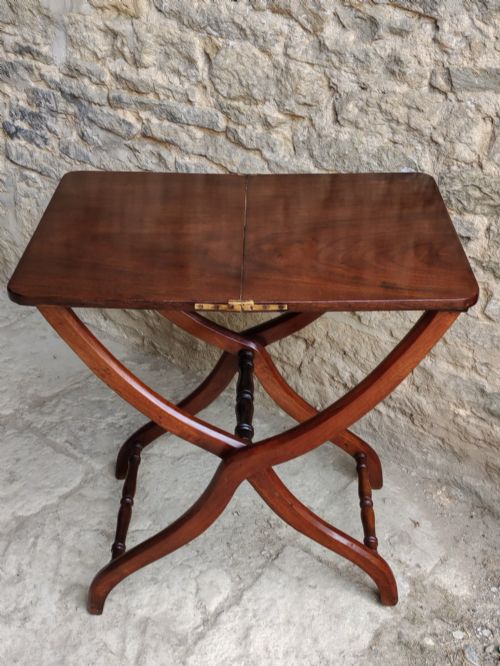
These portable folding table pieces are clever, collapsible items built for travel, offering sturdy surfaces that pack flat when space matters.

Portable Folding Table
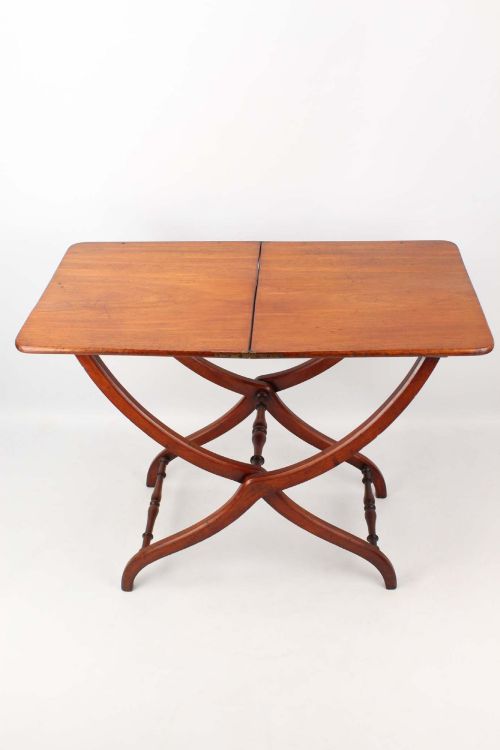
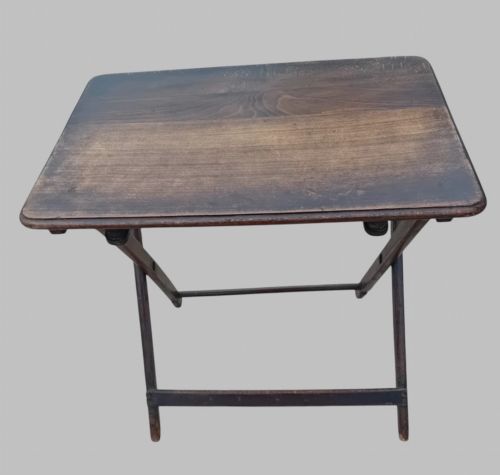
A portable folding table provides a practical surface designed to pack down neatly for movement, drawing on 19th-century and early 20th-century utility. The pieces seen here span Victorian and Edwardian periods, stretching from the 1880s through to the 1930s.
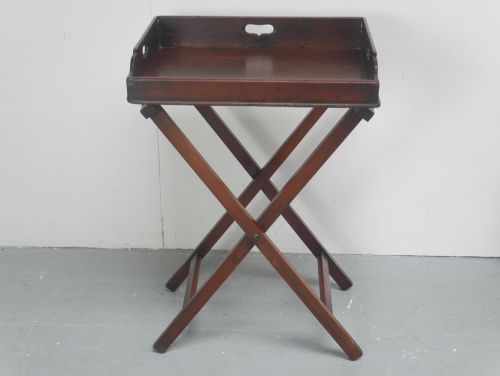
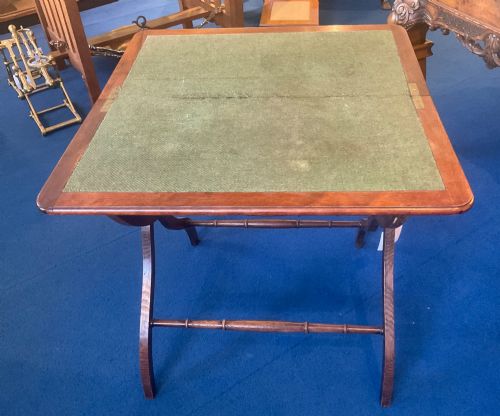
Most examples function as coaching tables, campaign tables, or butlers trays on stands, often executed in mahogany or beech. Alongside standard occasional and side tables, the selection includes games tables, sewing work tables, and writing desks.
The aesthetic leans heavily toward the campaign style, reflecting British military and travel history. Buyers find both simple folding frames and more elaborate metamorphic or multi-functional pieces designed for transit.
How They Were Made
Construction relies primarily on timbers such as mahogany, oak, beech, and teak, chosen for strength and stability during travel. Brass hinges, brackets, and fittings allow the frameworks to articulate smoothly and fold flat without weakening.
Secondary materials like leather, baize, and webbing appear on writing surfaces and game boards, while glass and inlay add decorative detail to specific models. Joinery focuses on robust hinges and folding X-frames that withstand repeated assembly and dismantling.
What Varies in Quality
The calibre of a portable folding table depends on the tightness of its joints and the quality of its folding mechanism. Finely fitted brass hardware and smooth-operating hinges distinguish superior examples from simpler, utilitarian builds.
Timber selection and finish also drive the distinction between standard pieces and finer ones, particularly when rich grains of mahogany or careful inlay work are present. Maker attribution, such as pieces bearing signatures from established London firms, elevates the standing of an item.
J.C Vickery of London·Asprey London
The Portable Folding Table Glossary
- Coaching table
- A lightweight, folding table designed to be easily stowed in a carriage or coach during travel. These typically feature an X-frame base and a removable tray top.
- Campaign style
- Furniture built for military officers and travellers, characterised by portability, folding mechanisms, and protective brass corners. Pieces in this style prioritise modular function and robust construction.
- Butlers tray
- A removable wooden tray with raised edges, often fitted with cut-out handles, designed to sit upon a separate folding stand. It allows for easy service and compact storage.
- Metamorphic furniture
- Pieces designed to transform from one form of furniture into another, such as a desk turning into a writing surface or a table incorporating multiple uses. These utilise clever internal mechanics.
- Baize
- A coarse woollen material resembling felt, commonly used to cover the surfaces of games tables and writing desks. It provides a soft, non-slip texture for cards and writing.
Portable Folding Table: Frequently Asked Questions
What is a coaching table?
A coaching table is a portable piece of furniture featuring a folding X-frame stand and a removable top tray. They were originally used by travellers and officers who needed a stable surface that packed flat.
Today, these tables function well as flexible side tables in living rooms or studies. Their folding nature makes them simple to store away when floor space is needed.
How do campaign tables fold?
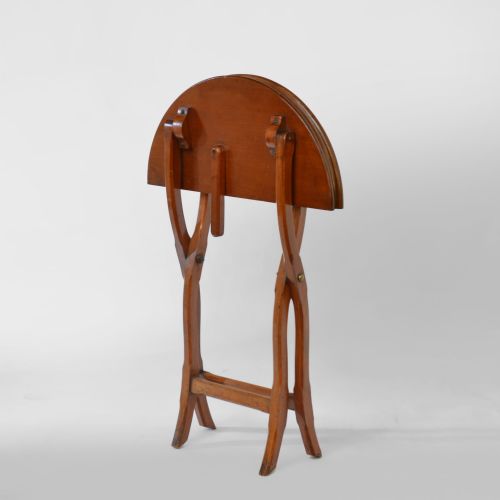
Campaign tables typically rely on hinged wooden frames that collapse inwards and removable tops that lift off their bases. Brass hardware is often integrated to reinforce the joints and protect the edges during transit.
This clever design allows the entire structure to flatten into a compact bundle. Operating the folding mechanism requires no tools, just a simple lifting and pivoting of the frame.
Are these tables sturdy?
Despite their folding design, these tables are engineered to be remarkably stable when fully assembled. The interlocking wooden supports and tight brass hinges distribute weight evenly across the frame.
Quality timbers like mahogany and oak ensure the structure remains rigid during use. They handle everyday items such as lamps, books, and drinks securely.
How do I date a folding table?
Dating relies on examining the timber species, the style of the brass hardware, and the construction methods used in the frame. Victorian and Edwardian examples often display specific turning on the legs and characteristic patination on the wood.
Maker marks or stamps on the brass fittings can also provide a precise year or maker. Comparing the design to known military and travel furniture styles helps narrow down the decade.