


Folding Bridge Table
A folding bridge table is a clever piece of heritage furniture designed for parlour entertainment, offering a compact surface that expands for play.
Folding Bridge Table
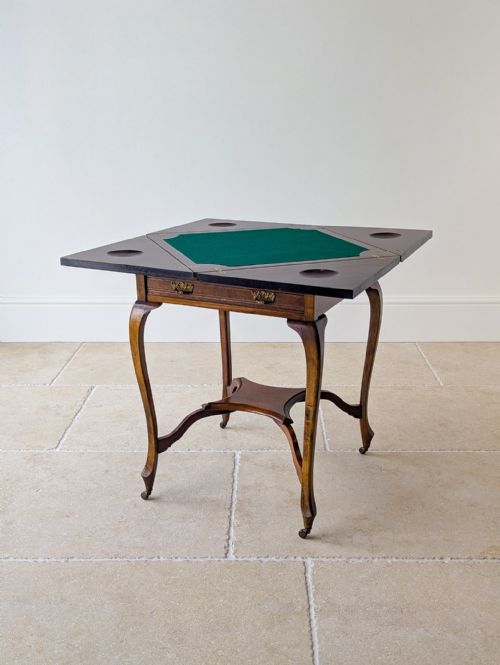
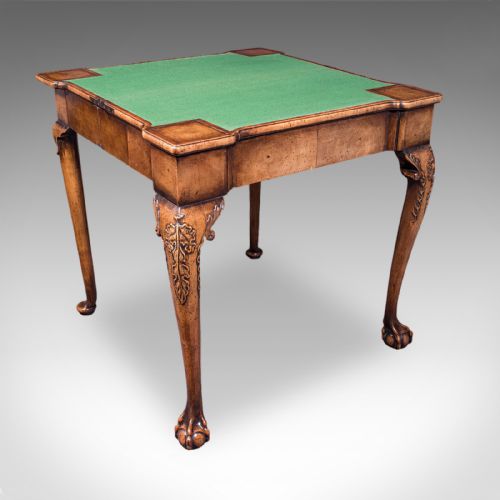
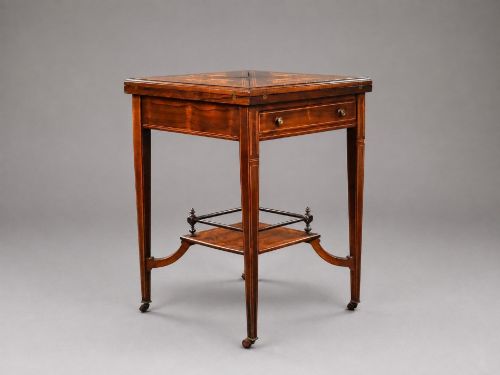
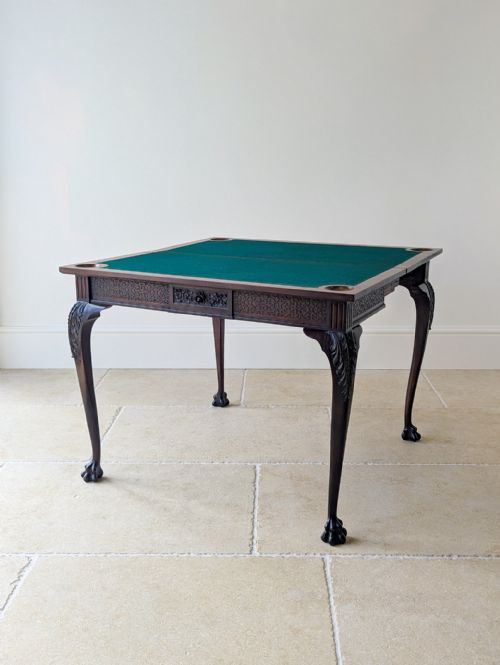
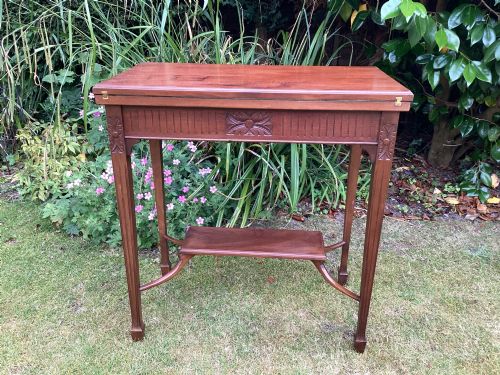
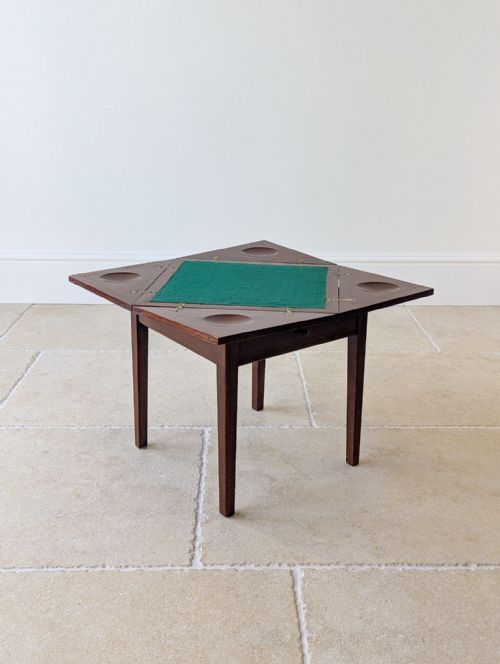
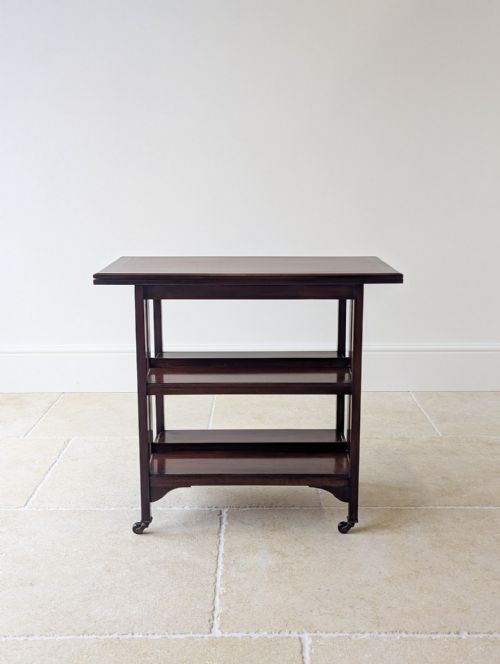
A folding bridge table serves as a versatile furniture form created specifically for card games, social evenings, and domestic entertainment in period interiors. These tables range from ingenious envelope designs that unfold into square playing surfaces to traditional fold-over tops supported on pivoting frames.
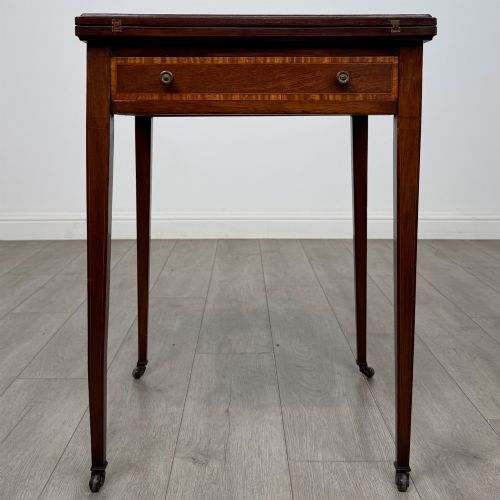
The versions most commonly met on this page date from the Edwardian and Victorian eras, alongside select Georgian and Regency examples. They appear frequently in mahogany, walnut, and rosewood, often featuring inlaid satinwood details and lined playing surfaces.
How they were made
Cabinet makers utilised dense hardwoods such as mahogany, walnut, and rosewood for the structural frames and decorative veneering. Delicate satinwood and brass inlay frequently adorned the tops, while turned or tapering legs provided sturdy support during spirited play.
Internal mechanisms allowed tops to rotate, fold, or swivel open to reveal hidden gaming wells and compartments for counters and cards. Surfaces were customarily lined with baize, wool baize, or leather to cushion the dealt cards and quieten the play.
Several tables retain hidden corner wells specifically designed to hold ivory gaming counters safely out of the way of flying trumps.
What varies in quality
The refinement of the timber selection and the precision of the cabinet work dictate the standing of each piece. Superior examples display finely figured veneers, meticulous marquetry or brass inlay, and sophisticated folding mechanisms that operate with smooth precision.
Makers of distinction invested greater care in secondary woods, structural joinery, and the quality of the internal gaming wells. Tables carrying documented signatures or attribution to notable workshops generally represent the higher tier of craftsmanship.
James Shoolbred and Co.·Maple and Co.·Howard and Sons Ltd·Edwards and Roberts·Gregory and Co
The Folding Bridge Table Glossary
- Envelope card table
- A folding table with a square top formed of four triangular flaps that swivel and open outward like an envelope to reveal a baize-lined playing surface.
- Baize
- A coarse woolen fabric, often green, traditionally used to line the playing surfaces of card and games tables to provide a smooth, soft texture.
- Gaming wells
- Small recessed compartments built into the corners of a card table surface to hold counters, chips, or coins during play.
- Fold-over top
- A hinged table top design where one half folds back or swings on a pivot to double the surface area when opened for games.
- Marquetry
- Decorative veneer work formed by fitting together small pieces of different coloured wood or other materials to create intricate patterns on the table top.
Folding Bridge Table: Frequently Asked Questions
What is a folding bridge table?
A folding bridge table is a specialised piece of antique furniture engineered to provide a stable surface for card games while saving space when not in use.
These tables typically feature clever mechanical actions, such as pivoting tops or unfolding leaves, that transform a console or occasional table into a dedicated gaming area.
How do you use an envelope table?
An envelope table opens by lifting and swivelling the triangular wooden flaps outward, which reveals a baize or leather playing surface underneath.
Many of these models incorporate small wells in the corners to hold counters or cards during social games.
What materials are used on these tables?
Cabinet makers built these tables using dense timbers like mahogany, walnut, and rosewood, often enhancing the tops with satinwood and brass inlay.
Playing surfaces were almost exclusively lined with wool baize, green baize, or leather to protect the cards and dampen sound.
How can I tell the period?
Stylistic clues such as Regency pedestal bases, Victorian marquetry, or Edwardian string inlay help identify the era of manufacture.
Construction methods, timber choices, and maker stamps or paper labels also provide clear indicators of date.