


Folding Brass Tray Table
A folding brass tray table brings together portable metalwork and collapsible timber stands to create adaptable living space.
Folding Brass Tray Table
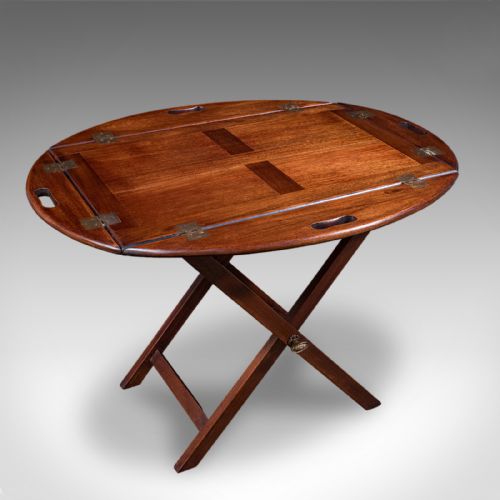
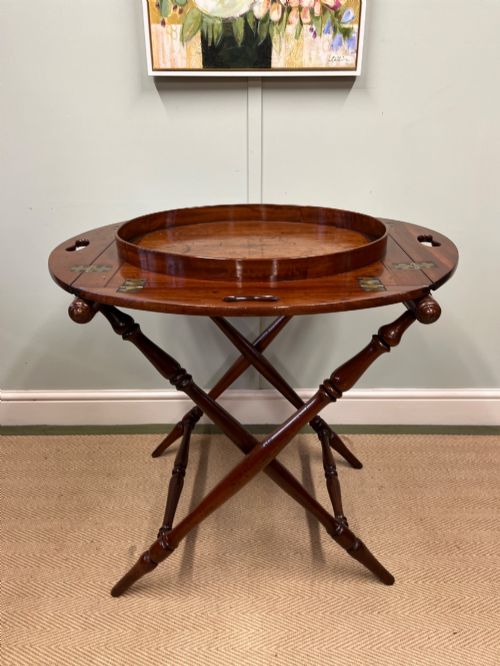
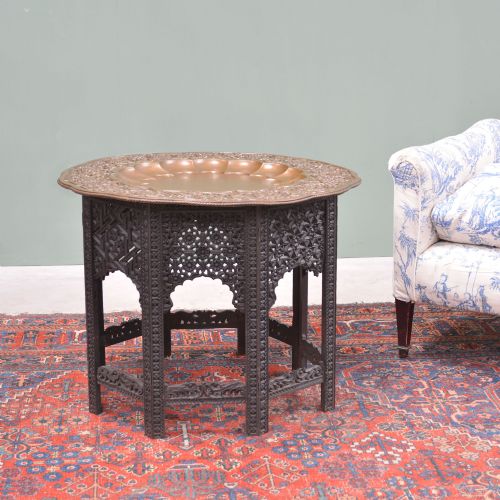
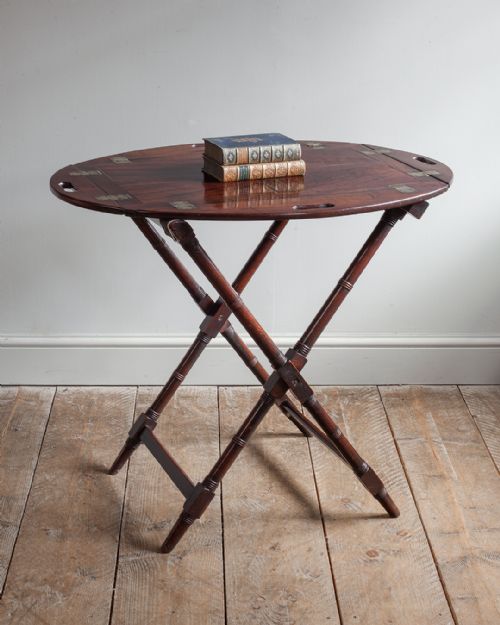
A folding brass tray table combines a removable metal tray with a collapsible wooden stand, functioning as a flexible surface for serving or display. When you search for a folding brass tray table, you encounter diverse regional traditions ranging from British butler's trays to intricate Middle Eastern and Indian metalwork.
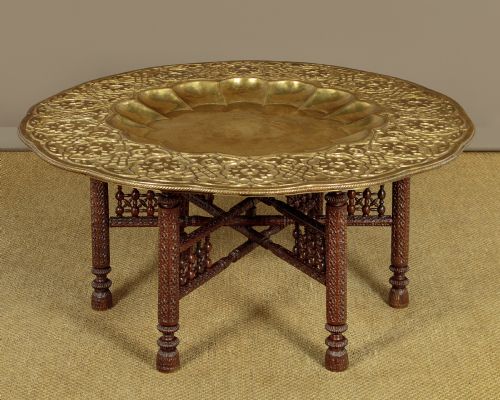
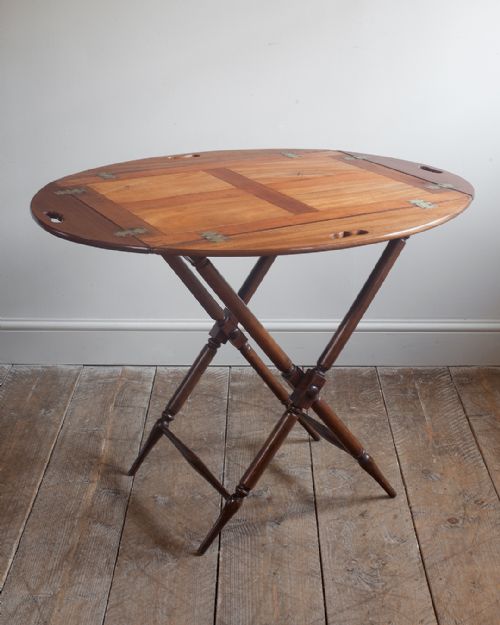
The British examples in mahogany, oak, and teak often feature oval or drop-flap designs resting on folding X-frames. Alongside these, you find heavily engraved brass and copper trays originating from Persian, Moorish, and Anglo-Indian workshops.
Stand forms vary from simple bamboo or hardwood cross-frames to heavily carved occasional supports designed to hold heavy metal tops securely. These pieces function equally well as coffee tables, side tables, or occasional serving furniture.
How they were made
Makers constructed the removable trays using beaten or engraved brass and copper, frequently detailing the metal surfaces with dense geometric and floral motifs. Beneath these metal tops, stands utilised dense timbers such as mahogany, teak, hardwood, and oak, alongside bamboo for lighter folding frames.
Carpenters joined the folding stands with pivoting cross-braces and hinges that allowed the entire base to collapse flat for storage. Tray edges were often raised with shaped handles or gallery rails to secure glassware and tea services during transport.
Listings feature mahogany, teak, oak, and hardwood alongside brass and copper across Georgian, Victorian, and Edwardian periods.
What varies in quality
Quality rests primarily in the crispness of the hand-engraving on the brass or copper surface and the density of the chosen timber in the stand. Superior examples display deep, sharp chasing across the metal top rather than shallow machine stamping.
The structural integrity of the folding mechanism dictates daily utility, with finer stands offering tight joints and smooth pivoting actions that prevent wobbling. The weight and gauge of the metal tray also determine durability, distinguishing substantial serving pieces from lighter decorative tops.
The Folding Brass Tray Table Glossary
- Butler's tray
- A removable wooden tray with hinged or shaped sides, designed for carrying china and silver before being placed onto a folding stand.
- Anglo-Indian
- A descriptive term for items produced in India during the British colonial period, combining local craftsmanship with European furniture forms.
- Benares
- A historic centre of Indian brass production known for densely engraved and chased metalware trays featuring deities and foliage.
- Drop-flap
- A table or tray design featuring hinged leaves that lower to reduce the surface footprint when not in use.
- Occasional table
- A small, portable table intended for flexible placement within a room rather than a fixed dining or desk arrangement.
Folding Brass Tray Table: Frequently Asked Questions
How do I clean a brass tray?
Dust the metal surface regularly with a soft cloth to prevent grime accumulation in the engraved recesses. Avoid harsh chemical polishes that strip away historic patination from older brass and copper.
For stubborn marks, use a mild soapy solution on a damp cloth and dry the metal thoroughly immediately afterwards.
Are the trays fixed to the stands?
Most trays lift completely off their folding wooden bases to allow for easy serving and compact storage. This dual construction means the top and stand were often paired together.
When moving the assembled table, lift it by the wooden stand rather than the edges of the tray alone.
How do I identify an Anglo-Indian table?
Anglo-Indian folding tables typically feature heavy surface engraving across a brass or copper top, paired with intricately carved hardwood stands. The carving often incorporates dense foliage and animal motifs.
These pieces reflect late nineteenth-century export markets aimed at European homes desiring exotic furnishings.
Can I use these tables daily?
These tables adapt easily to modern living spaces as coffee tables or side surfaces next to seating. The folding design allows you to tuck the stand away if you need extra floor space.
Ensure heavy items stay centred on the tray to maintain balance across the collapsible wooden base.