

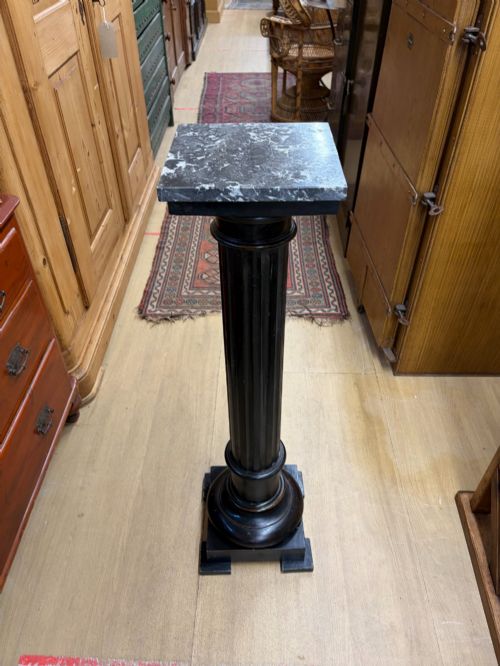
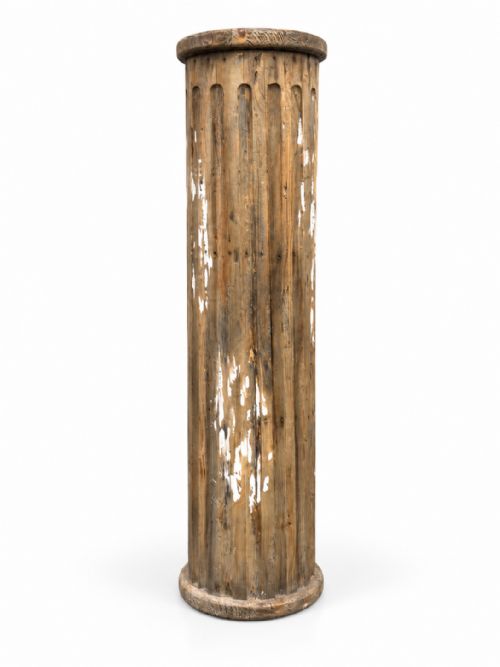
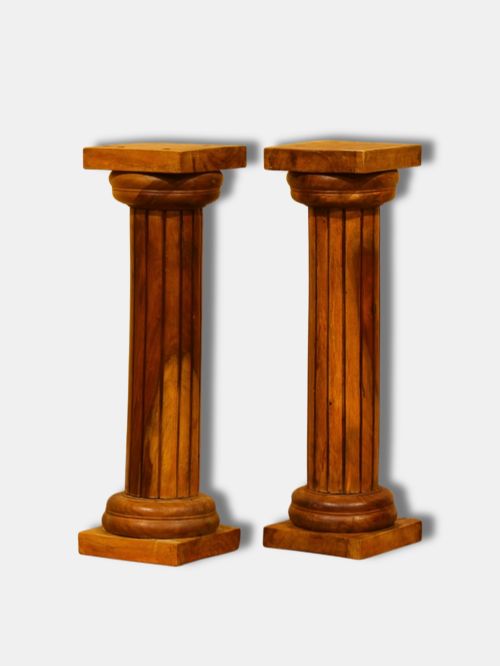



Fluted Wooden Pedestal Plinth
A fluted wooden pedestal plinth elevates sculpture or ceramics with classical architecture.
Fluted Wooden Pedestal Plinth
A fluted wooden pedestal plinth serves as a structural display stand for decorative objects, urns, and sculptures within interior spaces. The pieces listed under this search phrase span forms such as columns, stands, pillars, and torcheres designed to elevate visual weight.
The inventory on this page draws from the nineteenth century, the Victorian era, the Edwardian period, and the nineteen-twenties. These works derive from English country house, Neoclassical, and Neoclassical Revival traditions.
Buyers most frequently encounter mahogany, hardwood, pine, satinwood, and ebonised wood formats, occasionally paired with marble tops. Both single columns and matched pairs appear across the selection.
How they were made
Construction relies on solid timbers and hardwoods including mahogany, satinwood, beech, and pine shaped into vertical columns. Woodworkers introduced fluting, carving, and turning techniques to articulate the shafts of these display stands.
Many examples incorporate contrasting materials, pairing timber bases with inset marble tops for display stability. Ebonising and painted finishes alter the surface appearance of the wood beneath.
Fluted Wooden Pedestal Plinth Retail Price Guide 2026
Typical asking prices for fluted wooden pedestal plinth among the pieces listed under this phrase on Sellingantiques today, from the lower quarter to the upper quarter. They describe what is for sale here now, not the wider market.
The selection spans the nineteenth century, the Victorian period, and the nineteen-twenties.
What varies in quality
Quality rests on the precision of the carved or turned fluting and the structural integrity of the timber column. Finishes range from simple painted wooden surfaces to finely figured satinwood and polished mahogany.
The presence of integrated decorative elements, such as marble tops or secret compartments, distinguishes individual examples within the range.
The Fluted Wooden Pedestal Plinth Glossary
- Fluted
- A series of shallow, vertical parallel grooves carved into the surface of a column or pedestal shaft. This decorative technique originates in classical architecture.
- Plinth
- The heavy base or lower block upon which a column, pedestal, or statue rests. It provides a stable footing on the floor.
- Torchn
- A tall stand or pedestal traditionally utilised to support a candle, torch, or lamp. In later periods, these forms adapted to hold decorative urns and vases.
- Ebonised
- Wood treated with a dark stain or finish to imitate the appearance of dense ebony. This dark surface treatment found favour in nineteenth-century furniture.
- Neoclassical
- A style drawing inspiration from the classical art and architecture of ancient Greece and Rome. It emphasises symmetry, columns, and restrained ornamentation.
Fluted Wooden Pedestal Plinth: Frequently Asked Questions
What were these pedestals used for?
These columns and stands served primarily to elevate decorative objects, bronze figures, or large floral arrangements in formal reception rooms. By raising items off the floor, they drew the eye upward and highlighted specific pieces of art within the interior.
In country houses and parlours, pairs often flanked doorways or fireplaces to create symmetrical displays. Their height allowed heavy urns and marble busts to sit at an optimal viewing level for guests.
How do I style a plinth at home?
A wooden column works well in a hallway or corner to display a contemporary ceramic or a bronze sculpture. Keeping the top uncluttered lets the carved wood and fluting remain the focal point of the arrangement.
Matching pairs can frame a sideboard or an architectural feature to add immediate symmetry to a room. Placing a heavy object on top helps anchor the vertical line of the stand against the wall.
How do I distinguish Victorian pieces from earlier works?
Victorian examples often utilise darker finishes, ebonised wood, or heavy proportions suited to nineteenth-century domestic interiors. They frequently incorporate dense mahogany or varied timbers beneath heavy mouldings.
Earlier Georgian and Neoclassical revival pieces typically display sharper hand-carved details and lighter woods like satinwood. Construction joints and secondary timbers on the underside also offer clues to the manufacturing decade.
Are marble tops original to these columns?
Marble inserts were frequently integrated into nineteenth-century column designs to provide a cool, stable surface for heavy urns and stone figures. They protected the wooden core from moisture and gave a contrasting neoclassical appearance.
When examining a piece with a stone top, look at how the marble sits flush within the timber rim. Original mounts show consistent weathering and fitting appropriate to the age of the wooden base.