





Fluted Wine Glasses
These fluted wine glasses bring tactile weight and historical form to the table, offering collectors a direct link to Georgian, Victorian, and later dining traditions.
Fluted Wine Glasses
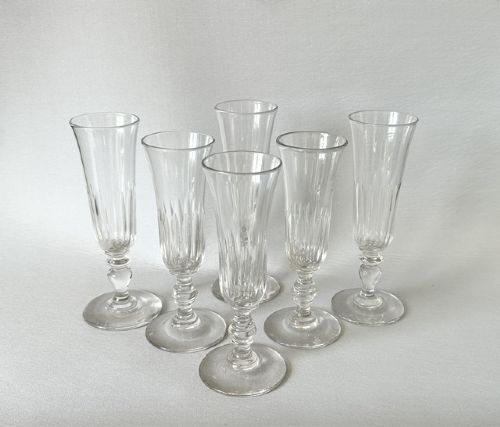
When seeking fluted wine glasses, a buyer examines a lineage spanning from the eighteenth century through the Victorian era and into the 1930s. The selection on this page centres primarily on drinking vessels, wine glasses, and champagne flutes, alongside serving bottles and decanters.
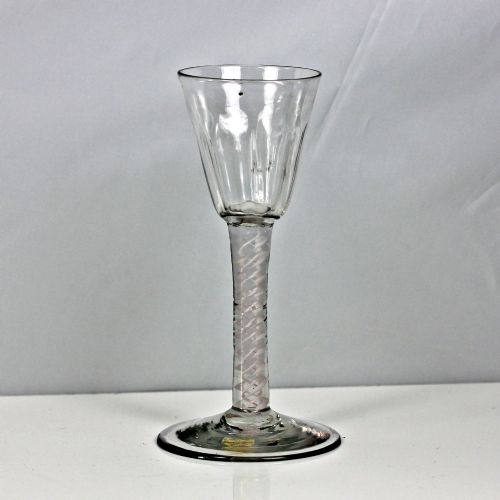
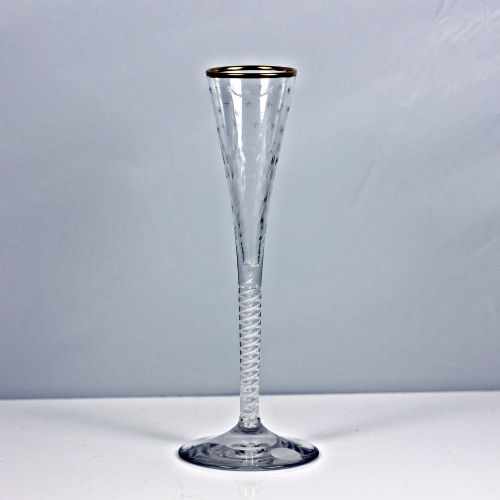
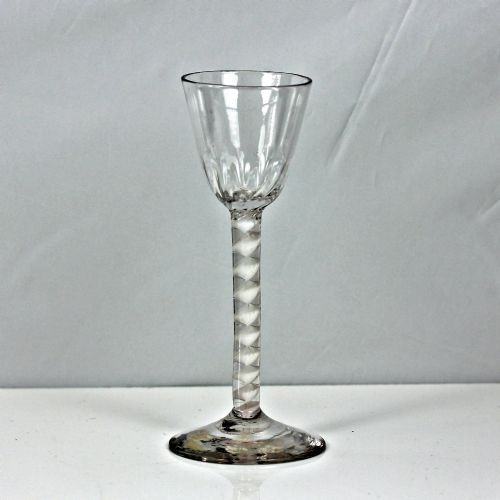
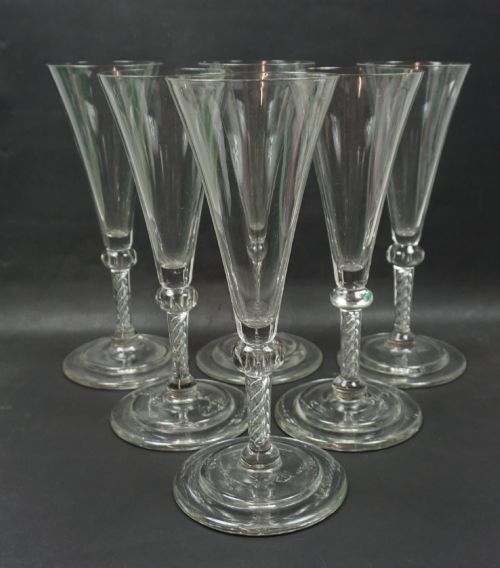
The eighteenth-century examples frequently display air twist, opaque twist, or mixed twist stems supporting rounded funnel or flute-moulded ogee bowls. Later pieces from the Victorian period and the twentieth century introduce taller profiles, cut glass decoration, and coloured glass.
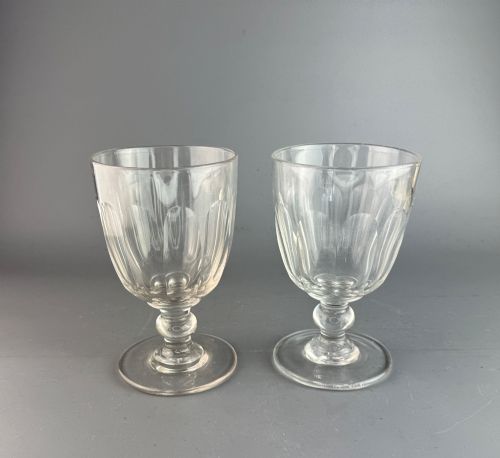
Alongside standard wine glasses, related forms such as ale glasses, ratafia glasses, and rummers appear across the periods. These objects served various historical drinking habits, from ale and ratafia to champagne and fortified wine.
Materials and Techniques
The pieces on this page are formed predominantly from lead glass, clear glass, and lead crystal, shaped through blowing and manipulation while molten. Artisans introduced air bubbles into the stem to draw out delicate air twists, or incorporated white enamel threads to create opaque twists.
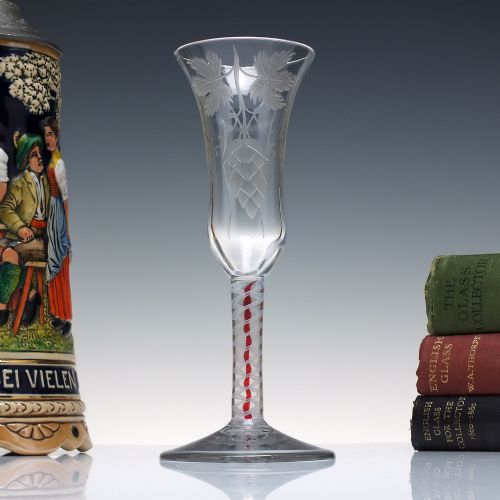
Cut glass decoration relies on grinding facets and patterns into the hardened vessel using abrasive wheels, producing crisp geometric surfaces. Engraving and enamel work, including white enamel and gilding, add surface detail to bowls and decanters.
Fluted Wine Glasses Retail Price Guide 2026
Typical asking prices for fluted wine glasses among the pieces listed under this phrase on Sellingantiques today, from the lower quarter to the upper quarter. They describe what is for sale here now, not the wider market.
Listings feature lead glass, cut glass, and lead crystal across periods from the 18th century to the 1930s.
Indicators of Quality
The refinement of the twist within the stem distinguishes ordinary examples from superior ones, with tightly drawn air or opaque threads showing exceptional glasshouse skill. Symmetry in the bowl moulding and clarity in the lead glass or crystal dictate visual weight.
Engraved ornamentation varies from simple wheel cuts to deeply carved, crisp floral or heraldic motifs. The proportion between the foot, stem, and bowl creates a balanced silhouette that separates standard utility glassware from finer collector pieces.
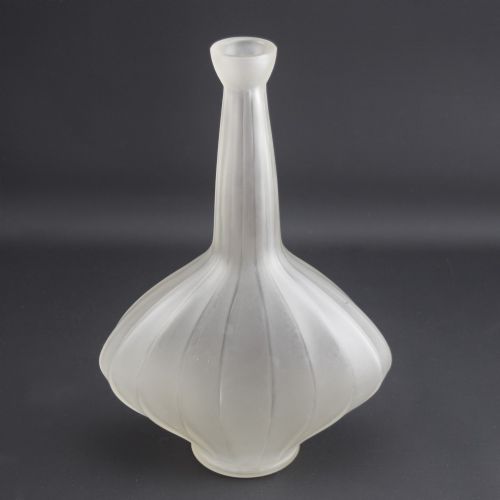
Hukin & Heath·Rene Lalique·Riihimaki
The Fluted Wine Glasses Glossary
- Air twist
- A stem containing elongated spiral air bubbles formed during manufacture. These threads run through the centre of the glass to catch the light.
- Opaque twist
- A stem containing white or coloured enamel threads twisted into spirals within the clear glass. This technique dates prominently to the eighteenth century.
- Ratafia glass
- A tall, narrow drinking glass designed for sweet cordials and liqueurs. Its slender bowl often sits upon an elongated stem.
- Rummer
- A large, heavy drinking glass with a short stem and capacious bowl. These pieces frequently feature cut glass decoration from the Georgian and Victorian periods.
- Balustroid
- A stem style featuring a thick, swelling profile reminiscent of architectural balusters. It appears frequently on eighteenth-century drinking vessels.
Fluted Wine Glasses: Frequently Asked Questions
How do I identify an 18th-century twist stem?
Eighteenth-century twist stems contain internal threads of air or white enamel enclosed within the clear glass rod. Examine the stem under magnification to confirm the enclosed spirals.
These twisted threads result from manual manipulation while the glass remains hot, creating slight irregularities unique to hand-blown pieces.
Are these antique glasses suitable for daily use?
Many buyers choose to use antique lead glass and crystal for special occasions, provided they wash them carefully by hand. The heavier Victorian and Edwardian pieces offer more robust daily resilience than delicate 18th-century twist stems.
Hand washing prevents thermal shock and protects the surface engraving from modern detergent wear.
How can I distinguish Georgian glass from Victorian pieces?
Georgian glass often exhibits lighter weight, pontil marks on the base, and specialised stem formations like air or opaque twists. Victorian examples tend to be heavier, featuring deeper cut glass patterns or coloured glass.
The darker metal and heavier proportions of nineteenth-century pieces contrast with the finer, resonant handle of earlier lead glass.