



Fluted Silver Plate Bowl
These fluted silver plate bowl pieces bring polished metalwork to the table, offering versatile serving dishes and decorative centerpieces from the Victorian, Edwardian, and Art Deco eras.
Fluted Silver Plate Bowl
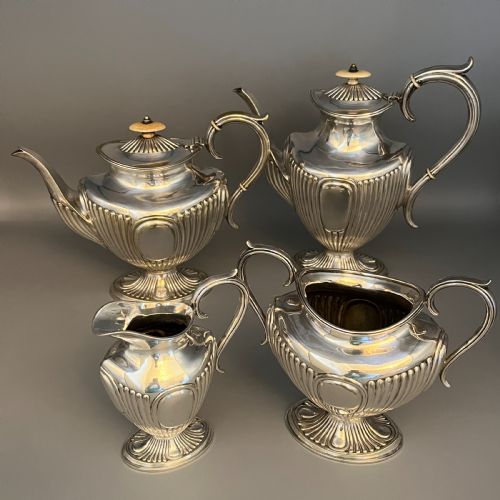
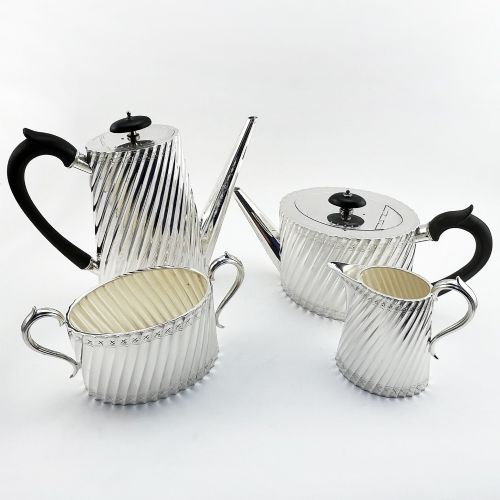
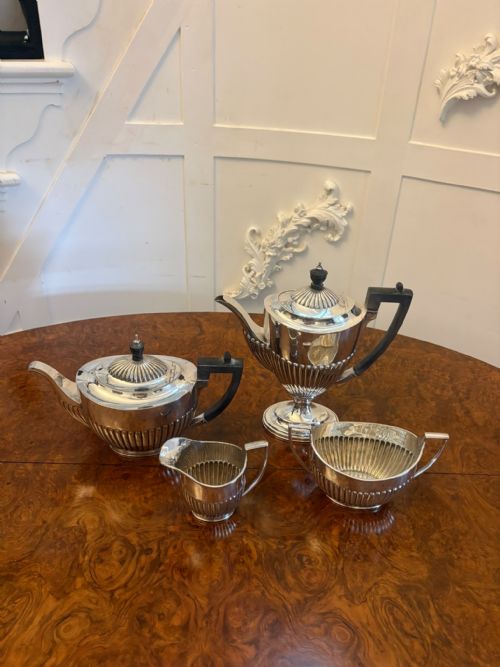
A fluted silver plate bowl brings a distinct moulded profile to the table, appearing across serving dishes, baskets, and tazzas. These items span the nineteenth century into the twentieth century, encompassing Victorian, Edwardian, and Art Deco periods.
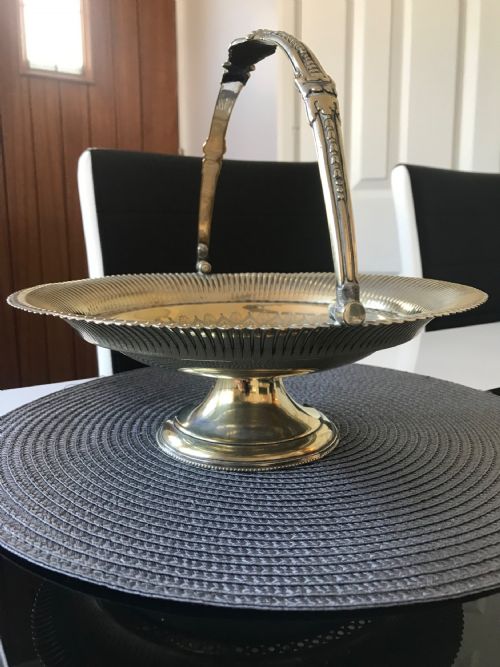
The most common formats on this page include multi-piece tea and coffee sets, serving dishes, bread baskets, fruit baskets, and standalone bowls. They originate from British, French, and Scottish makers, utilising plated metal techniques over copper or nickel silver.
Buyers seeking a fluted silver plate bowl encounter designs ranging from neoclassical fruit baskets with loop handles to geometric Art Deco tazzas. The overarching aesthetic relies on crisp vertical or spiral fluting that catches the light across the silver surface.
Materials and construction
Makers produced these pieces using silver plate, electroplated nickel silver, and silver plate on copper. A base metal such as brass, copper, or nickel silver received a bonded layer of silver through electroplating or older plating methods.
Decorative elements involve floral engraving, cut glass integration, ebonised wood handles, and structural casting. Fluting was typically achieved by pressing or hammering the metal against a shaped die to create regular vertical channels.
Fluted Silver Plate Bowl Retail Price Guide 2026
Typical asking prices for fluted silver plate bowl among the pieces listed under this phrase on Sellingantiques today, from the lower quarter to the upper quarter. They describe what is for sale here now, not the wider market.
Listings feature items spanning the 1860s through the 1930s, incorporating Victorian, Edwardian, and Art Deco styles.
Judging quality in silver plate
Quality rests on the crispness of the fluting and the thickness of the original plating over the base metal. Superior examples retain their complete silver layer without base metal showing through on high points and edges.
Hand-engraved floral details, robust handle mountings, and balanced proportions distinguish finer Victorian and Edwardian items from standard production ware. Maker marks from established firms indicate higher workshop standards.
Walker & Hall·Christofle Gallia
The Fluted Silver Plate Bowl Glossary
- Silver plate
- A base metal coated with a thin layer of pure silver. This technique allowed households to own impressive tableware at a fraction of solid silver cost.
- Electroplated Nickel Silver
- An alloy of copper, nickel, and zinc coated with silver via an electrical current. It provided a strong, durable foundation for Victorian and Edwardian hollowware.
- EPNS
- An abbreviation for electroplated nickel silver commonly stamped on the base of nineteenth and twentieth-century metalware. It confirms the non-precious core beneath the silver surface.
- Tazza
- An Italian term for a shallow bowl or cup elevated on a stem and foot. These pieces function as decorative fruit bowls or serving stands.
- Neoclassical
- A style drawing inspiration from classical antiquity, featuring symmetrical lines, urn motifs, and restrained ornamentation. It recurs frequently in nineteenth-century baskets and bowls.
Fluted Silver Plate Bowl: Frequently Asked Questions
How do I clean a silver plated bowl?
Use a soft cloth and a dedicated silver polish designed for plated items. Avoid harsh abrasives that can wear away the thin silver layer.
Wash the piece in warm soapy water afterwards and dry it thoroughly to prevent tarnishing.
Can I use these bowls for serving food?
Most antique silver plate pieces function well for dry foods, fruit, and bread. Acidic foods should not be left in contact with the metal for extended periods.
Hand washing is essential to preserve the integrity of the plating and any applied wooden handles.
How do I identify an Edwardian piece?
Edwardian items date from the reign of Edward VII, spanning the early years of the twentieth century. They often feature lighter neoclassical revival motifs and bright silver finishes.
Maker marks and registration numbers stamped on the base can help narrow down the production year.
What is the difference between EPNS and silver plate on copper?
Silver plate on copper uses a reddish copper base metal beneath the silver layer. When worn, the warm copper tone shows through the silver.
EPNS uses a silvery-white nickel alloy base, meaning worn spots appear silver-grey rather than copper-red.